
Why Protein Bars Have Become the Go-To Snack for Modern Consumers
From fitness enthusiasts to busy professionals, protein bars are reshaping the global snacking industry through convenience, nutrition, and innovation.

Traditional meal patterns are being replaced by flexible eating habits that fit increasingly busy lifestyles. Consumers are looking for foods that offer convenience without sacrificing nutrition, and this shift has fueled the rise of one of the fastest-growing segments in the health and wellness industry: protein bars.
Once considered a niche product designed primarily for athletes and bodybuilders, protein bars have evolved into a mainstream nutrition solution enjoyed by students, office workers, travelers, fitness enthusiasts, and health-conscious consumers alike. Today, these compact snacks serve multiple purposes, from supporting muscle recovery and weight management to providing a quick meal replacement during hectic days.
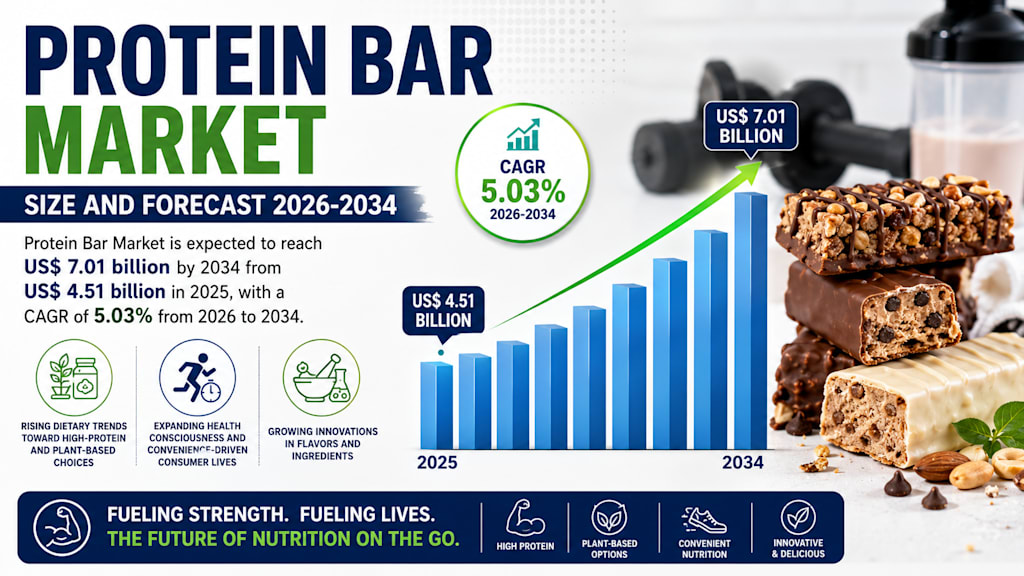
As awareness of nutrition continues to grow worldwide, the protein bar market is experiencing steady expansion. Industry forecasts suggest that the global protein bar market will increase from approximately US$ 4.51 billion in 2025 to US$ 7.01 billion by 2034, growing at a compound annual growth rate (CAGR) of 5.03% between 2026 and 2034.
The market's growth reflects broader changes in consumer behavior, including rising interest in health, fitness, convenience, and functional nutrition.

The Evolution of Protein Bars
Protein bars have come a long way from their early days.
Initially developed for athletes seeking convenient sources of protein, early products often prioritized nutritional content over taste and texture. Many consumers viewed them as functional supplements rather than enjoyable snacks.
Over time, however, manufacturers recognized the opportunity to appeal to a broader audience.
Today's protein bars combine nutritional benefits with flavors and textures that rival traditional snack products. Chocolate brownie, peanut butter, salted caramel, cookies and cream, and fruit-based varieties have become common offerings. Some products even resemble dessert bars while maintaining high protein content and lower sugar levels.
This transformation has helped protein bars move from specialty fitness stores into supermarkets, convenience stores, coffee shops, airports, and online marketplaces around the world.
Health Consciousness Is Driving Demand
One of the biggest reasons behind the growth of the protein bar market is the increasing focus on health and wellness.
Consumers are paying closer attention to what they eat and how nutrition affects overall well-being. Protein has gained significant popularity because of its association with muscle development, satiety, metabolism, and healthy aging.
Many people actively seek ways to increase their daily protein intake without making major dietary changes.
Protein bars provide an easy solution.
They offer a convenient source of protein that can be consumed virtually anywhere, making them attractive for individuals with busy schedules. Whether someone is heading to work, attending classes, traveling, or finishing a workout, protein bars provide quick access to nutrition without requiring preparation.
As fitness culture continues to expand globally, the appeal of protein-rich snacks is expected to remain strong.
The Rise of Active Lifestyles
Fitness is no longer limited to professional athletes or dedicated gym-goers.
Across the world, more people are participating in recreational sports, running, cycling, yoga, strength training, and wellness-focused activities. Social media platforms have further accelerated interest in fitness by making health and exercise content more accessible than ever before.
This cultural shift has created a larger consumer base for protein-rich products.
Protein bars are particularly appealing because they fit naturally into active lifestyles. Many consumers use them before workouts for energy, after exercise for recovery, or throughout the day to support nutritional goals.
The growing emphasis on preventive healthcare has also contributed to demand. Rather than waiting for health problems to develop, consumers increasingly invest in products that support long-term wellness.
Protein bars align perfectly with this mindset by offering functional nutrition in a convenient format.
Convenience Has Become a Priority
Modern lifestyles are busier than ever.
Long work hours, commuting, academic commitments, and family responsibilities leave many people with limited time to prepare balanced meals. As a result, demand for portable and convenient food options continues to rise.
Protein bars address this need exceptionally well.
Unlike traditional meals, they require no cooking, refrigeration, or preparation. Consumers can carry them in bags, desks, gym lockers, or vehicles and consume them whenever necessary.
This convenience makes protein bars especially attractive to professionals, students, travelers, and parents seeking quick nutritional solutions.
The growing trend toward snacking rather than consuming three large meals per day has further strengthened demand. Many consumers now prefer multiple smaller eating occasions throughout the day, creating opportunities for protein bars to serve as satisfying and nutritious snacks.
Innovation Is Transforming the Market
Innovation remains one of the most important drivers of growth within the protein bar industry.
Manufacturers continuously develop new formulations to meet changing consumer preferences. Today's products are far more sophisticated than those available a decade ago.
Companies are introducing bars with improved texture, cleaner ingredient lists, reduced sugar content, and enhanced nutritional profiles.
Many products now include additional functional ingredients such as fiber, probiotics, vitamins, minerals, collagen, and superfoods.
These additions allow protein bars to address specific health goals beyond basic protein supplementation.
Consumers can choose products designed for energy, recovery, digestion, weight management, immunity, or overall wellness.
This level of specialization helps brands differentiate themselves in an increasingly competitive marketplace.
Plant-Based Nutrition Is Creating New Opportunities
One of the most significant developments in the protein bar market is the growing popularity of plant-based nutrition.
Consumers are increasingly exploring vegetarian, vegan, and flexitarian lifestyles for health, ethical, and environmental reasons. This trend has encouraged manufacturers to expand beyond traditional whey-based formulations.
Plant-derived proteins such as pea protein, soy protein, brown rice protein, and hemp protein are becoming common ingredients in modern protein bars.
These alternatives allow companies to reach consumers with dietary restrictions, lactose intolerance, or preferences for plant-based products.
Plant-based protein bars also align with broader sustainability goals, making them attractive to environmentally conscious consumers.
As demand for alternative protein sources continues to grow, plant-based products are expected to represent an increasingly important segment of the market.
Clean Labels Are Influencing Purchasing Decisions
Transparency has become a major factor in food purchasing decisions.
Consumers want to know exactly what ingredients are included in the products they consume. This has led to growing demand for clean-label foods that contain recognizable and minimally processed ingredients.
Protein bar manufacturers are responding by reformulating products to eliminate artificial additives, reduce sugar content, and incorporate natural sweeteners.
Ingredients such as dates, honey, stevia, monk fruit, nuts, seeds, and whole grains are becoming increasingly popular.
Brands that successfully communicate ingredient transparency often gain stronger consumer trust and loyalty.
This trend is expected to continue shaping product development across the protein bar industry for years to come.
Challenges Facing the Industry
Despite strong growth prospects, the protein bar market faces several challenges.
One of the most significant is intense competition.
The popularity of protein bars has attracted numerous global brands, regional manufacturers, and private-label competitors. As a result, consumers have access to an overwhelming number of choices.
This crowded landscape makes differentiation increasingly difficult.
Many products offer similar nutritional benefits, forcing companies to compete through branding, flavor innovation, packaging, and marketing strategies.
Maintaining visibility and consumer loyalty requires continuous investment in product development and promotion.
For smaller brands, competing against established multinational companies can be particularly challenging.
Balancing Taste and Nutrition
Another ongoing challenge involves achieving the right balance between nutritional value and consumer enjoyment.
While consumers want products that support health goals, they also expect great taste and appealing texture.
Developing protein bars that satisfy both requirements can be difficult.
High-protein formulations sometimes create texture challenges, while reducing sugar may affect flavor profiles.
At the same time, manufacturers must manage ingredient costs and maintain affordability.
Premium protein sources, natural sweeteners, and functional ingredients often increase production expenses.
Companies that successfully combine nutrition, taste, and value are more likely to achieve long-term success in the marketplace.
Regional Markets Continue to Expand
The United States remains one of the world's largest and most mature protein bar markets.
Consumers in the country have embraced protein bars as convenient solutions for fitness, weight management, and daily nutrition. Extensive retail distribution and continuous product innovation continue to support growth.
Germany is also experiencing strong demand as consumers increasingly prioritize fitness, wellness, and functional nutrition. Interest in clean-label products, plant-based ingredients, and sustainable sourcing is particularly strong among German consumers.
India represents one of the fastest-growing opportunities globally.
Rising urbanization, growing disposable incomes, and increasing awareness of health and fitness are encouraging more consumers to explore protein-rich snack options. The expansion of e-commerce platforms and modern retail channels has further improved product accessibility.
The United Arab Emirates is another promising market where active lifestyles, premium consumer preferences, and strong retail infrastructure continue to support demand for protein bars and other functional nutrition products.
Industry Developments Signal Continued Growth
Recent product launches and investments highlight growing confidence in the future of the protein bar market.
Manufacturers are introducing new formulations featuring higher protein content, lower sugar levels, and innovative ingredient combinations. Partnerships between food companies and nutrition brands continue to drive product development and market expansion.
The emergence of protein bars designed specifically for children, plant-based consumers, and specialized health needs demonstrates the industry's ability to identify and respond to evolving consumer preferences.
These innovations are helping expand the category beyond its traditional fitness-focused audience.
The Future of Protein Bars
Looking ahead, the protein bar industry appears well-positioned for sustained growth.
Several powerful trends are supporting long-term demand, including rising health awareness, increasing participation in fitness activities, growing interest in functional foods, and demand for convenient nutrition solutions.
Future growth will likely be driven by continued innovation in ingredients, personalized nutrition, sustainability initiatives, and digital marketing strategies.
Manufacturers that successfully align their products with evolving consumer expectations will be best positioned to capitalize on emerging opportunities.
As the distinction between snacks and nutritional products continues to blur, protein bars are becoming a permanent fixture in modern diets.
Final Thoughts
The success of protein bars reflects a larger transformation occurring within the global food industry.
Consumers no longer view food solely as a source of calories. Instead, they increasingly seek products that deliver convenience, nutrition, functionality, and enjoyment simultaneously.
Protein bars meet these expectations remarkably well.
What began as a specialized product for athletes has evolved into a mainstream nutrition category embraced by people from all walks of life. As health-conscious lifestyles continue to gain momentum, protein bars are expected to remain one of the most dynamic and innovative segments within the broader wellness market.
For consumers seeking smarter snacking options and for brands pursuing growth opportunities, the future of protein bars looks stronger than ever.
About the Creator
Enjoyed the story? Support the Creator.
Subscribe for free to receive all their stories in your feed.
Comments
There are no comments for this story
Be the first to respond and start the conversation.