
Why Plant-Based Foods Are Becoming Mainstream Across the United States
Growing Health Awareness, Sustainability Concerns, and Food Innovation Are Driving a New Era of Consumer Eating Habits

Plant-Based Foods, Vegan Diet, Food Industry, Sustainable Living, Healthy Eating, Food Innovation, Alternative Protein, Wellness Trends, United States Market, Nutrition
Plant-based foods are no longer a niche category reserved for vegans and vegetarians. Over the past decade, these products have evolved into one of the fastest-growing segments of the American food industry, attracting consumers from virtually every demographic group.
From plant-based burgers and dairy-free milk to ready-to-eat meals and protein-rich snacks, consumers are embracing alternatives that align with their health goals, environmental values, and changing lifestyles. Major grocery stores, restaurants, healthcare institutions, and food service providers are responding by significantly expanding their plant-based offerings.
What began as a movement driven primarily by ethical and environmental concerns has now entered the mainstream. Today's consumers are increasingly choosing plant-based foods for a variety of reasons, including improved nutrition, weight management, sustainability, and overall wellness.
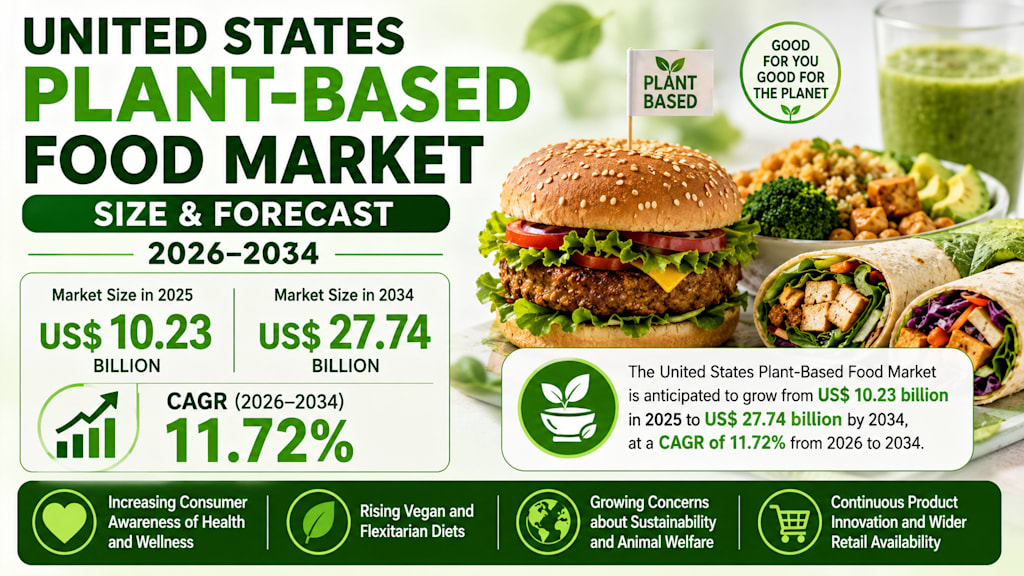
According to Renub Research, the United States Plant-Based Food Market is expected to grow from US$ 10.23 billion in 2025 to US$ 27.74 billion by 2034, expanding at a compound annual growth rate (CAGR) of 11.72% between 2026 and 2034. This impressive growth highlights the increasing influence of plant-based eating on the future of the American food industry.
The Shift Toward Plant-Based Eating
Consumer attitudes toward food have changed dramatically in recent years. Rather than focusing solely on taste and convenience, many Americans now consider how their dietary choices affect their personal health, the environment, and overall quality of life.
Plant-based foods are products made primarily from ingredients such as fruits, vegetables, grains, legumes, nuts, seeds, and plant-derived proteins. These foods are designed to provide nutritional benefits while reducing or eliminating reliance on animal-derived ingredients.
The category includes a wide variety of products, ranging from plant-based meat alternatives and dairy-free beverages to snacks, sauces, ready meals, and functional foods. Advances in food technology have enabled manufacturers to create products that closely resemble the taste, texture, and nutritional characteristics of traditional animal-based foods.
As product quality continues to improve, plant-based foods are becoming increasingly attractive to mainstream consumers who may not identify as vegan or vegetarian but are interested in healthier and more sustainable eating habits.
Health and Wellness Are Driving Consumer Demand
One of the most important factors fueling the growth of the plant-based food market is increasing health consciousness among American consumers.
Many people are becoming more aware of the relationship between diet and chronic health conditions such as obesity, heart disease, diabetes, and high cholesterol. As a result, consumers are actively seeking foods that support long-term health and wellness goals.
Plant-based foods are often perceived as healthier alternatives because they typically contain less saturated fat and higher levels of fiber, vitamins, minerals, and antioxidants compared to many animal-based products.
The rise of flexitarian diets has also contributed significantly to market growth. Unlike strict vegan or vegetarian lifestyles, flexitarian consumers simply aim to reduce their meat consumption while continuing to eat animal products occasionally. This approach has dramatically expanded the customer base for plant-based food products.
Health professionals and dietary organizations increasingly encourage plant-forward eating patterns as part of balanced nutrition strategies. These recommendations have further strengthened consumer confidence in plant-based foods and supported wider adoption.
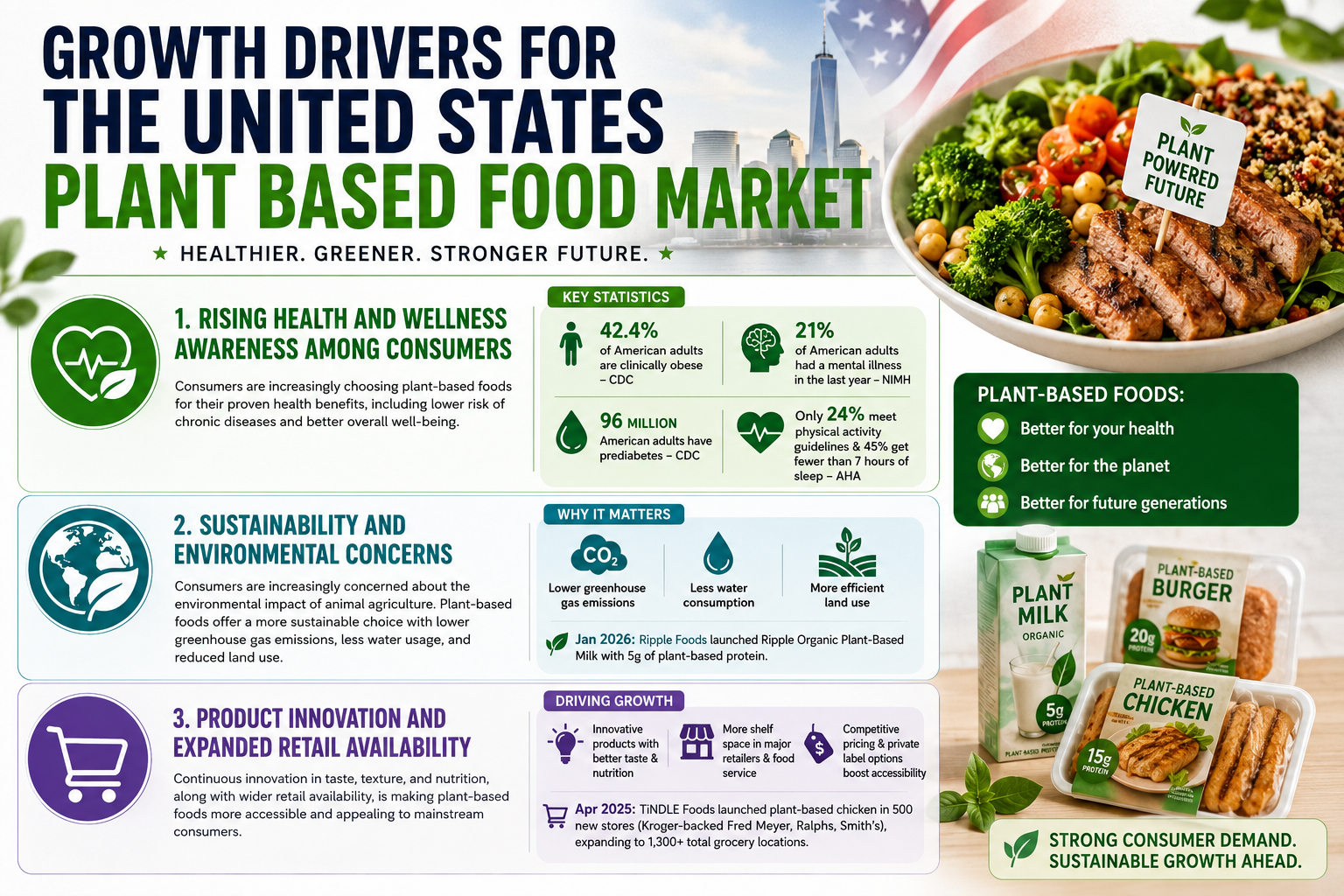
Health concerns remain particularly relevant in the United States. According to data highlighted in the report, obesity, diabetes, cardiovascular disease, and other lifestyle-related conditions continue to affect millions of Americans, reinforcing interest in healthier food alternatives.
Sustainability Is Influencing Purchasing Decisions
Environmental sustainability has become a powerful force shaping consumer behavior across numerous industries, and food is no exception.
Many consumers are increasingly concerned about the environmental impact associated with traditional livestock farming, including greenhouse gas emissions, water consumption, and land use requirements. Plant-based foods are often viewed as a more environmentally responsible option because they generally require fewer natural resources to produce.
Younger generations, in particular, are paying closer attention to sustainability issues when making purchasing decisions. They are more likely to support brands that demonstrate commitment to environmental responsibility and climate-conscious practices.
Food manufacturers have responded by incorporating sustainability messaging into marketing campaigns and investing in environmentally friendly production methods. These efforts help strengthen brand loyalty while encouraging broader adoption of plant-based alternatives.
In January 2026, Ripple Foods introduced Ripple Organic Plant-Based Milk, a new organic product containing five grams of plant-based protein. Product launches such as this demonstrate how companies continue to innovate while addressing consumer demand for nutritious and sustainable food options.
Innovation Is Making Plant-Based Foods More Appealing
The plant-based food industry has undergone remarkable innovation over the past several years.
Early plant-based products often struggled to replicate the taste and texture of traditional animal-based foods. Today, advancements in food science and ingredient technology have dramatically improved product quality.
Manufacturers are investing heavily in research and development to create products that closely resemble conventional meat, dairy, and other animal-derived foods. Improved formulations, advanced protein extraction methods, and innovative ingredient combinations have enhanced flavor, texture, and nutritional value.
These innovations are helping plant-based foods attract consumers who previously may have been hesitant to try alternative products. Better taste experiences encourage repeat purchases and contribute to long-term market growth.
At the same time, expanded retail distribution has made plant-based products more accessible than ever before. Supermarkets, warehouse clubs, convenience stores, restaurants, and online retailers are dedicating more shelf space to plant-based options.
In April 2025, TiNDLE Foods announced a major retail expansion by introducing its plant-based chicken products into 500 additional grocery stores across the United States. This expansion increased the company's retail presence to more than 1,300 stores and illustrates how rapidly plant-based products are entering mainstream distribution channels.
Plant-Based Meat Is Leading the Category
Among all plant-based food segments, meat alternatives remain one of the most dynamic and influential categories.
Plant-based burgers, sausages, nuggets, meatballs, and ground meat alternatives have gained widespread popularity among consumers seeking alternatives to traditional meat products. These products are typically made using ingredients such as soy protein, pea protein, wheat protein, and other plant-derived sources.
The success of plant-based meat products can largely be attributed to their ability to deliver familiar flavors and textures while aligning with consumer preferences for healthier and more sustainable food choices.
Major food manufacturers, restaurant chains, and quick-service restaurants have embraced plant-based meat offerings, making them increasingly visible and accessible to consumers nationwide. As demand continues to rise, innovation within this category is expected to accelerate further.
Traditional Plant-Based Foods Continue to Thrive
While modern meat alternatives often capture headlines, traditional plant-based foods remain an important part of the market.
Products such as tofu and tempeh continue to enjoy steady demand among health-conscious consumers who value minimally processed foods with strong nutritional profiles. Rich in protein and highly versatile in cooking applications, these products have long been staples within plant-based diets.
Growing interest in international cuisines, particularly Asian-inspired dishes, has also contributed to increasing demand for tofu and tempeh products throughout the United States.
Product innovation within this segment has expanded consumer appeal through flavored options, convenient packaging, and ready-to-cook formats that make plant-based eating more accessible to busy households.
Restaurants Are Embracing Plant-Based Menus
The restaurant industry is playing a significant role in expanding consumer exposure to plant-based foods.
Full-service restaurants, casual dining establishments, and quick-service chains are increasingly incorporating plant-based dishes into their menus. This trend reflects changing customer preferences and growing demand for healthier dining options.
Chefs are exploring creative ways to integrate plant-based ingredients into both traditional and innovative recipes. The result is a broader range of dining experiences that appeal to vegans, vegetarians, flexitarians, and curious consumers alike.
As restaurant menus continue evolving, plant-based foods are becoming a standard feature rather than a specialty offering.
Healthcare Institutions Are Supporting Plant-Based Nutrition
Healthcare organizations are increasingly recognizing the role nutrition plays in disease prevention and long-term wellness.
Many hospitals and healthcare facilities now include plant-based meal options as part of broader efforts to support cardiovascular health, weight management, and chronic disease prevention. These initiatives reflect growing scientific evidence linking plant-forward dietary patterns with positive health outcomes.
As healthcare providers continue promoting nutrition as a component of preventive medicine, demand for plant-based foods within healthcare settings is expected to increase.
Challenges Still Exist
Despite strong growth, the plant-based food industry continues to face several challenges.
Price remains one of the most frequently cited barriers. Many plant-based products still cost more than conventional animal-based alternatives due to production complexity, ingredient sourcing, and smaller manufacturing scale. Although the price gap is narrowing, affordability remains an important factor for many consumers.
Taste and texture also continue to influence consumer acceptance. While significant progress has been made, some consumers remain unconvinced that plant-based alternatives can fully replicate the sensory experience of traditional meat and dairy products.
In addition, misunderstandings regarding nutritional value and food processing methods can affect purchasing decisions. Continued education and transparency will be important for building consumer trust and encouraging wider adoption.
California Continues to Lead the Market
California remains one of the most influential regions within the U.S. plant-based food industry.
The state's strong focus on health, sustainability, and innovation has created an ideal environment for plant-based food companies. Major cities such as Los Angeles, San Francisco, and San Diego serve as hubs for food technology startups, product development, and consumer adoption.
The presence of numerous vegan, vegetarian, and flexitarian consumers further supports demand for plant-based products across retail and foodservice channels.
Other states, including New York, Washington, and Arizona, are also experiencing strong growth as consumer awareness and accessibility continue to improve.
Looking Ahead
The future of the United States plant-based food market appears highly promising. Growing awareness of health and wellness, rising sustainability concerns, continuous product innovation, and expanding retail availability are creating favorable conditions for long-term growth.
Leading companies such as Beyond Meat, Tyson Foods, Hormel Foods, Archer Daniels Midland, Kellanova, Conagra Brands, Maple Leaf Foods, and US Foods continue investing in product development and market expansion, reflecting confidence in the category's future potential.
As plant-based products become more affordable, accessible, and appealing, they are likely to play an increasingly important role in the everyday diets of millions of Americans.
Final Thoughts
Plant-based foods have evolved from a niche lifestyle choice into a mainstream movement that is reshaping the American food landscape. Consumers are embracing these products for reasons that extend beyond dietary preferences, including health, sustainability, convenience, and overall wellness.
With the market projected to nearly triple in value by 2034, plant-based foods are poised to become an even more influential part of the food industry. Continued innovation and consumer education will further strengthen adoption, helping create a future where plant-based eating is not just an alternative but a standard option available to everyone.
As the industry continues to grow, plant-based foods will remain at the center of conversations about nutrition, sustainability, and the future of food in the United States.
About the Creator
Enjoyed the story? Support the Creator.
Subscribe for free to receive all their stories in your feed.
Comments
There are no comments for this story
Be the first to respond and start the conversation.