
Why Organic Dairy Is Becoming the Future of Healthy Eating and Sustainable Agriculture
Growing consumer demand for clean-label foods, ethical farming practices, and premium nutrition is transforming the global organic dairy industry into one of the fastest-growing segments of the food market.

In recent years, consumers have become far more selective about the food they purchase. Labels, ingredients, production methods, and sustainability practices now play a major role in purchasing decisions. Among the many categories benefiting from this shift, organic dairy has emerged as one of the strongest performers.
Once considered a niche category reserved primarily for health-conscious shoppers, organic dairy products have entered mainstream markets around the world. Consumers increasingly view organic milk, yogurt, cheese, butter, and cream as healthier, safer, and more environmentally responsible alternatives to conventional dairy products.
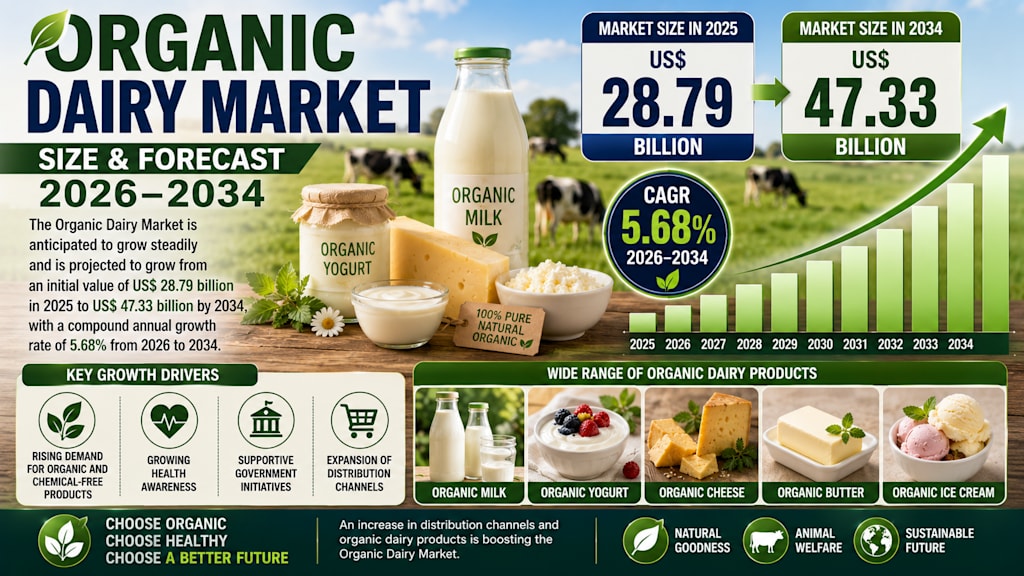
This changing consumer mindset is creating substantial opportunities throughout the global food industry. According to Renub Research, the global Organic Dairy Market is projected to grow from US$ 28.79 billion in 2025 to US$ 47.33 billion by 2034, expanding at a compound annual growth rate (CAGR) of 5.68% between 2026 and 2034. Rising health awareness, increasing demand for chemical-free food products, expanding distribution networks, and government support for organic farming are among the key drivers fueling this growth.
As consumers place greater value on nutrition, sustainability, and transparency, organic dairy is rapidly becoming a defining segment of the global food market.
Understanding Organic Dairy
Organic dairy products are derived from animals raised according to certified organic farming standards.
Unlike conventional dairy farming, organic dairy production prohibits the use of synthetic hormones, routine antibiotics, genetically modified feed, and many chemical-based agricultural inputs. Instead, organic farming emphasizes natural grazing practices, animal welfare, environmental stewardship, and sustainable agriculture.
Products within the organic dairy category include milk, yogurt, cheese, butter, cream, and a growing range of value-added dairy offerings.
Consumers often associate organic dairy products with higher quality, cleaner production methods, and improved nutritional value. While scientific opinions may vary regarding specific nutritional differences, consumer trust in organic production methods continues to drive demand globally.
This trust has become one of the industry's most valuable assets.
Health-Conscious Consumers Are Driving Demand
One of the most important growth drivers in the organic dairy market is increasing health consciousness among consumers.
Today's consumers are more informed than ever before. They actively research ingredients, production practices, nutritional benefits, and potential health risks associated with food products.
Organic dairy products appeal to these consumers because they are perceived as being free from synthetic hormones, antibiotics, pesticides, and other artificial inputs commonly associated with conventional agriculture.
Parents are particularly attracted to organic dairy products due to concerns about long-term health impacts and a desire to provide cleaner nutrition for their children.
The growing focus on preventive healthcare, wellness, and healthy aging is also contributing to demand.
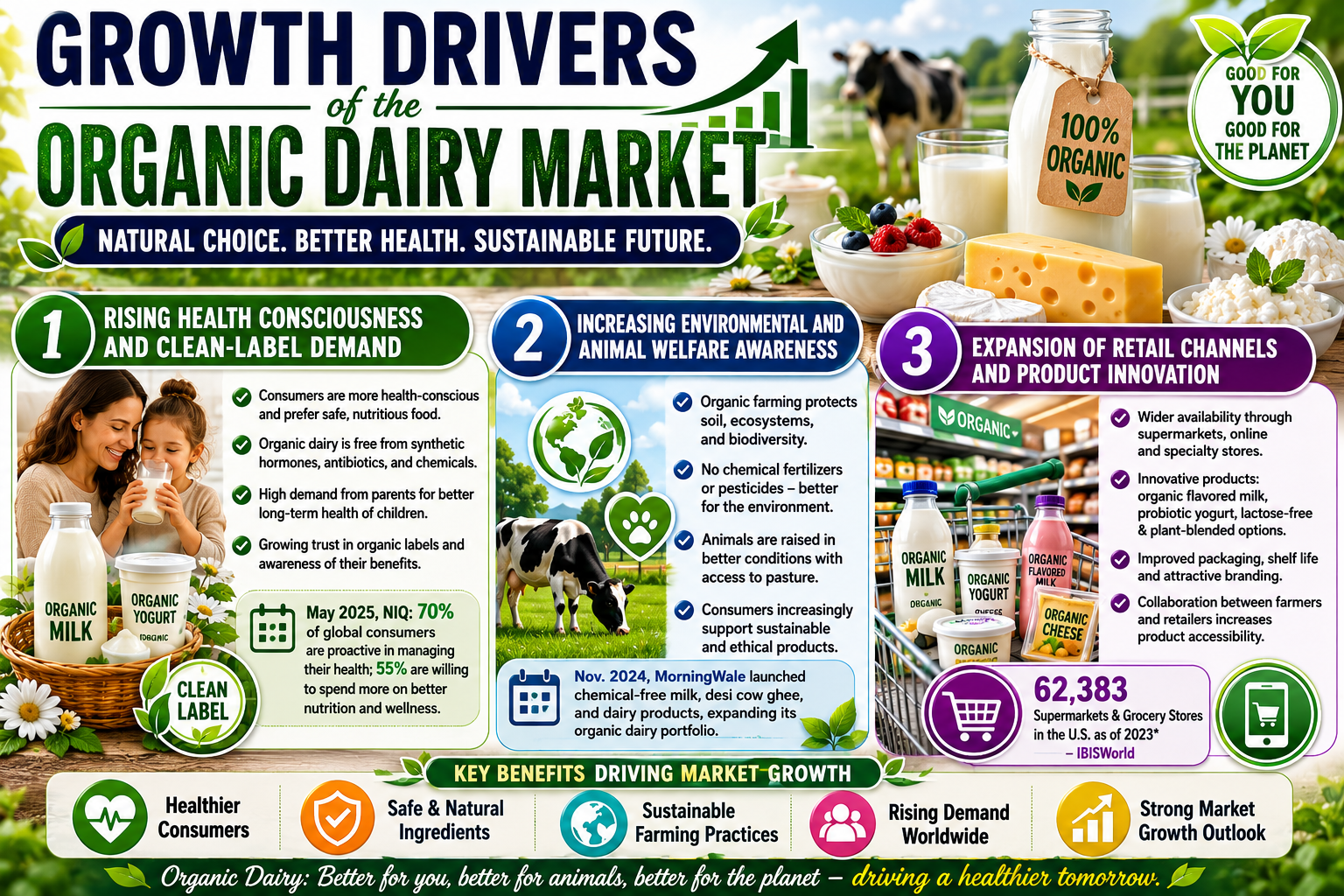
According to data cited in the market report, approximately 70% of global consumers consider themselves proactive about managing their health, while 57% state that aging well is more important today than it was five years ago. Additionally, 55% are willing to spend more than $100 per month on better nutrition, physical health, and self-care.
These trends continue creating favorable conditions for organic dairy products worldwide.
Clean-Label Products Are Reshaping Food Choices
The clean-label movement has become one of the most influential trends within the food industry.
Consumers increasingly seek products with simple ingredient lists, transparent sourcing, and minimal processing. Organic dairy products align naturally with these preferences.
Shoppers are increasingly skeptical of artificial additives and complicated ingredient labels. They want products they can easily understand and trust.
Organic certification provides reassurance that products meet established standards regarding farming practices, animal care, and ingredient sourcing.
This growing demand for transparency is encouraging food manufacturers to expand organic product portfolios and invest in cleaner production methods.
As consumer expectations continue evolving, clean-label positioning is expected to remain a powerful driver of organic dairy market growth.
Sustainability Is Influencing Purchasing Decisions
Environmental awareness is becoming an increasingly important factor in food purchasing decisions.
Consumers are paying greater attention to the environmental impact of agricultural production, resource consumption, and food supply chains.
Organic dairy farming appeals to environmentally conscious consumers because it emphasizes sustainable land management, biodiversity preservation, reduced chemical usage, and soil health.
Unlike conventional farming systems that often rely heavily on synthetic fertilizers and pesticides, organic farming prioritizes natural ecological processes.
As concerns regarding climate change, pollution, and environmental degradation continue growing, many consumers view organic dairy products as a more responsible choice.
Animal welfare considerations also play an important role. Organic dairy farming generally requires better living conditions, access to pasture grazing, and more natural animal management practices.
This combination of environmental and ethical benefits continues strengthening consumer demand.
A notable example occurred in November 2024 when MorningWale expanded its organic dairy portfolio by launching chemical-free milk, desi cow ghee, and additional dairy products aimed at environmentally and health-conscious consumers.
Product Innovation Is Expanding Market Opportunities
Product innovation has become a major catalyst for growth within the organic dairy sector.
Manufacturers are introducing a wide variety of new products designed to meet changing consumer preferences.
Organic flavored milk, probiotic yogurts, lactose-free dairy products, high-protein formulations, functional beverages, and plant-dairy blended products are becoming increasingly common.
These innovations help attract new consumer segments while increasing consumption among existing customers.
Packaging improvements, shelf-life enhancements, and premium branding strategies are also supporting growth.
At the same time, collaborations between dairy producers, retailers, and foodservice operators are improving product availability and market visibility.
The expansion of product offerings ensures that organic dairy remains relevant across multiple demographic groups and consumption occasions.
Retail Expansion Is Making Organic Dairy More Accessible
Improved distribution channels are playing a critical role in market development.
Organic dairy products are no longer confined to specialty health food stores. Today, consumers can find organic options in supermarkets, hypermarkets, convenience stores, and online retail platforms.
The growth of organized retail infrastructure has significantly increased product accessibility.
According to the report, the United States alone had approximately 62,383 supermarkets and grocery stores in 2023, providing substantial opportunities for organic product distribution.
E-commerce has further accelerated market growth by allowing consumers to access organic products conveniently from home.
Digital platforms also help educate consumers about product benefits, certifications, and sourcing practices.
As retail networks continue expanding globally, organic dairy products are becoming increasingly accessible to mainstream consumers.
Organic Yogurt Leads Functional Nutrition Trends
Among organic dairy categories, yogurt represents one of the fastest-growing segments.
Consumers increasingly seek foods that provide both nutrition and functional health benefits.
Organic yogurt aligns perfectly with this trend due to its probiotic content, digestive health benefits, and perceived naturalness.
The popularity of high-protein diets, wellness lifestyles, and gut health awareness has contributed significantly to demand.
Urban consumers especially appreciate organic yogurt because it offers a convenient, nutritious option that fits into busy lifestyles.
As awareness of digestive health continues growing, organic yogurt is expected to remain one of the most dynamic segments within the market.
Organic Cheese Is Becoming a Premium Choice
Organic cheese is another segment experiencing steady expansion.
Consumers increasingly associate organic cheese with superior taste, quality, and authenticity.
The growing popularity of home cooking, international cuisines, and gourmet dining experiences has supported demand for premium cheese products.
Varieties such as cheddar, mozzarella, gouda, and specialty cheeses are attracting consumers willing to pay higher prices for ethically sourced and naturally produced products.
Foodservice operators are also incorporating organic cheese into menus to meet customer demand for premium ingredients.
As culinary trends continue evolving, organic cheese is expected to maintain strong momentum.
Organic Cream Benefits From Premium Food Trends
Organic cream has gained popularity among consumers seeking high-quality ingredients for cooking, baking, and food preparation.
The rise of home baking, specialty desserts, artisan coffee beverages, and premium culinary experiences has contributed significantly to demand.
Restaurants, cafes, bakeries, and food manufacturers increasingly incorporate organic cream into recipes to enhance quality and appeal.
Consumers willing to spend more on premium ingredients continue supporting growth within this segment.
The trend toward indulgent yet natural food experiences further strengthens market opportunities.
Sustainable Packaging Is Becoming a Competitive Advantage
Packaging innovation is becoming increasingly important within the organic dairy market.
Consumers not only evaluate product contents but also consider environmental impacts associated with packaging materials.
Organic dairy pouches are gaining popularity because they offer portability, convenience, and reduced material usage.
At the same time, cartons and boxes remain important due to their ability to extend shelf life while utilizing renewable materials such as paperboard.
Advances in recyclable and aseptic packaging technologies are helping manufacturers improve sustainability performance without compromising product safety.
As environmental concerns continue influencing purchasing behavior, packaging innovation will remain a critical competitive factor.
Challenges Continue to Affect Market Growth
Despite strong demand, the organic dairy industry faces several challenges.
One of the most significant obstacles is the high cost of production.
Organic farming requires specialized feed, certification processes, animal welfare practices, and compliance with strict production standards. These requirements increase production expenses and ultimately result in premium product pricing.
For many consumers, particularly in developing markets, higher prices remain a barrier to adoption.
Supply chain limitations also create challenges. Organic dairy production remains smaller in scale than conventional dairy farming, leading to occasional shortages and distribution complexities. Organic feed availability, longer production cycles, and infrastructure limitations can further constrain supply.
Addressing these challenges will be essential for expanding accessibility and sustaining long-term growth.
Regional Markets Driving Expansion
The United States remains one of the world's most developed organic dairy markets.
Strong consumer awareness, rigorous certification standards, widespread retail availability, and high disposable incomes continue supporting growth. In October 2024, the USDA launched the Organic Dairy Product Promotion program, investing $15 million to improve access to organic dairy products within educational institutions and youth programs.
The United Kingdom is experiencing steady growth driven by sustainability concerns, animal welfare awareness, and consumer willingness to pay for premium products.
India represents a rapidly developing market where increasing awareness, urbanization, government support, and expanding online retail channels are creating new opportunities.
Saudi Arabia is witnessing gradual expansion due to rising health awareness, premium food demand, and increasing availability of imported organic dairy products.
These diverse regional dynamics highlight the global potential of the organic dairy industry.
Final Thoughts
The organic dairy market represents far more than a temporary consumer trend. It reflects a fundamental shift in how people think about food, health, sustainability, and ethical consumption.
Consumers increasingly seek products that align with their values while delivering nutritional benefits and quality they can trust. Organic dairy products successfully meet these expectations by combining natural production methods, environmental responsibility, and premium positioning.
With the market projected to grow from US$ 28.79 billion in 2025 to US$ 47.33 billion by 2034, opportunities for producers, retailers, and innovators continue expanding.
As awareness regarding health, sustainability, and food transparency grows worldwide, organic dairy is poised to become an increasingly important part of the global food system. What was once a niche category is rapidly evolving into a mainstream choice for consumers seeking healthier lifestyles and a more sustainable future.
About the Creator
Enjoyed the story? Support the Creator.
Subscribe for free to receive all their stories in your feed.
Comments
There are no comments for this story
Be the first to respond and start the conversation.