
Why Mexico’s Smart Safety Helmets Market Is Growing With Connected Industrial Safety
Mexico’s smart safety helmets market is expanding as high-risk industries adopt connected wearables for real-time monitoring, communication, and better worker protection.

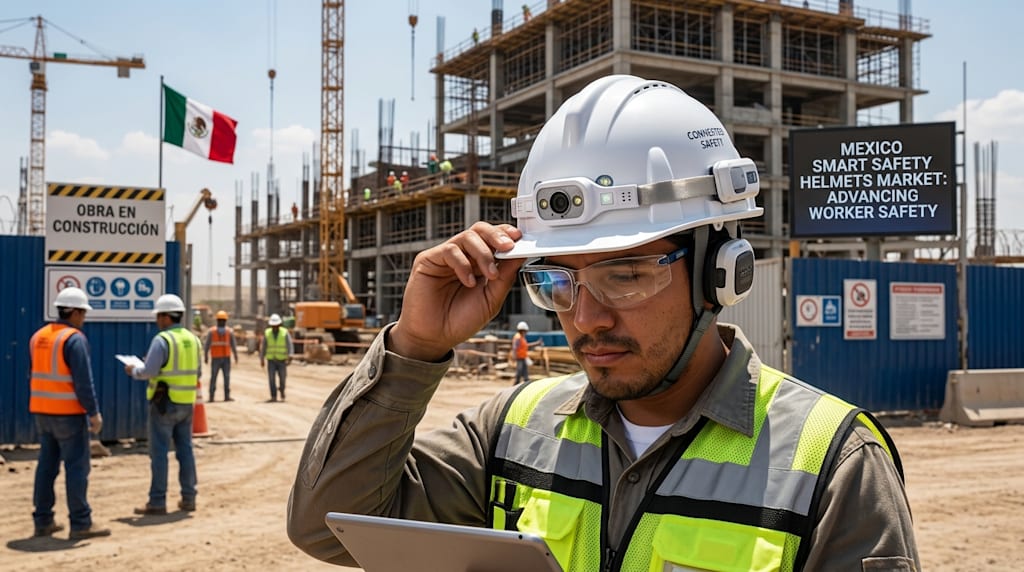
In risk-laden industries‚ helmets are no longer simply passive protection‚ but a conglomeration of many functions in a single device․ They are also increasingly becoming connected devices that can ease remote supervision of working conditions and hazards‚ provide workers with better communication and more timely information in the field‚ and‚ in the case of Mexico‚ help drive the fast-growing market for smart safety helmets in sectors such as construction‚ mining and quarrying‚ manufacturing‚ and oil and gas․ According to IMARC Group‚ the Mexico smart safety helmets market size stood at USD 17․9 million in 2025․ The market size is projected to reach USD 67․2 million by 2034‚ growing at a CAGR of 15․38% during the forecast period 2026-2034․ The growth of the workplace safety wearable market is expected to be driven by growing workplace regulations‚ increasing adoption of wearable technology‚ and the demand from high-risk industries․
One of the clearest reasons for this growth is the need to constantly keep a check on the health and safety of workers․ According to IMARC‚ the demand for smart helmets is increasing because they can monitor health parameters such as heart rate‚ body temperature and fatigue levels‚ and also measure gas concentrations‚ humidity‚ temperature‚ and noise․ That is important because it turns an ordinary helmet into a tool for early risk detection‚ helping supervisors respond before a dangerous situation becomes a serious incident․
The increasing penetration of augmented reality (AR) and heads-up displays (HUDs) is another major factor driving the market․ According to IMARC‚ for instance‚ the adoption of AR-integrated helmets is increasing as these help workers view data overlays in real-time without having to leave their task‚ thereby increasing efficiency and productivity․ For the construction‚ power generation‚ and manufacturing industries‚ such helmets can allow remote troubleshooting‚ expertise on site‚ or training through a type of virtual reality that can improve productivity․
Construction and mining are also identified by IMARC as major industrial users because both industries face hazards such as falling objects‚ gas leaks‚ or other events that cause structural collapse․ In mining‚ smart helmets can track the location of workers in the mines‚ for example‚ monitor air quality‚ and for construction teams‚ communication‚ compliance and safety training․ These will be opportunities only after proving the practical value of the connected safety equipment․
Communication is also an important part of the segment‚ with the increasing popularity of integrated communication systems and noise-canceling features contributing to its expansion‚ according to IMARC․ Communications may be especially important in noisy or dangerous environments‚ so smart helmets are being developed to be more than safety equipment by integrating communications functions․ In this way‚ smart helmets are being used as communication equipment in response to a variety of needs․ This stems from IMARC's centralized communication and connectivity‚ focusing on real-time collaboration and efficiency․
From a market structure perspective‚ the IMARC report segments the market by technology into IoT-enabled smart helmets‚ augmented and virtual reality helmets‚ artificial intelligence helmets‚ sensor-enabled helmets‚ GPS-enabled helmets‚ communication helmets‚ Bluetooth helmets‚ Wi-Fi and cloud connected helmets‚ and RFID and NFC helmets․ It segments the market by material (polycarbonate‚ fiberglass and composite‚ ABS plastic‚ and carbon fiber) and by safety features (real-time health monitoring‚ fall and impact detection‚ noise cancellation and communication enhancement‚ fire and hazard detection‚ environmental monitoring‚ and smart lighting and alerts)․
The report segments the Mexican market by end use industry and region․ The end uses include construction and infrastructure‚ manufacturing and heavy industry‚ mining‚ oil and gas‚ automotive and transportation‚ defense and law enforcement‚ healthcare and emergency services‚ and sports and outdoor activities․ The report segments the market by region in Northern Mexico‚ Central Mexico‚ Southern Mexico‚ and other regions․ This broad segmentation shows that the opportunity is not limited to one specific sector and that smart helmet adoption is regarded applicable wherever safety‚ mobility and being aware of one's surroundings is a concern․ This last point can be inferred from the segment structure shown on the IMARC page․
What is interesting about the Mexico smart safety helmets is that they show a shift in attitudes toward workplace safety: Companies are no longer just interested in using protective equipment that deploys only after a workplace accident; they are interested in equipment that can sense‚ warn‚ connect‚ and support the decision-making process at the moment of the job․ Additionally‚ with the push towards industrial digitization and the rising safety standards for industrial accident prevention in Mexico‚ smart helmets appear poised to be an integral part of workplace risk management․ This conclusion is drawn from the driver and market trend observations made by IMARC․
About the Creator
michael matthew
I’m a market researcher passionate about understanding people, markets, and motivations. My work blends data analysis, consumer psychology, and strategic insight to help brands and businesses make informed, human-centered decisions.
Enjoyed the story? Support the Creator.
Subscribe for free to receive all their stories in your feed.
Comments
There are no comments for this story
Be the first to respond and start the conversation.