
Why Mexico’s Smart Industrial Motors Market Is Growing With Connected Manufacturing
Mexico’s smart industrial motors market is expanding as factories invest in automation, energy efficiency, and more intelligent motion-control systems.

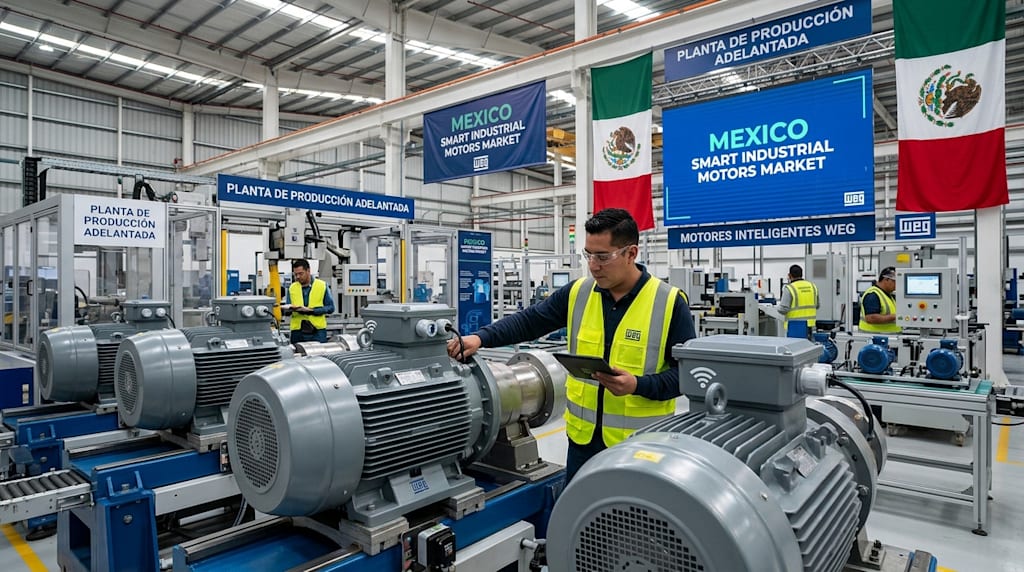
Industrial motors have historically been a piece of hardware in the production process․ In smarter factories‚ motors are at the heart of an advanced digital ecosystem․ They measure performance‚ adjust output on-the-fly‚ save on energy consumption and anticipate breakdowns before they happen‚ avoiding costly equipment failures․ This kind of demand has been growing in Mexico as manufacturers invest in new technologies and use automation to fashion an industrial strategy․ According to IMARC Group‚ the Mexico smart industrial motors market was valued at USD 511․44 million in 2024 and is expected to grow at a CAGR of 10․30% to reach USD 1‚363․17 million by 2033․ The growth is attributed to increasing industrial automation in Mexico‚ a focus on energy efficiency‚ and a growing automotive manufacturing sector in the country․
One of the most visible reasons is the automation trends in the Mexican economy․ According to IMARC‚ the manufacturing and processing industries in Mexico are gradually transitioning to programmable data-driven production in the automotive‚ electronics and consumer goods verticals․ Smart industrial motors with position control‚ real-time condition monitoring‚ and integration into industrial control systems seem a natural fit to some manufacturers․ Furthermore‚ as manufacturing processes increasingly focus on flexibility and real-time operation‚ smart motor systems may gain traction․
That trend is important because motors are no longer selected solely on their power ratings‚ but because of how well they can communicate‚ adapt and remain operational․ A smart motor can help a factory identify problems before they arise‚ provide operational efficiencies and reduce downtime․ In that sense‚ the potential market is growing not just with industrial activity‚ but also with the growing importance of operational visibility․ This is based to some extent on IMARC's trends of automation‚ remote monitoring‚ and integration into industrial systems․
Energy efficiency is also a major driver․ The authors of an IMARC report observed that high energy costs and sustainability regulations are encouraging organizations to invest in motor systems that can match output continuously with load rather than strictly use fixed speeds․ Also for this reason‚ the report mentions the importance of reducing electricity consumption and the need for built-in monitoring and diagnostics‚ for example‚ to detect inefficiencies at an early stage․ The National Programme of Sustainable Energy Use in Mexico intended to achieve a 15% reduction in energy use by 2024․
This is particularly important for industrial users of power‚ such as those in the Bajio and northern Mexico․ Energy intensive industries are being pressured to have tighter energy management and lower environmental impact․ A smarter electric motor adds more value than mechanical motion‚ supporting energy efficiency in the life of equipment in a facility․ That gives the category a calculated role‚ as customary industrial components do not tend to have data feedback‚ based on energy-efficiency trends described by IMARC․
Another major driver of demand is automotive manufacturing․ IMARC has identified automotive manufacturing as one of the most important drivers․ In manufacturing states like Guanajuato‚ Puebla and Coahuila‚ automation‚ process control and continuous production cycles require a high ratio of power to capital․ Because of the changes in production‚ such as electric vehicle production‚ the report claims that smart motors have become more important for robotics‚ dynamic calibration‚ and predictive maintenance․
That matters because it shows the market is tied not only to industrial modernization in general‚ but to one of Mexico's strongest export-oriented manufacturing sectors․ Among the first industries to adopt modernization‚ when automotive plants expand or upgrade‚ they tend to raise expectations for speed‚ reliability‚ and control․ This would also benefit smart motors‚ as they are well-suited for that type of responsive and monitored control that this configuration is looking for (as discussed in IMARC in the context of automotive growth and plant changes for EVs)․
On the basis of motor type‚ the smart motor market is classified into AC smart motors‚ DC smart motors‚ servo motors‚ stepper motors‚ and synchronous and asynchronous motors․ On the basis of connectivity and intelligence‚ the smart motor market is classified into IoT smart motors‚ AI and ML smart motors‚ wireless and cloud smart motors‚ and edge computing and embedded systems․ The market can be segmented based on power rating: low power (0․1 kW to 10 kW)‚ medium power (10 kW to 100 kW)‚ and high power (above 100 kW)․ The market is also segmented based on end-use industry․ The major end-use industries of the industrial valves and actuators market include manufacturing and heavy industries‚ automotive and aerospace‚ energy and utilities‚ oil and gas‚ food and beverage‚ pharmaceutical and healthcare‚ and construction and infrastructure․ Region-wise‚ the market includes Northern Mexico‚ Central Mexico‚ Southern Mexico‚ and others․
The segmentation also shows that the opportunity has become far broader than just a single smart motor or industrial niche and now consists of a more general shift to connected motion throughout many industrial applications․ A market with such a structure is typically expanding when digitalization beyond early adopters becomes mainstream industrial investment‚ as suggested by the segment mix of the IMARC report․
More recently‚ a report from IMARC stated that in March 2025‚ WEG acquired Regal Rexnord's industrial electric motors and generators business‚ including Marathon‚ Cemp and Rotor brands․ This acquisition allowed the company to strengthen its industrial presence in Mexico and provide expertise in smart motor solutions․ The report also stated that Intretech opened a USD 60 million factory in Monterrey in October 2024 to cater to increased demand for smart manufacturing solutions․ This shows that suppliers view Mexico as a planned market for clever industrial equipment․
The Mexico smart industrial motors market is a microcosm of what is happening in terms of the industrial revolution․ Companies are looking to run machines‚ smarter‚ more efficiently‚ and with less downtime․ Smart motors‚ which link the movement of machines to data and monitoring‚ are at the heart of that transformation․ With increased investment in automation‚ energy efficiency and advanced manufacturing‚ smart motors will be well-positioned to support many of Mexico's industrial companies in their future operations․ The last point is an interpretation of the market drivers‚ trends‚ and recent developments described by IMARC․
For readers who want a closer look at forecast data, segment trends, and industrial drivers, the full IMARC Group study offers more detailed insight.
About the Creator
michael matthew
I’m a market researcher passionate about understanding people, markets, and motivations. My work blends data analysis, consumer psychology, and strategic insight to help brands and businesses make informed, human-centered decisions.
Enjoyed the story? Support the Creator.
Subscribe for free to receive all their stories in your feed.
Comments
There are no comments for this story
Be the first to respond and start the conversation.