
Why Is North America’s Frozen and Canned Seafood Market Continuing to Thrive Despite Supply Chain Challenges?
Growing Demand for Convenient, Protein-Rich Foods Is Driving Steady Expansion Across the Region

As consumer lifestyles become increasingly busy and health-conscious, frozen and canned seafood products are gaining popularity across North America. Once considered simple pantry staples, these products have evolved into essential components of modern meal planning, offering convenience, affordability, nutritional value, and year-round availability.
Consumers today seek food solutions that fit hectic schedules without compromising quality or health. Frozen fish fillets, pre-cooked shrimp, canned tuna, salmon, sardines, and other seafood products meet these expectations by providing high-quality protein, omega-3 fatty acids, vitamins, and minerals in convenient formats.
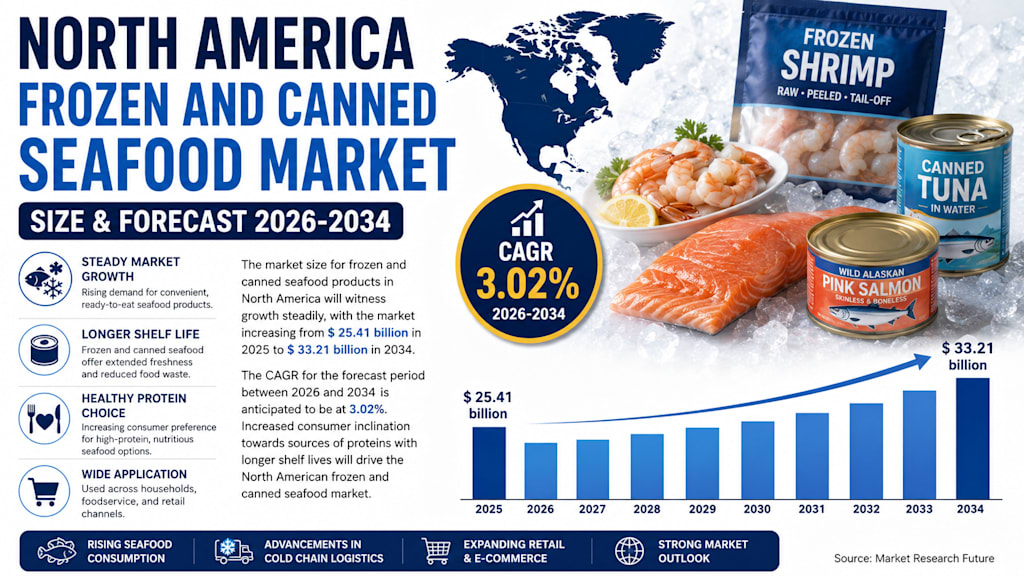
According to Renub Research, the North America Frozen and Canned Seafood Market is projected to grow from US$ 25.41 billion in 2025 to US$ 33.21 billion by 2034, expanding at a CAGR of 3.02% between 2026 and 2034. The market's growth is being fueled by increasing consumer preference for protein-rich foods with longer shelf lives, alongside continued innovation in packaging, distribution, and product offerings.
Seafood's Growing Role in Modern Diets
Seafood has long been recognized as one of the healthiest protein sources available. Rich in essential nutrients such as omega-3 fatty acids, high-quality protein, vitamins, and minerals, seafood plays an important role in supporting cardiovascular health, brain function, and overall wellness.
As awareness of healthy eating continues to rise, consumers are incorporating more seafood into their diets. Popular dietary approaches including Mediterranean, keto, and paleo eating plans actively encourage seafood consumption, further boosting demand across North America.
Frozen and canned seafood products make it easier for consumers to enjoy these nutritional benefits without worrying about freshness, spoilage, or frequent shopping trips.
The combination of convenience and health benefits has transformed seafood into a preferred protein source for many households.
Convenience Is Driving Consumer Demand
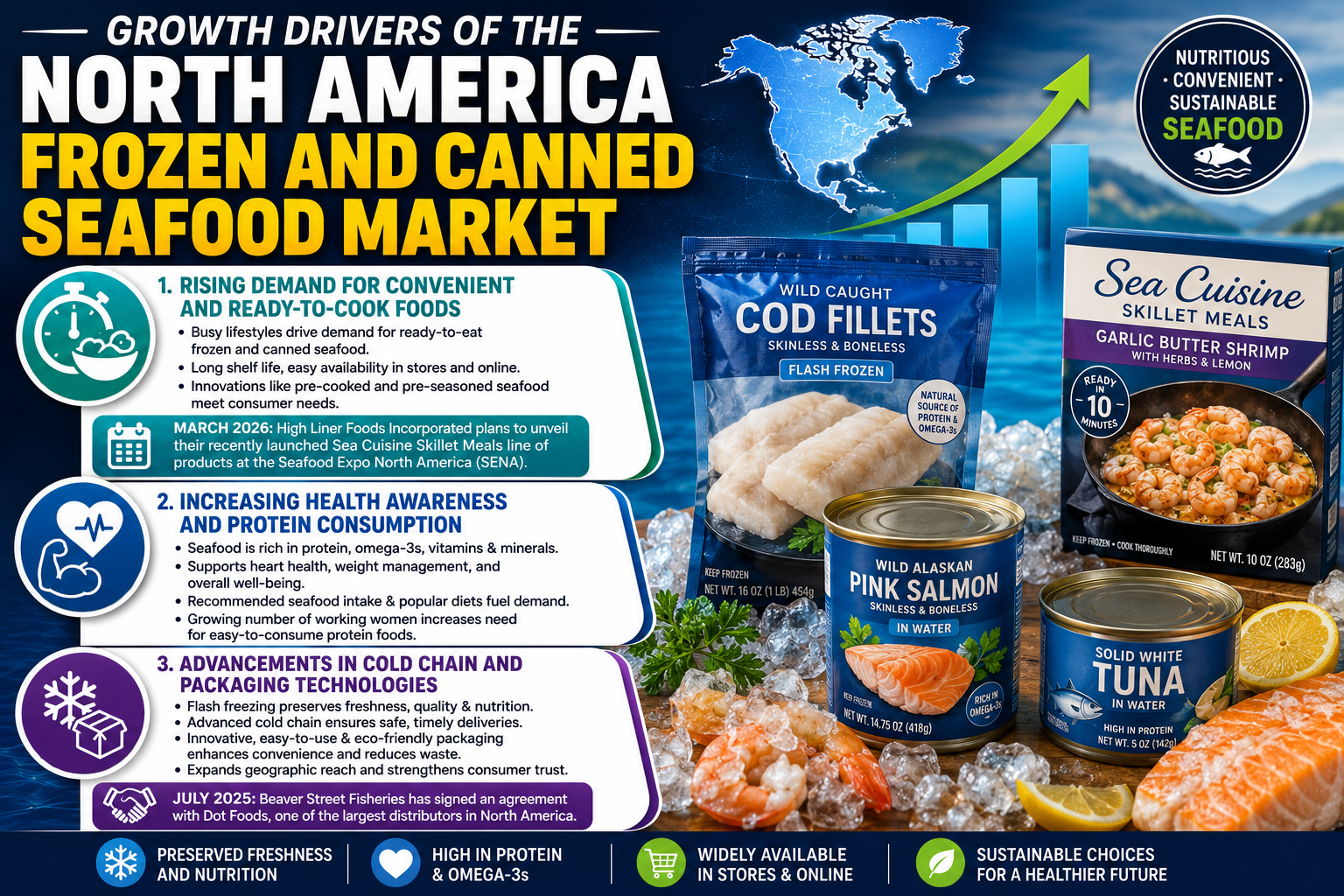
One of the strongest growth drivers in the market is the increasing demand for convenient food solutions.
Modern consumers often have limited time for meal preparation due to demanding work schedules, family responsibilities, and active lifestyles. As a result, they increasingly seek products that simplify cooking while maintaining nutritional quality.
Frozen seafood products offer significant advantages because they require minimal preparation and are available in convenient formats such as cleaned fillets, peeled shrimp, seafood blends, and pre-cooked meal components.
Similarly, canned seafood products provide ready-to-use protein options suitable for sandwiches, salads, pasta dishes, wraps, and quick meals.
The growing preference for convenient, ready-to-cook foods continues to create substantial opportunities for seafood manufacturers and retailers.
Health Awareness Continues to Boost Seafood Consumption
Health-conscious consumers are becoming a major force behind market expansion.
Seafood is widely recognized as a nutrient-dense food that supports numerous health goals. Consumers seeking healthier alternatives to processed meats and high-fat protein sources increasingly view seafood as a valuable addition to their diets.
Dietary recommendations also encourage seafood consumption. According to industry data, the Dietary Guidelines for Americans recommend consuming approximately eight ounces of seafood weekly. However, a significant portion of consumers still fall short of this recommendation, creating opportunities for future market growth.
Growing concerns regarding obesity, heart disease, and chronic health conditions are further encouraging consumers to adopt healthier eating habits that include seafood products.
As wellness remains a top priority, seafood consumption is expected to continue rising throughout the forecast period.
Innovation Is Expanding Product Appeal
Product innovation is playing a critical role in attracting new consumers and supporting market growth.
Manufacturers are developing increasingly diverse product offerings designed to meet changing consumer preferences. Today's frozen and canned seafood products extend far beyond traditional options.
Companies are introducing products featuring pre-seasoned fillets, marinated seafood, ready-to-cook meal kits, gourmet flavors, premium seafood blends, and portion-controlled packaging.
These innovations provide consumers with convenient meal solutions while reducing preparation time and improving cooking consistency.
In March 2026, High Liner Foods Incorporated announced plans to showcase its Sea Cuisine Skillet Meals product line at Seafood Expo North America, reflecting the industry's continued focus on convenience-oriented innovation.
Advances in Cold Chain Technology Are Supporting Growth
Technological advancements have significantly improved the quality and accessibility of frozen seafood products.
Modern flash-freezing technologies help preserve seafood freshness, texture, flavor, and nutritional value more effectively than ever before. These innovations enable manufacturers to deliver products that closely resemble fresh seafood while offering much longer shelf lives.
Cold chain logistics have also become increasingly sophisticated. Improved transportation systems, temperature monitoring, and storage technologies ensure products maintain quality throughout the supply chain.
Packaging innovations further enhance consumer convenience. Features such as resealable packaging, easy-open containers, portion-controlled packs, and environmentally friendly materials improve product usability and appeal.
Together, these technological advancements have strengthened consumer confidence in frozen and canned seafood products.
E-Commerce Is Creating New Opportunities
Online shopping has become an increasingly important distribution channel for frozen and canned seafood products.
Consumers appreciate the convenience of browsing extensive product selections, comparing brands, reading reviews, and receiving products directly at home.
Advances in insulated packaging and refrigerated delivery systems have made online seafood purchases more reliable and accessible. Subscription programs and direct-to-consumer models are also gaining popularity among consumers seeking regular seafood deliveries.
The growth of digital commerce accelerated during the global pandemic and continues to influence purchasing behavior today.
As e-commerce adoption expands, online channels are expected to play a larger role in future market growth.
Sustainability Remains a Key Industry Challenge
Despite positive growth prospects, sustainability concerns continue to present challenges for the seafood industry.
Overfishing, habitat degradation, and unsustainable harvesting practices have raised environmental concerns among consumers, governments, and advocacy organizations.
As awareness of these issues grows, consumers increasingly seek seafood products that are responsibly sourced and certified by recognized sustainability programs.
However, obtaining sustainability certifications can be costly and time-consuming for producers. Sustainable fishing quotas and environmental regulations may also limit supply availability for certain species.
Companies that successfully demonstrate responsible sourcing practices are likely to gain stronger consumer trust and long-term competitive advantages.
Supply Chain Risks and Price Volatility
The seafood industry is highly dependent on global supply chains, making it vulnerable to disruptions and price fluctuations.
Factors such as weather conditions, fuel costs, labor shortages, geopolitical tensions, and climate change can significantly impact seafood production and distribution.
Ocean conditions directly influence fish populations and harvesting volumes, creating uncertainty in supply availability. Import and export regulations may also affect product pricing and accessibility.
Maintaining reliable cold chain infrastructure requires substantial investment, adding further operational complexity.
Managing these challenges effectively will remain essential for maintaining stable growth within the industry.
Frozen Fish Continues to Dominate the Market
Frozen and canned fish products represent one of the largest segments within the North American seafood market.
Popular varieties include tuna, salmon, cod, and sardines, all of which are highly valued for their nutritional benefits. Consumers appreciate frozen fish because it maintains freshness while offering flexibility in meal preparation.
Manufacturers continue introducing flavored, marinated, and ready-to-cook fish products designed to appeal to younger consumers and busy households.
As awareness of seafood's health benefits continues to increase, demand for frozen and canned fish products is expected to remain strong.
Shrimp Products Experience Strong Demand
Shrimp remains one of the most popular seafood categories across North America.
Its versatility allows it to be used in a wide variety of cuisines, including American, Asian, Mediterranean, and Latin American dishes. Frozen shrimp products are particularly popular because they retain flavor and texture while offering convenient preparation options.
Consumers increasingly view shrimp as a lean, protein-rich food that supports healthy lifestyles. Sustainable aquaculture practices are also helping secure future supply growth.
As a result, frozen and canned shrimp products continue to represent an important growth segment within the broader seafood market.
The United States Leads Regional Consumption
The United States remains the largest market for frozen and canned seafood products in North America.
Consumer demand is supported by strong retail infrastructure, extensive product availability, and growing interest in protein-rich diets. Busy lifestyles and increasing demand for convenient meal solutions further contribute to market expansion.
In December 2024, Pacific Seafood acquired Trident Seafoods' operations in Kodiak, Alaska, including several major processing facilities. This acquisition strengthens Pacific Seafood's ability to supply a broader range of wild-caught Alaskan seafood products to customers throughout North America.
Canada and Mexico Offer Significant Growth Potential
Canada benefits from abundant marine resources and a strong fishing industry. Products such as salmon, cod, shrimp, and lobster contribute significantly to market growth. Consumers increasingly prioritize sustainability, quality, and nutritional value when purchasing seafood products.
Mexico's market continues to expand due to strong seafood traditions, growing urbanization, and rising consumer awareness regarding healthy eating. Tuna, sardines, and shrimp remain particularly popular among Mexican consumers.
Both countries present attractive opportunities for manufacturers seeking regional expansion.
Final Thoughts
The North America frozen and canned seafood market continues to demonstrate resilience and steady growth despite facing sustainability concerns and supply chain complexities.
Driven by rising health awareness, increasing demand for convenient meal solutions, technological advancements, and expanding online retail channels, the market is well-positioned for future development.
With market value projected to increase from US$ 25.41 billion in 2025 to US$ 33.21 billion by 2034, companies that prioritize innovation, sustainability, product quality, and consumer convenience will be best positioned to capitalize on evolving market opportunities.
As consumers continue seeking nutritious, accessible, and time-saving food options, frozen and canned seafood products are expected to remain a staple in North American households for years to come.
About the Creator
Enjoyed the story? Support the Creator.
Subscribe for free to receive all their stories in your feed.
Comments
There are no comments for this story
Be the first to respond and start the conversation.