
Why India’s Frozen Food Market Is Experiencing a Remarkable Transformation
Changing lifestyles, growing demand for convenience, expanding cold-chain infrastructure, and the rise of e-commerce are reshaping the future of frozen food consumption across India.

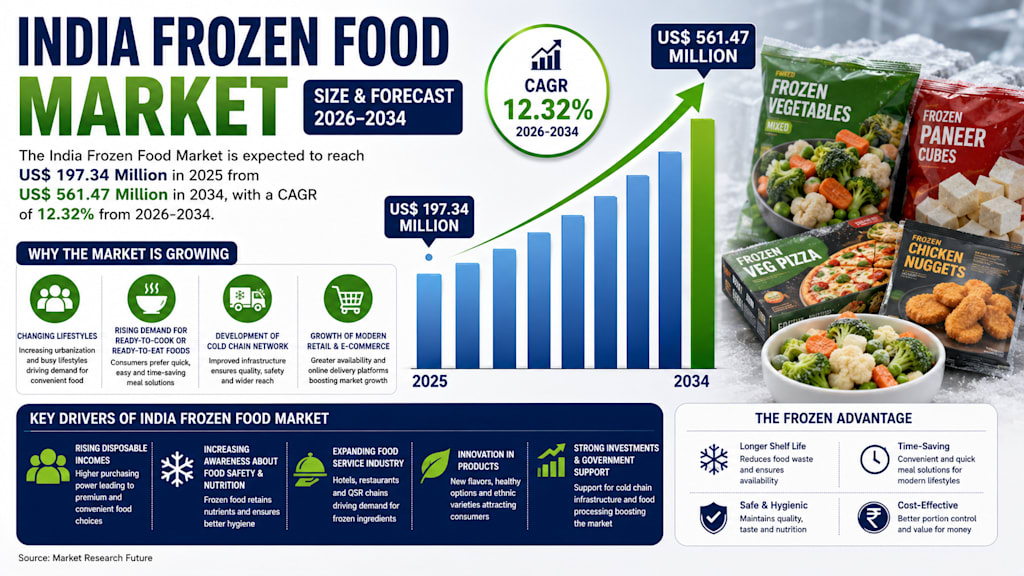
India's food industry is undergoing a significant transformation. For decades, Indian consumers have traditionally preferred freshly prepared meals and locally sourced ingredients, often viewing frozen foods as products reserved for special occasions or limited urban markets. However, changing lifestyles, urbanization, rising disposable incomes, and growing awareness about food safety are rapidly altering consumer perceptions.
Today, frozen foods are no longer confined to supermarket freezer sections in major metropolitan cities. They are increasingly becoming a regular part of everyday consumption for millions of Indian households. From frozen vegetables and ready-to-cook parathas to chicken nuggets, French fries, frozen desserts, and complete ready meals, consumers are embracing convenience without sacrificing taste or quality.
This shift is creating enormous opportunities across India's food processing sector. According to Renub Research, the India Frozen Food Market is expected to grow from US$ 197.34 million in 2025 to US$ 561.47 million by 2034, registering a strong compound annual growth rate (CAGR) of 12.32% between 2026 and 2034. The market's growth is being driven by changing consumer lifestyles, increasing demand for ready-to-cook and ready-to-eat products, expanding cold-chain infrastructure, and the rapid growth of modern retail and e-commerce channels.
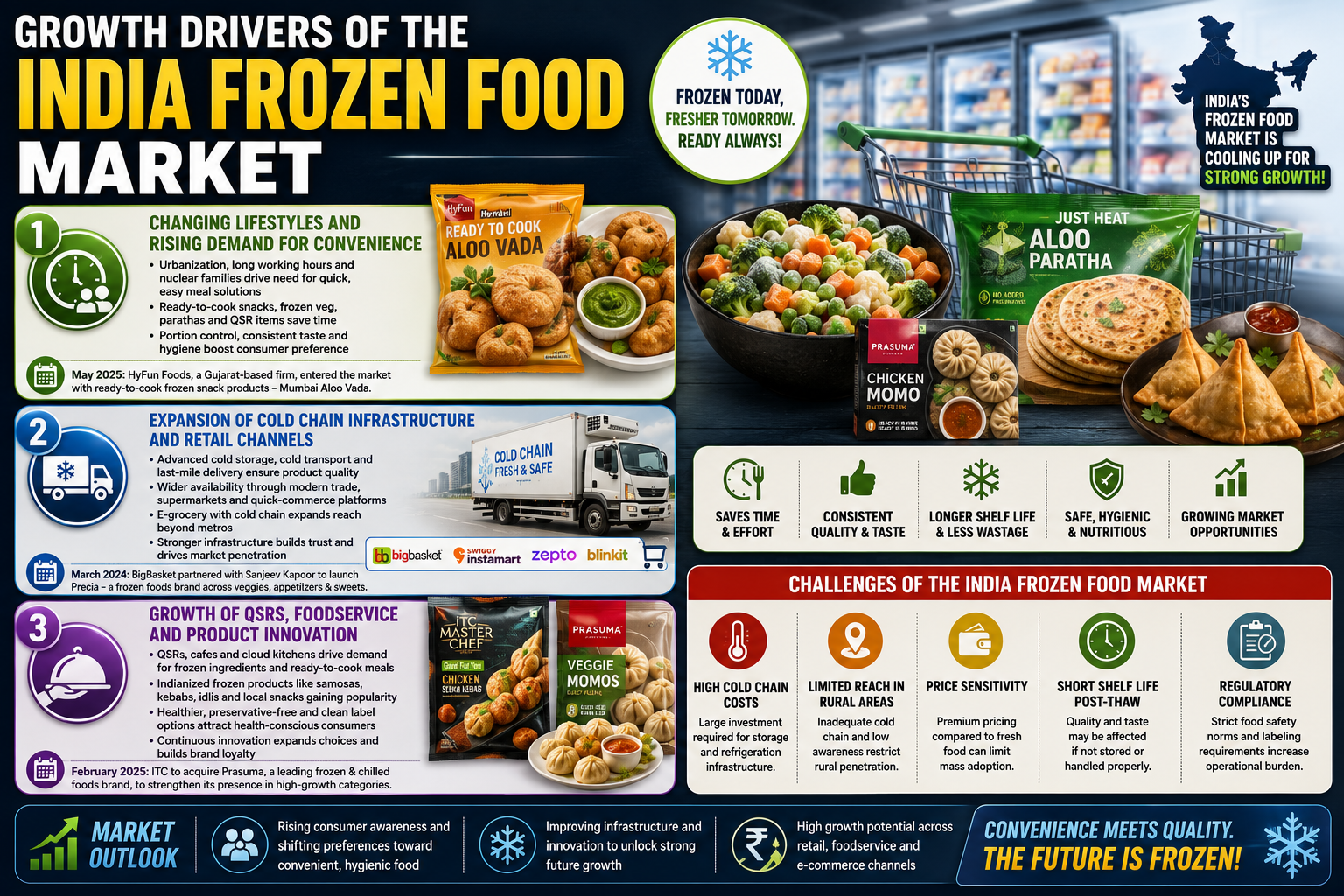
Frozen Food Is Becoming Part of Modern Indian Living
The modern Indian consumer lives very differently from previous generations.
Urbanization has accelerated significantly, creating busier lifestyles and reducing the amount of time available for meal preparation. Long working hours, traffic congestion, dual-income households, and smaller family sizes are forcing consumers to seek practical solutions that simplify daily routines.
Frozen food fits naturally into this environment.
Unlike traditional meal preparation methods that often require significant time and effort, frozen foods provide convenience while maintaining taste, texture, and nutritional value. Consumers can prepare meals quickly without compromising quality, making frozen products particularly attractive for working professionals, students, and young families.
As more Indians adopt fast-paced urban lifestyles, frozen food is increasingly being viewed as a practical necessity rather than a luxury purchase.
The Demand for Convenience Is Driving Growth
Convenience remains one of the most important factors behind the rapid expansion of India's frozen food market.
Modern consumers want food solutions that save time while delivering consistent quality. Frozen products provide exactly that.
Whether it is frozen vegetables for home cooking, ready-to-cook snacks for evening meals, or complete ready-to-eat dishes for busy weekdays, consumers appreciate the ability to prepare food quickly and efficiently.
The growing popularity of products such as frozen parathas, samosas, kebabs, fries, momos, nuggets, and regional specialties demonstrates how manufacturers are adapting to local tastes while addressing evolving consumer needs.
Convenience is no longer a niche preference. It has become a central purchasing factor influencing food choices across urban India.
Urbanization Is Reshaping Food Consumption Patterns
India's urban population continues to expand rapidly.
As people migrate to cities in search of employment and better opportunities, traditional food consumption patterns are changing. Urban consumers often have less time available for grocery shopping and meal preparation, leading to increased demand for packaged and convenient food products.
Frozen food manufacturers have benefited significantly from this trend.
Products that require minimal preparation allow consumers to balance busy schedules while maintaining access to diverse meal options. Additionally, frozen foods help reduce food waste by offering longer shelf lives and portion-controlled packaging.
These advantages are particularly appealing in households where convenience and efficiency have become priorities.
As urbanization continues, frozen food adoption is expected to accelerate further.
Cold Chain Infrastructure Is Unlocking Market Potential
One of the most important developments supporting market growth is the expansion of India's cold-chain infrastructure.
Historically, inadequate refrigerated storage and transportation facilities limited the availability and quality of frozen foods. Products often struggled to reach consumers in optimal condition, particularly outside major cities.
However, significant investments in cold storage facilities, refrigerated logistics, and temperature-controlled transportation networks are transforming the industry.
Improved infrastructure allows manufacturers to distribute products more efficiently while maintaining quality throughout the supply chain.
This development is especially important because it enables frozen food brands to expand beyond metropolitan markets into Tier II and Tier III cities.
As cold-chain capabilities continue improving, frozen food companies gain access to millions of new consumers across India.
E-Commerce and Quick Commerce Are Accelerating Adoption
Digital commerce has become another powerful growth driver.
The rapid expansion of online grocery platforms, quick-commerce services, and food delivery applications has significantly increased consumer access to frozen products.
Consumers can now browse extensive frozen food selections, compare products, and receive deliveries directly to their homes within hours.
This convenience removes many of the barriers that previously limited frozen food purchases.
Major e-commerce platforms have invested heavily in cold storage and temperature-controlled delivery systems, ensuring that frozen products maintain quality during transportation.
The combination of digital convenience and expanding logistics capabilities is helping frozen food brands reach consumers more effectively than ever before.
As online grocery shopping becomes increasingly common, frozen food sales are expected to benefit substantially.
Quick-Service Restaurants Are Fueling Demand
The growth of India's quick-service restaurant industry is creating additional opportunities for frozen food suppliers.
Restaurants, cafes, food delivery operators, and cloud kitchens rely heavily on frozen ingredients because they provide consistency, efficiency, and scalability.
Products such as frozen French fries, chicken nuggets, patties, vegetables, and ready-to-cook components enable foodservice operators to maintain quality standards while managing large volumes of orders.
As international and domestic restaurant chains continue expanding throughout India, demand for frozen ingredients is increasing accordingly.
The growth of food delivery services has further strengthened this relationship.
Restaurants increasingly depend on frozen products to ensure operational efficiency and maintain product consistency across multiple locations.
Innovation Is Expanding Consumer Choice
Innovation has become a defining feature of India's frozen food industry.
Manufacturers are continuously introducing new products designed specifically for Indian consumers.
Traditional frozen categories such as vegetables and French fries remain popular, but companies are increasingly offering regionally inspired products that align with local preferences.
Frozen samosas, idlis, kebabs, biryanis, dhoklas, theplas, and various ready-to-cook Indian snacks have gained popularity among consumers seeking convenience without abandoning familiar flavors.
Health-focused innovations are also becoming more common.
Manufacturers are introducing preservative-free products, minimally processed ingredients, and nutritionally enhanced options to appeal to health-conscious consumers.
This emphasis on innovation is helping companies differentiate themselves in an increasingly competitive market.
Frozen Chicken Is Emerging as a High-Growth Segment
Among non-vegetarian categories, frozen chicken products are experiencing particularly strong demand.
Consumers increasingly prefer frozen chicken due to concerns regarding hygiene, quality control, and convenience.
Frozen chicken nuggets, sausages, marinated products, and ready-to-cook cuts offer consumers standardized quality while reducing preparation time.
The expansion of organized retail channels and specialized meat delivery platforms has further supported growth in this category.
Although fresh meat continues to dominate many markets, frozen chicken is gaining acceptance, particularly among urban consumers who value convenience and food safety.
As protein consumption continues increasing across India, frozen poultry products are expected to remain an important growth segment.
Frozen Ready Meals Are Becoming More Popular
Ready meals represent another rapidly growing category within the frozen food market.
Consumers increasingly seek complete meal solutions that require minimal preparation. Frozen ready meals provide a practical answer for busy professionals, students, and families.
Manufacturers are responding by introducing products tailored to Indian tastes, including paneer dishes, biryanis, curries, rice meals, and regional specialties.
Improvements in packaging technology and product quality have helped overcome earlier concerns regarding taste and freshness.
As consumer trust continues to grow, frozen ready meals are expected to become an increasingly important component of India's convenience food sector.
Challenges Continue to Affect Market Expansion
Despite strong growth prospects, the frozen food market faces several challenges.
One of the most significant issues remains uneven cold-chain infrastructure.
Although major cities benefit from advanced storage and transportation facilities, many smaller cities and rural regions continue facing logistical limitations. Inconsistent refrigeration availability and high distribution costs can impact product quality and profitability.
Another challenge involves consumer perception.
Many Indian households still associate frozen foods with preservatives, lower nutritional value, or reduced freshness. These perceptions can influence purchasing decisions, particularly among older consumers.
Education and awareness campaigns will be important for overcoming these barriers and encouraging broader adoption.
Regional Markets Are Driving Growth
Several Indian states are emerging as important growth centers for frozen food consumption.
Maharashtra remains one of the largest markets due to its high level of urbanization, strong retail infrastructure, and large population of working professionals. Frozen snacks, ready meals, French fries, and poultry products continue experiencing strong demand throughout the state.
Gujarat has developed a strong market for frozen vegetarian products such as dhokla, patra, parathas, and frozen vegetables. Busy lifestyles and a well-developed food processing ecosystem continue supporting growth.
West Bengal is gradually embracing frozen foods as urbanization increases and modern retail channels expand. Frozen fish products, chicken products, snacks, and ready-to-cook meals are becoming increasingly popular among younger consumers.
The Future of Frozen Food in India
The future of India's frozen food market appears exceptionally promising.
Several long-term trends continue supporting growth, including urbanization, rising disposable incomes, digital commerce expansion, improving infrastructure, and evolving consumer preferences.
Manufacturers are expected to invest further in product innovation, regional flavors, healthier formulations, and sustainable packaging solutions.
Meanwhile, improvements in cold-chain infrastructure and distribution networks will continue expanding market reach.
As consumer awareness increases and perceptions continue to evolve, frozen foods are likely to become a mainstream component of Indian food consumption.
Final Thoughts
India's frozen food industry is undergoing a remarkable transformation.
What was once considered a niche category limited to urban supermarkets has evolved into a rapidly growing market driven by convenience, technology, and changing lifestyles. Consumers increasingly value products that save time, offer consistent quality, and fit seamlessly into modern living.
Although challenges related to infrastructure and consumer perceptions remain, the industry's growth trajectory remains highly encouraging.
With the market projected to reach US$561.47 million by 2034, frozen foods are positioned to play a much larger role in India's food ecosystem. As innovation continues and accessibility improves, frozen products will likely become an increasingly familiar presence in households across the country, reflecting broader changes in how Indians shop, cook, and consume food.
About the Creator
Enjoyed the story? Support the Creator.
Subscribe for free to receive all their stories in your feed.
Comments
There are no comments for this story
Be the first to respond and start the conversation.