
Why Healthcare Organizations Are Replacing Legacy Systems With Modern Digital Platforms
Healthcare Organizations Are Replacing Legacy Systems

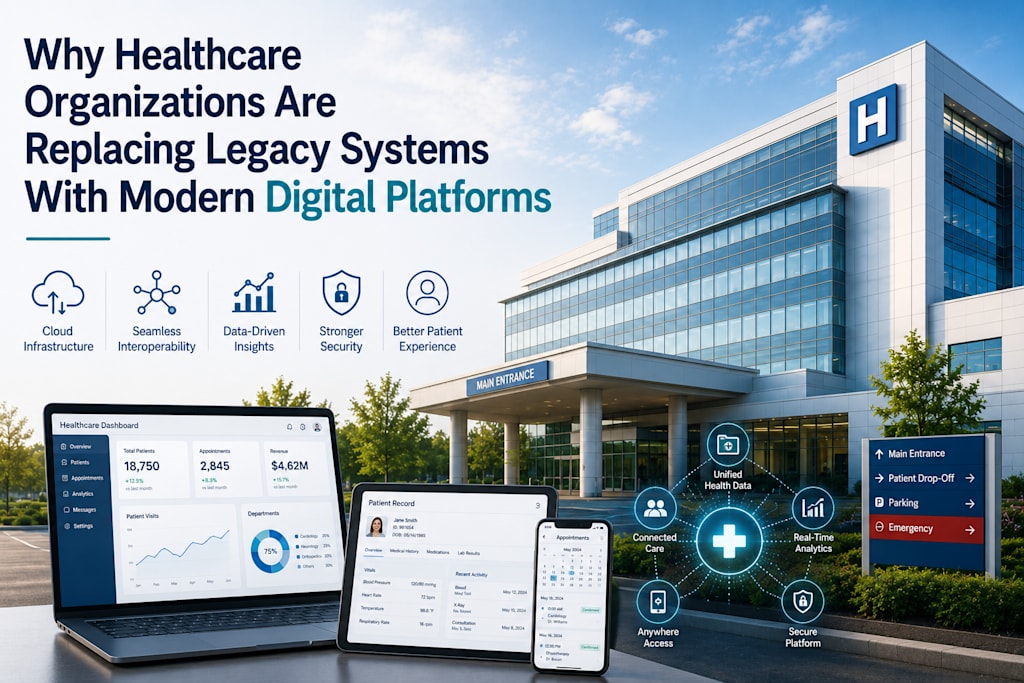
For years, healthcare organizations relied on legacy systems to manage patient records, billing operations, scheduling, and administrative workflows. These systems helped hospitals and healthcare providers operate efficiently for decades, but healthcare today looks very different from the environment they were originally designed for.
Patient expectations have changed. Healthcare services have become increasingly connected. Organizations are expected to manage growing volumes of information while improving efficiency, delivering better experiences, and adapting to new technologies.
What once served as a reliable foundation is now becoming more difficult to maintain and expand. The challenge isn't that these systems have stopped working. It's that modern healthcare increasingly demands capabilities they were never designed to support.
As a result, healthcare organizations around the world are investing in modern digital platforms that offer greater flexibility, stronger connectivity, and better support for evolving healthcare needs.
But what's driving this transition, and why are so many organizations deciding that maintaining legacy systems is no longer enough?
Why Digital Transformation Has Become a Priority for Healthcare Organizations
For years, many healthcare organizations have found ways to work around the limitations of legacy systems.
Teams created manual processes. Departments relied on separate tools. Information was transferred between systems through workarounds that became part of everyday operations.
The challenge is that healthcare has become far more connected than it was when many of these systems were originally implemented.
Growing Demand for Connected Healthcare Experiences
Patients no longer interact with healthcare organizations through a single appointment or phone call. They expect access to online portals, digital communication, mobile applications, and faster access to information throughout their healthcare journey.
At the same time, healthcare professionals need information to move quickly between departments, locations, and systems. As expectations continue evolving, organizations are finding it increasingly difficult to deliver connected experiences using technology that was designed for a very different healthcare environment.
The Shift Toward Data-Driven Decision Making
One of the biggest changes in modern healthcare is the amount of information organizations generate every day.
A hospital can collect data from appointments, diagnostics, billing systems, patient portals, wearable devices, and clinical records-all before a patient even leaves the facility. The challenge is no longer collecting information. It's turning that information into meaningful insights.
Healthcare leaders are increasingly using analytics to identify trends, improve resource planning, and support better decision-making. But those efforts become much harder when critical information remains spread across multiple disconnected systems.
Improving Operational Efficiency Across Healthcare Systems
What's interesting is that digital transformation is no longer being driven by technology teams alone.
Operational efficiency has become a priority across the entire organization. Administrative staff want simpler workflows. Healthcare professionals want faster access to information. Leadership teams want greater visibility into performance and resource utilization.
What's becoming clear is that technology is no longer supporting healthcare operations from the background. It's becoming part of how healthcare is delivered. The goal is no longer simply replacing older systems. It's creating an environment where people, processes, and information can work together more effectively.
How Modern Digital Platforms Are Changing Healthcare Operations
The conversation around healthcare modernization often focuses on technology. In practice, the bigger impact is how these platforms change the way organizations operate, share information, and deliver services.
Cloud-Based Healthcare Infrastructure
One reason healthcare organizations are moving toward cloud-based platforms is flexibility. Traditional infrastructure often requires significant effort to scale, maintain, and update. Modern cloud solutions allow organizations to adapt more easily as operational demands and healthcare services continue evolving.
Unified Healthcare Data Management
Information has become one of the most valuable assets in healthcare. The challenge for many organizations isn't collecting data-it's making that data accessible when it's needed. Modern platforms help bring information together, giving healthcare teams a clearer view of both patient and operational data.
Enhanced Interoperability Across Systems
Healthcare organizations rarely rely on a single application. Patient information, diagnostics, scheduling, and administrative processes often exist across multiple systems. Modern platforms make it easier for those systems to communicate, helping organizations reduce information gaps and improve coordination across healthcare operations.
Modern healthcare platforms are doing more than replacing older systems. They're helping organizations build operations that are better connected, easier to scale, and more prepared for future demands.
The Role of Interoperability in Healthcare Modernization
Healthcare organizations rarely operate through a single platform.
Patient records may exist in one system. Scheduling may happen in another. Billing, diagnostics, and administrative processes may depend on entirely different applications.
Ironically, many healthcare organizations don't struggle because they lack information. They struggle because information exists in too many places.
Why Healthcare Data Must Move More Freely
Modern healthcare depends on having the right information available at the right time.
A physician reviewing a patient's history, an administrator processing documentation, or a specialist coordinating care all rely on timely access to accurate information. When data remains trapped inside disconnected systems, delays and inefficiencies become difficult to avoid.
Benefits of Connected Healthcare Ecosystems
Organizations that improve interoperability often experience benefits beyond simple data sharing:
- Reduced duplicate data entry
- Better collaboration between departments
- Faster access to information
- Improved operational visibility
- More consistent patient experiences
Connecting systems is important, but the real value comes from making information easier for people to use when they need it.
How Interoperability Supports Better Patient Outcomes
At its core, interoperability is about improving the flow of information.
When healthcare professionals have access to complete and up-to-date data, they can coordinate care more effectively and respond more quickly to patient needs. In many ways, interoperability is less about technology and more about removing barriers. The easier information moves, the easier it becomes for healthcare teams to focus on patients instead of systems.
Security and Compliance Considerations During Modernization
One of the less obvious reasons healthcare organizations are modernizing legacy systems is security. Many older platforms were implemented in a very different technology environment, long before today's cybersecurity threats, connected healthcare services, and growing data-sharing requirements became common.
Protecting Sensitive Healthcare Information
Trust is one of the foundations of healthcare, which makes protecting patient information far more than a technical responsibility. As digital healthcare services continue expanding, protecting patient data has become increasingly important.
The challenge is that many legacy systems were not originally designed for the security expectations healthcare organizations face today.
Regulatory and Compliance Requirements
Healthcare organizations operate in highly regulated environments where compliance requirements continue evolving.
As technology changes and healthcare data becomes more interconnected, maintaining compliance can become increasingly complex when organizations rely on aging systems.
Building Secure Digital Healthcare Platforms
Security is no longer something organizations can address after implementation. It has become an important consideration throughout the modernization process.
Modern platforms often help organizations strengthen security practices while supporting long-term reliability and resilience.
Ultimately, security and compliance are no longer just IT concerns. They have become important factors influencing how healthcare organizations evaluate technology investments and plan for future growth.
What Healthcare Organizations Should Consider Before Replacing Legacy Systems
Modernizing a healthcare system is rarely just a technology project.
Legacy platforms often support years of patient information, established workflows, and operational processes that healthcare teams rely on every day. Replacing them without a clear strategy can create new challenges while attempting to solve existing ones.
What's interesting is that many modernization challenges have little to do with technology itself. In many cases, the bigger challenge is understanding how deeply existing systems are connected to everyday operations.
That's why replacing a legacy system is rarely as simple as choosing new software. Before moving forward with modernization, healthcare organizations should carefully evaluate several key factors.
1. Are Current Systems Limiting Growth?
A system that performs well today may not be prepared for what the organization needs tomorrow.
A platform that works today may struggle to handle growing patient volumes, expanding digital services, or new operational demands. Understanding these limitations helps determine whether modernization is becoming a necessity rather than an option.
2. Identifying Hidden Workflow Challenges
Technology issues are often symptoms of larger operational challenges. Delays in accessing information, inefficient workflows, duplicate data entry, and communication gaps between departments can all affect productivity. Identifying these bottlenecks helps organizations focus modernization efforts on the areas that will create the greatest impact.
3. How Can Risk Be Minimized During Migration?
For healthcare organizations, the challenge isn't just implementing a new system. It's doing so without disrupting the services patients rely on every day.
That's why many modernization initiatives follow a phased approach rather than replacing everything at once. Careful planning, data validation, and stakeholder involvement can help reduce implementation risks while maintaining operational continuity.
4. Does the Strategy Support Long-Term Goals?
Technology decisions tend to last much longer than technology trends.
Healthcare organizations should consider how new platforms will support future growth, evolving patient expectations, regulatory requirements, and emerging technologies. A system that solves today's challenges but limits tomorrow's opportunities may simply create a different version of the same problem.
Ultimately, replacing a legacy system is not just about adopting new technology. It's about building a stronger foundation that can support the future of healthcare delivery.
Why Replacing Legacy Systems Is More Challenging Than It Looks
What makes legacy system replacement difficult is that healthcare organizations can't simply start over. New technology must be introduced while existing operations continue running, patient information remains accessible, and teams adapt to new ways of working.
That's why modernization often becomes as much an operational challenge as a technical one.
Assessing Existing Infrastructure
Replacing a legacy system is rarely as simple as installing new software. Healthcare organizations often rely on years of historical data, established workflows, and interconnected processes that must be carefully evaluated before modernization begins.
Before replacing a legacy system, organizations need to understand which parts of the existing environment still create value and which parts are slowing future progress.
Identifying Operational Bottlenecks
Technology problems are often connected to broader operational challenges.
Before implementing new platforms, organizations must identify inefficiencies, workflow issues, and process limitations that may be affecting performance. Otherwise, they risk transferring existing problems into new systems.
Planning a Phased Modernization Strategy
One reason many modernization projects take longer than expected is that healthcare organizations can't simply pause operations while new systems are being implemented.
Many organizations adopt phased approaches that allow them to modernize gradually while maintaining operational stability and minimizing risk.
Choosing the Right Healthcare Technology Partner
The success of a modernization project often depends as much on the people involved as the technology being implemented.
Selecting the right partner can help organizations navigate complex implementation challenges while ensuring that new platforms align with long-term goals and operational needs.
In many cases, the complexity of modernization isn't caused by the new technology itself. It's caused by everything that already depends on the old one.
Future Trends Driving Healthcare Platform Modernization
Healthcare modernization is not only about solving today's challenges. It's also about preparing for technologies that are expected to play a much larger role in healthcare over the coming years.
Artificial Intelligence in Healthcare Systems
A few years ago, artificial intelligence was viewed as a future possibility. Today, many healthcare organizations are evaluating where they can create practical value. From administrative automation to clinical decision support, organizations are increasingly exploring how AI can help teams work more efficiently and make better-informed decisions.
Predictive Analytics and Personalized Care
Healthcare organizations have access to more information than ever before. The next challenge is using that information proactively rather than reactively.
Predictive analytics is helping organizations identify patterns, anticipate needs, and support more personalized approaches to care.
Cloud-Native Healthcare Platforms
Innovation tends to move faster than infrastructure, which is one reason many healthcare organizations are rethinking the platforms that support their operations.
That's one reason cloud-native platforms are becoming increasingly important. They provide the flexibility and scalability needed to support innovation without the limitations often associated with older systems.
Intelligent Automation in Healthcare Operations
What's changing is that automation is no longer focused only on reducing manual work.
Organizations are increasingly using automation to improve workflows, streamline operations, and allow healthcare professionals to spend more time on higher-value activities.
The future of healthcare modernization will likely be shaped by organizations that can successfully combine technology, data, and operational efficiency to deliver better healthcare experiences.
Conclusion
Legacy systems played an important role in helping healthcare organizations manage operations, improve record keeping, and support patient services for many years. The challenge is that modern healthcare now demands greater connectivity, flexibility, scalability, and security than many older systems were designed to provide.
As patient expectations evolve and digital healthcare continues advancing, organizations are recognizing the need for technology that can support long-term growth and innovation. For many healthcare organizations, modernization is becoming less about adopting new technology and more about creating systems that can keep pace with how healthcare continues to evolve.
While modernization can be complex, many healthcare organizations are discovering that the challenge isn't that legacy systems have stopped working. It's that modern healthcare now demands capabilities they were never designed to support.
About the Creator
Encodedots Technolabs
Encodedots Technolabs is a diversified IT outsourcing company. We help our clients reach their business goals with our IT solutions to add real value to your business.
Visit: https://www.encodedots.com
Enjoyed the story? Support the Creator.
Subscribe for free to receive all their stories in your feed.
Comments
There are no comments for this story
Be the first to respond and start the conversation.