
Why Factories Are Quietly Rethinking Their CNC Controllers
Smarter machining demands smarter brains—here's what's driving the shift.

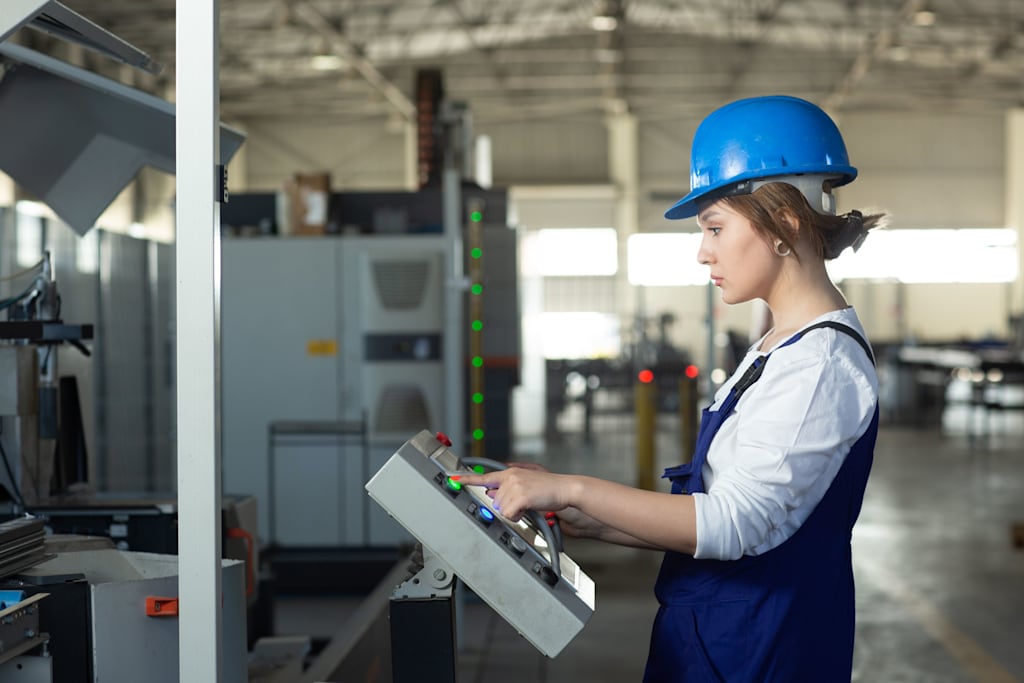
Walk into almost any modern machine shop and you'll notice something: the machines look familiar, but what's running them has changed dramatically. The CNC controller market is expanding fast, driven by manufacturers who want more precision, less downtime, and machines that can essentially think for themselves. What used to be a simple interface for feeding instructions to a cutting tool has evolved into a sophisticated computing system that touches everything from aerospace components to dental implants.
If you're trying to understand where this industry is headed, the underlying numbers tell a story worth digging into, and you can get your free sample report to see how the data breaks down by region and application.
From Mechanical Precision to Digital Intelligence
For decades, CNC controllers did one job: translate programmed instructions into precise machine movement. That's still the core function, but the expectations around it have multiplied. Manufacturers now want controllers that can predict tool wear, adjust cutting parameters in real time, and flag maintenance issues before a breakdown halts production.
This shift mirrors a broader trend in manufacturing—the move toward smart factories where machines communicate with each other and with central monitoring systems. A controller today isn't just a control box; it's a node in a larger industrial network, feeding data upstream so plant managers can make decisions based on actual machine performance rather than guesswork.
A Real-World Push: Aerospace and Medical Manufacturing
One of the clearest examples of this demand comes from aerospace component manufacturing, where tolerances are measured in microns and a single defective part can mean scrapping an expensive titanium blank. Companies producing turbine blades and structural components have increasingly adopted controllers with adaptive machining capabilities—systems that adjust feed rates and spindle speeds on the fly based on sensor feedback, rather than relying purely on pre-programmed paths.
Medical device manufacturing tells a similar story. Producing surgical instruments or orthopedic implants requires repeatability that older controller generations simply couldn't guarantee at scale. The push toward five-axis machining for complex geometries has made controller sophistication a competitive differentiator rather than a back-office concern.
Asia-Pacific has become a particularly active region in this space, with countries investing heavily in domestic manufacturing capacity and automation infrastructure. That regional momentum is one of several factors fueling the cnc controller market's steady upward trajectory over the past several years, as both established manufacturers and newer entrants compete to supply increasingly capable systems.
Software Is Eating the Hardware
Perhaps the most interesting trend isn't mechanical at all—it's the growing role of software within these systems. Open-architecture controllers that allow third-party software integration are gaining traction because they let manufacturers customize functionality without waiting on a single vendor's update cycle.
This has opened the door for AI-assisted toolpath optimization, where algorithms analyze thousands of previous machining runs to suggest more efficient cutting strategies. Some controller manufacturers are partnering directly with software developers rather than building everything in-house, recognizing that the pace of digital innovation often outstrips traditional hardware development timelines.
Cloud connectivity has also crept into controller design, letting operators monitor machines remotely and pull diagnostic data without standing at the console. For multi-site manufacturers, this means a single engineer can oversee equipment health across several facilities instead of needing dedicated staff at each location.
Challenges That Haven't Gone Away
None of this progress comes without friction. Retrofitting older machine tools with modern controllers is often more expensive than buying new equipment outright, which creates a slow-moving bottleneck for smaller shops operating on tighter margins. Cybersecurity is another growing concern, since networked controllers introduce new vulnerabilities that simply didn't exist when machines operated in isolation.
There's also a skills gap. Operating advanced controllers with adaptive and AI-driven features requires training that many shop floors haven't fully caught up with yet, leaving a gap between what the technology can do and what workers are equipped to use.
What Comes Next
The trajectory seems clear enough: controllers will keep absorbing more intelligence, more connectivity, and more autonomy, gradually shifting from passive instruction-followers to active decision-makers on the shop floor. Manufacturers who adapt early, investing in training and infrastructure alongside the hardware itself, are likely to see the biggest returns as this transition continues. The shops that wait may find themselves competing against machines that quite literally know more than the people running them—and that's a gap worth closing sooner rather than later.
About the Creator
Hazel Williams
Building, learning, and growing every day.
Enjoyed the story? Support the Creator.
Subscribe for free to receive all their stories in your feed.
Comments
There are no comments for this story
Be the first to respond and start the conversation.