
Why Electric Trucks Could Redefine Global Logistics by 2034
The rapid rise of zero-emission freight vehicles is reshaping supply chains, sustainability goals, and the trucking industry

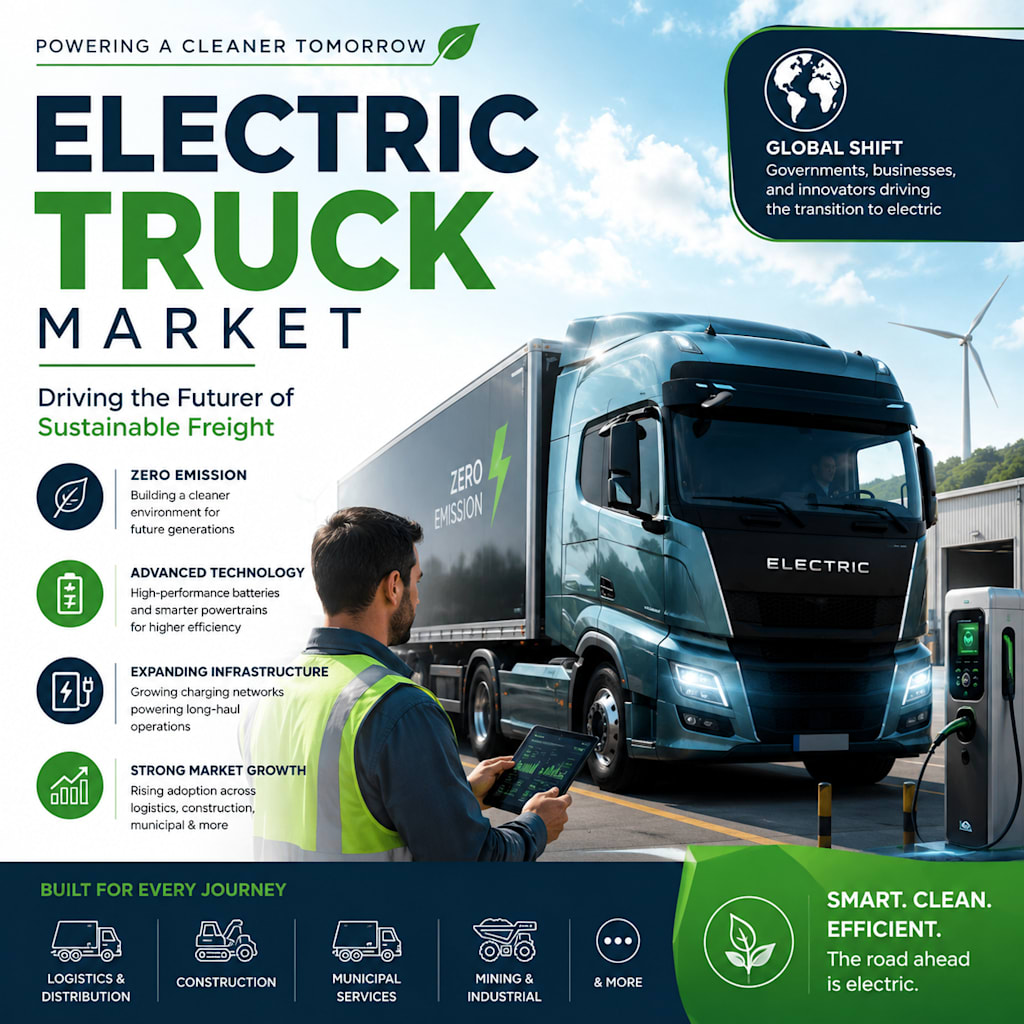
The entire logistics and transport sector of the world is one of the most significant changes happening over the past few decades. Although the world often hears about electric passenger vehicles and their importance, another massive shift is underway in the sphere of freight, logistics and commercial transportation: Electric Trucks.
Diesel trucks have for long been the engine of supply chains across the world, crisscrossing cities, highways, ports, industrial zones for everyday logistics. Environmental concerns, soaring fuel costs, and rigid government regulations are now driving the sector towards eco-friendly alternatives. Consequently, the market for electric trucks is witnessing unprecedented growth, with investments flowing in from leading auto manufacturers, tech firms, logistics companies, and government agencies worldwide.
A Market poised for massive growth
By 2025, the electric trucks market size is projected to value around US$ 1.07 billion and further grow to nearly US$ 7.74 billion by 2034, with a Compound Annual Growth Rate (CAGR) of 24.6% between 2026 and 2034. Electric trucks are quickly emerging as the fast growing sector in the commercial vehicle industry, their growth driven by a mix of government incentives, corporate sustainability targets, improving battery technologies, fuel costs and the rollout of new charging infrastructure-conditions perfect for mass electric fleet adoption.
Reasons behind the shift away from Diesel
Diesel trucks have always held the favor of freight transporters for decades due to their ruggedness and capacity for long-distance hauling. However, their impact on the environment has become a major concern. The freight sector as a whole is a massive contributor of greenhouse gases and urban pollution, and governments are now enacting stricter standards for emissions reductions, especially for heavy duty vehicles. Regulations in countries such as the U.S. Are urging logistics companies to adopt zero-emission vehicles faster than ever. The volatile nature of diesel fuel also makes fuel costs an unpredictable factor for fleets, making the fixed cost model for electricity more appealing to business owners.
Battery Technology - the Game changer
One of the biggest factors contributing to the viability of electric trucks is the revolutionary advancements in battery technology. Early electric truck models struggled with a short range, slow charging rates, and limitations in payload capacity. However, improvements in battery technology have drastically improved the performance metrics; modern electric trucks can now boast higher energy density, faster charging capabilities, improved thermal performance, extended operational life, and better performance even under heavy load. Several electric trucks can now travel hundreds of miles on a single charge and are ready for both regional and long-haul transport. Manufacturers are also developing and investing in high-power megawatt charging stations that will be available for commercial trucks, allowing them to be recharged during mandatory driver breaks, boosting operational efficiency.
Logistics firms are leading the electric transition
The logistics sector has played a crucial role in pushing electric trucks into the mainstream. E-commerce, retail and logistics companies have been at the forefront of the push towards sustainability, opting for electric trucks for their entire operations. The segment that stands to benefit the most are last-mile delivery and urban delivery routes where the daily driving distances are more predictable and charging management is a far less challenging task. Beyond sustainability, lower maintenance costs for electric trucks as compared to diesel engines-which are significantly more complex with a larger number of moving parts-further make them an attractive option for businesses.
The Charging infrastructure is also growing
One of the major roadblocks to the widespread adoption of electric commercial vehicles has been the availability of adequate charging infrastructure. However, with public and private investments poured into the sector, dedicated charging facilities for trucks are becoming widely available across freight corridors, industrial hubs, ports and logistics clusters. High-power charging stations are becoming a common feature in North America, Europe, and parts of Asia. Such infrastructure expansion is slowly helping mitigate the 'range anxiety' among fleets.
Heavy Duty Electric trucks are gaining momentum
While electric commercial vehicles began their journey with lighter commercial segments, the emphasis has now largely shifted to the heavy-duty trucking sector. This sector is one of the primary targets for electric trucks since heavy-duty vehicles are responsible for a disproportionate percentage of commercial vehicle emissions. Heavy-duty electric trucks with their higher torque, improved battery management, and ultra-fast charging capabilities are now proving their worth in applications ranging from long-haul freight transport to construction logistics, mining and port operations.
Battery electric trucks are leading the race
Among the various propulsion technologies for electric trucks, Battery Electric Trucks (BETs) are currently dominating the market. The biggest advantage that BETs hold over their counterparts is that they are entirely emission-free and boast of a lower fuel cost. Other benefits that BETs offer include reduced maintenance and a quieter operating profile, along with higher energy efficiency, which makes them compliant with new stringent regulations and also helps businesses in optimizing their operating cost. With battery costs gradually declining, the initial price difference with diesel trucks is also shrinking rapidly, further improving the business case for fleet electrification.
Market growth is varied across regions
While electric trucks are gaining widespread acceptance, the adoption rate across the globe varies widely.
North America is currently leading the pack in the electric truck market, thanks to strong governmental support, robust charging infrastructure, and ambitious sustainability goals set by leading logistics firms.
Asia-Pacific is the next emerging market and is primarily being driven by China which has actively promoted electric commercial vehicles through subsidies, infrastructure projects, and stringent emission standards.
Europe is also actively pursuing fleet electrification and is making significant efforts in developing charging infrastructure for heavy-duty commercial vehicles.
The race for leadership in the electric truck sector has led to massive investments by various stakeholders and intensifying competition across the industry. Major automakers, EV startups and energy providers are heavily investing in R&D of new battery technologies, increasing manufacturing capacity and integrating autonomous driving technology. This fierce competition is directly benefiting the end-users by pushing innovation and rapid improvements in the performance of electric trucks.
Despite the growing momentum, the electric truck market still faces several challenges. These include high upfront vehicle costs, the dearth of charging stations in some regions, slow charging speeds for heavy duty vehicles, and the overall weight of batteries impacting payload capacity. Furthermore, supply chain constraints for battery materials pose a challenge for manufacturers. However, steady technological advancement and continued investments are expected to resolve many of these issues gradually.
The future of freight is electric.
The shift towards electric commercial transport is no longer a concept but a reality. With continually evolving battery technology, expanding charging infrastructure, and tightening environmental regulations, electric trucks are all set to become an integral part of the global logistics network. Future innovations in autonomous electric fleets, ultra-fast charging hubs, battery-swapping solutions and hydrogen-electric hybrid solutions for long-haul trucking are also expected to play a vital role in shaping the future of freight transportation, bringing together efficiency, sustainability and technology like never before.
About the Creator
Robert
Senior Market Researcher at IMARC Group, specializing in global market analysis, industry trends, and data-driven insights across diverse sectors.
Enjoyed the story? Support the Creator.
Subscribe for free to receive all their stories in your feed.
Comments
There are no comments for this story
Be the first to respond and start the conversation.