
Why Electric Trucks Could Completely Change the Global Logistics Industry
Rising fuel prices, stricter emission laws, and next-generation battery technology are accelerating the shift toward electric freight transportation.

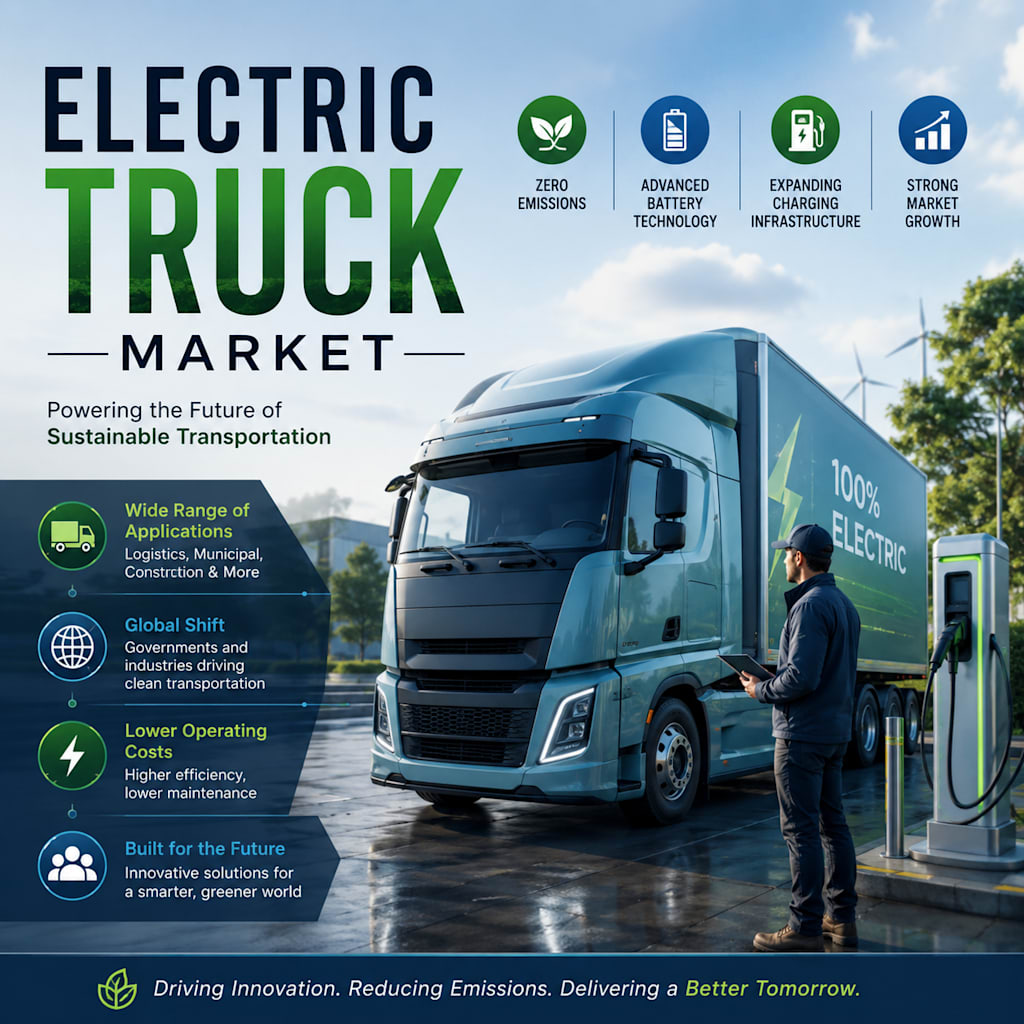
The transportation sector is going through one of the most massive shifts in its history.
For decades, diesel-powered trucks ruled the world of freight and logistics. They became the foundation of supply chains and were used to transport goods in every town, country, and continent. However, increasing fuel costs, growing environmental consciousness, and stringent emission regulations have now pushed the transportation sector into a new era – the era of electric trucking.
Something that was once deemed far-off in the future is quickly becoming a commercial reality.
Nowadays, electric trucks aren’t just limited to trial fleets and pilot projects. Leading manufacturers, logistics firms, and governments all around the world are significantly investing in zero-emission transportation technologies, which signals a huge shift in freight movement for the future.
Market Entering High-Growth Territory
The global electric truck market size was estimated at around $1.07 billion in 2025 and estimates project the market could increase up to nearly $7.74 billion in 2034.
This translates into an excellent 24.6% compound annual growth rate between 2026 and 2034.
This swift acceleration indicates a tremendous revolution occurring within the commercial transportation sector. Organizations are no longer considering electric trucks to be a small niche choice, but are starting to integrate them into their long-term fleet plans.
The confluence of government incentives, ever-improving battery technologies, and the growing pressure to minimize carbon emissions are driving adoption around the world.
Reason For Trucking Sector Embracing Electricity
One of the largest factors behind the growth in electric truck adoption is the global drive toward sustainability.
Governments in North America, Europe, and Asia are implementing harsher emission standards for heavy-duty vehicles. Because commercial transportation is one of the largest emitters of greenhouse gasses, fleet electrification has become a top priority for governments and policymakers worldwide.
As regulations become tougher, the transportation companies are being strongly encouraged, or even forced, to shift to zero-emission commercial trucks.
Battery Technology Making it Possible
For years, concerns about battery capabilities have prevented electric trucks from directly competing with traditional diesel vehicles. A limited range and long recharge times were the primary obstacles for the transportation industry, but things are rapidly changing.
Battery technology advancements have greatly enhanced energy efficiency, charging speeds, and overall vehicle performance. Modern electric trucks can travel much further than their predecessors, while still retaining competitive payload capacities.
Manufacturers have also started introducing more advanced thermal management systems, that help in better and longer battery life, even under tough operating conditions.
Today, some next-gen electric trucks are capable of driving hundreds of miles on a single charge, making them viable for regional and long-haul operations.
Charging Infrastructure Expands Rapidly
One of the largest deterrents to electric truck adoption has been the scarcity of charging facilities.
Commercial trucks, unlike passenger vehicles, require high-capacity charging systems capable of supporting their enormous battery packs and daily operation needs. To resolve this issue, governments and private corporations have invested heavily in building charging infrastructure.
More charging stations are being built across main freight corridors, logistics hubs, ports, and distribution centers.
This expansion of charging infrastructure creates a more robust foundation for electric trucking, alleviating concerns about a limited range and significant downtime.
Rise of Battery Electric Trucks
While there are different types of electric commercial vehicles available, battery electric trucks (BETs) are emerging as the dominant choice.
These vehicles are solely powered by rechargeable batteries and don't emit any pollution from the exhaust pipe. In comparison to diesel engines, electric drivetrains are far more efficient and require fewer components, thus leading to decreased maintenance costs in the long run.
BETs are rapidly gaining traction in:
- Urban delivery services
- Last-mile distribution
- Regional freight transportation
- Municipal vehicle fleet services
The price of batteries is steadily declining and the availability of charging stations is also steadily increasing, leading many experts to predict that battery electric trucks will take up a much larger market share in the future.
Heavy-Duty Trucks Driving Industry Attention
Both manufacturers and logistics providers are paying more attention to heavy-duty electric trucks.
These trucks are specifically engineered for high-intensity freight transport activities such as:
- Long-haul transportation
- Industrial logistics
- Construction hauling
- Port and warehouse distribution
Historically, the heaviest-duty trucks were among the toughest vehicles to electrify due to their immense power requirements. Nevertheless, rapid advancements in battery technology and drivetrain engineering are gradually making it possible to electrify them on a large scale.
Logistics Providers Leading the Charge
The logistics industry is at the forefront of adopting electric trucks.
Retailers, e-commerce organizations, and supply chain operators are under increasing pressure to minimize their environmental footprint and enhance their sustainability credentials.
Electric trucks provide logistics firms with multiple benefits including:
- Reduced fuel expenses
- Decreased maintenance and repair costs
- Compliance with green legislation
- Less noise for neighborhood deliveries
Many organizations are already adding electric trucks to their fleets as part of their wider ESG strategy.
With sustainability proving to be a competitive differentiator, integrating electric trucks into fleet strategies is no longer optional but a business necessity.
North America Leads the Way
North America is one of the foremost regions in the adoption of electric trucks.
Key reasons behind its leadership:
- Significant government incentives
- Expansion of charging networks
- Stricter environmental regulations
- Growing emphasis on corporate sustainability
The U.S, in particular, has become a major hub for the research, development, and rollout of electric trucks. Federal and state-level initiatives promoting zero-emission vehicle adoption are driving the adoption rates of electric trucks higher among fleet operators. Automotive and technology leaders are investing heavily in commercial electric transport solutions. This combination of factors puts North America at the forefront of this sector.
Europe and Asia-Pacific Are Also Growing Fast
Europe is witnessing steady growth in electric truck adoption.
Its aggressive climate targets and pro-sustainability policies are paving the way for electric vehicles among manufacturers and logistics companies. Several European countries are investing substantial amounts of capital into publicly available charging infrastructure and green freight initiatives.
The Asia-Pacific region is experiencing tremendous growth in electric truck adoption, with China leading the charge. As the world’s largest manufacturer and consumer of electric commercial vehicles, China’s strong manufacturing base, government backing, and firm climate policies are driving the growth of electric trucks. Japan, South Korea, and India are all stepping up their investments in electric truck technologies and infrastructure development.
The Industry's Competition is Heating Up
Competition among manufacturers is escalating as large auto companies and emerging EV start-ups jockey for market share. Manufacturers are focusing on improving the range of electric trucks, cutting down on charging times, and lowering manufacturing costs, in addition to making plans for smart fleet management and self-driving features.
Strategic partnerships and joint ventures are becoming increasingly common as companies look to leverage the expertise of various businesses in areas such as battery technology, software solutions, charging infrastructure, and vehicle manufacturing. This competition among manufacturers is serving to accelerate innovation across the board.
The Challenges Aren’t Quite Over
While the electric truck industry is experiencing strong growth, a few hurdles remain.
The upfront costs of purchasing an electric truck remain prohibitive for many businesses, especially small ones that lack access to sufficient capital.
Despite its rapid expansion, the charging infrastructure still needs a lot more development to fully support long-haul commercial freight operations.
The supply chains for batteries, along with the availability of raw materials, will continue to be an area of focus as demand for lithium-ion technology grows globally.
The Future of Freight Is Electric
The trucking industry is clearly moving toward an all-electric future. As the efficiency of batteries increases, charging networks expand, and environmental regulations become stricter, electric trucks are likely to become a staple of global transportation systems.
What started as a sustainability driven initiative is quickly evolving into a significant industrial revolution poised to redefine freight movement for years to come.
About the Creator
Robert
Senior Market Researcher at IMARC Group, specializing in global market analysis, industry trends, and data-driven insights across diverse sectors.
Enjoyed the story? Support the Creator.
Subscribe for free to receive all their stories in your feed.
Comments
There are no comments for this story
Be the first to respond and start the conversation.