
Why Choosing the Right Cabling Matters for Modern Security and Networking Systems
Building a reliable foundation for secure, high-speed, and future-ready network infrastructure.

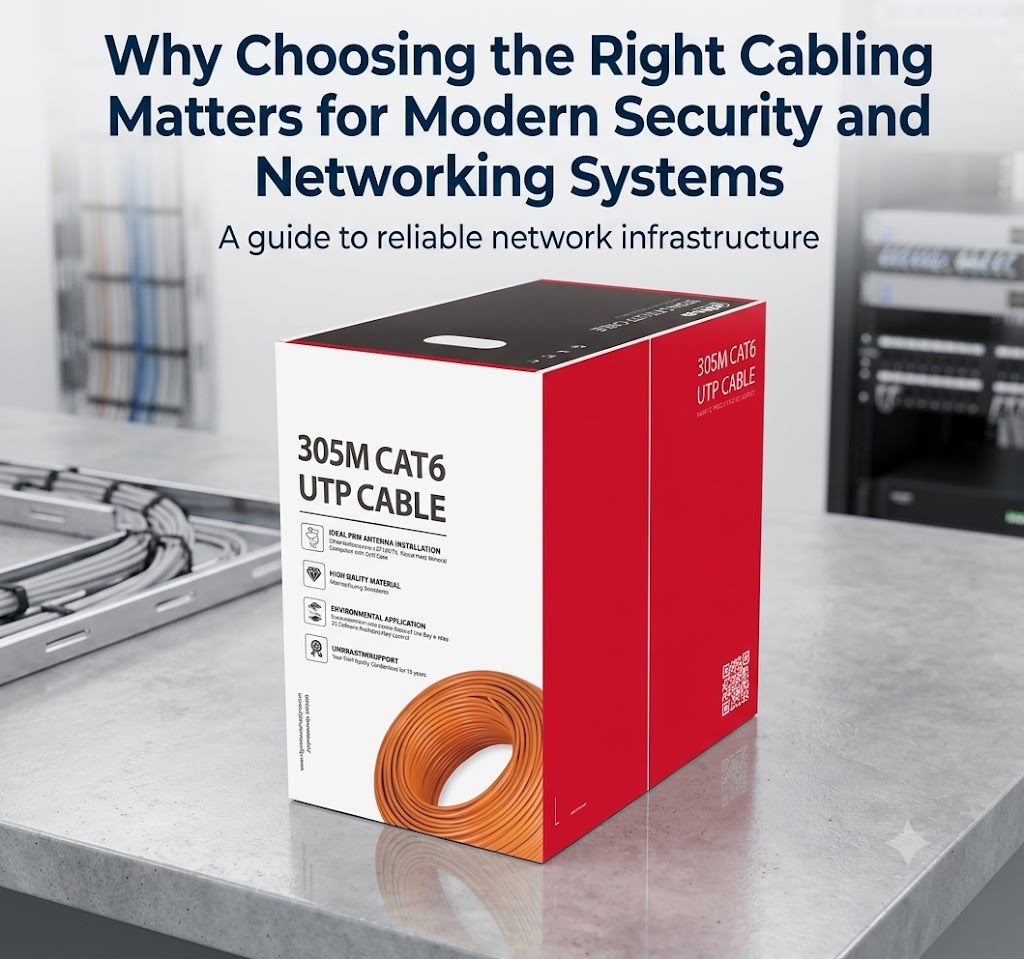
When people think about surveillance systems, network infrastructure, or smart building solutions, they often focus on cameras, recorders, and software. However, one of the most overlooked yet critical components is the cabling infrastructure that connects everything together.
Whether you're setting up a CCTV surveillance system, an IP network, or an integrated security solution, the quality and type of cables used can significantly impact system performance, reliability, and long-term maintenance.
In this article, we'll explore why cabling is the backbone of modern security systems, understand different cable types, and learn how selecting the right infrastructure can improve overall efficiency.
Understanding the Role of Cabling
Cabling acts as the communication pathway between devices. It carries power, video signals, audio, and data across different components within a network.
Without proper cabling:
- Video quality may degrade.
- Data transmission becomes unstable.
- Signal interference increases.
- Network downtime becomes more frequent.
- Maintenance costs rise over time.
A well-designed cabling infrastructure helps maintain consistent communication between cameras, switches, recorders, and monitoring stations.
Industry-standard security cabling solutions commonly include network cables, coaxial cables, connectors, cabinets, optical fiber, and cable accessories to support different surveillance and networking environments.
Common Types of Cabling Used in Security Systems
Choosing the correct cable depends on the application, installation environment, and transmission requirements.
1. Ethernet (Network) Cables
Ethernet cables are widely used in IP-based surveillance systems.
Popular categories include:
- Cat5e
- Cat6
- Cat6A
These cables support:
- High-speed data transfer
- Power over Ethernet (PoE)
- Easy installation
- Scalable network expansion
- They are commonly used with:
- IP cameras
- Network switches
- NVRs
- Access control systems
2. Coaxial Cables
Coaxial cables remain useful for traditional CCTV installations.
Their advantages include:
- Stable analog video transmission
- Strong shielding against interference
- Reliable long-distance performance
- Compatibility with existing infrastructure
Many organizations upgrading older surveillance systems continue using coaxial infrastructure while modernizing other components.
3. Optical Fiber Cables
Fiber optic cables are ideal for large facilities where data must travel across long distances.
Benefits include:
- Extremely high bandwidth
- Minimal signal loss
- Immunity to electromagnetic interference
Excellent reliability for campus-wide installations
They are commonly deployed in:
- Airports
- Universities
- Manufacturing plants
- Smart cities
- Industrial facilities
4. Cable Connectors
Even the best cable performs poorly if connectors are not installed correctly.
High-quality connectors help ensure:
- Stable communication
- Reduced signal loss
- Easier maintenance
- Better system durability
Proper termination also minimizes future troubleshooting.
Why Cable Quality Matters
Many organizations invest heavily in surveillance cameras but overlook cable quality.
Poor-quality cables may result in:
Signal Loss
Inferior materials reduce transmission efficiency, causing blurry images or interrupted communication.
Network Downtime
Unstable cables increase packet loss and communication failures.
Higher Maintenance Costs
Cheap cables often require replacement sooner, increasing operational expenses.
Reduced Equipment Lifespan
Power fluctuations caused by poor wiring can affect connected devices over time.
Investing in quality cabling helps reduce these risks while improving system stability.
Factors to Consider Before Selecting Cabling
Every installation has unique requirements.
Consider the following factors before choosing cable types.
Installation Distance
Long-distance installations require different solutions than short indoor deployments.
For example:
Ethernet cables typically perform reliably up to standard network distance limits.
Fiber optic cables are preferred for much longer runs.
Coaxial cables remain effective for many traditional CCTV applications.
Long cable runs may require technologies such as PoE extenders, switches, wireless links, or fiber depending on system design.
Indoor or Outdoor Environment
Outdoor installations require cables that can withstand:
- UV exposure
- Rain
- Heat
- Dust
- Temperature changes
Indoor cables generally focus more on flexibility and ease of installation.
Electromagnetic Interference (EMI)
Industrial environments often contain machinery that generates electrical interference.
Shielded cables help minimize:
- Signal distortion
- Communication errors
- Network instability
Future Expansion
Organizations should plan cabling with future growth in mind.
Adding more cameras or networking equipment becomes easier when sufficient capacity is available from the beginning.
Structured Cabling Makes Maintenance Easier
Well-organized cable management provides several operational benefits.
- These include:
- Faster troubleshooting
- Easier equipment replacement
- Better airflow inside cabinets
- Improved safety
- Cleaner installations
Proper labeling and documentation also reduce maintenance time significantly.
The Importance of Power over Ethernet (PoE)
Modern IP surveillance systems frequently use Power over Ethernet.
PoE allows one Ethernet cable to transmit both:
- Electrical power
- Network data
- Benefits include:
- Fewer cables
- Simpler installation
- Lower labor costs
- Flexible camera placement
This has become a preferred solution for many commercial security deployments.
Common Cabling Mistakes to Avoid
Many performance issues result from installation errors rather than equipment failure.
Common mistakes include:
Using the Wrong Cable Category
Higher-resolution systems often require cables capable of handling greater bandwidth.
Excessive Cable Length
Running cables beyond recommended distances can reduce performance.
Poor Cable Management
Messy cable installations make maintenance difficult and increase accidental damage.
Improper Connectors
Loose or poorly terminated connectors create intermittent network problems.
Ignoring Environmental Conditions
Using indoor cables outdoors often leads to premature failure.
Cabling and System Scalability
Businesses rarely keep the same surveillance system forever.
A scalable cabling infrastructure allows organizations to add:
Additional cameras
Access control devices
Network switches
Storage systems
Building automation equipment
without replacing the entire network.
This makes future upgrades more cost-effective.
Supporting Smart Buildings
Today's intelligent buildings combine multiple technologies into one network.
These include:
- Video surveillance
- Access control
- Visitor management
- Alarm systems
- Network infrastructure
- IoT devices
Reliable cabling forms the foundation that enables these systems to communicate efficiently.
Best Practices for Reliable Cabling Installations
Following industry best practices improves long-term system reliability.
Recommended practices include:
- Use certified cables suitable for the application.
- Keep cables away from high-voltage electrical lines where possible.
- Avoid excessive bending or twisting.
- Label every cable during installation.
- Test all cable runs before commissioning.
- Use proper cable trays and management accessories.
- Leave room for future expansion.
These practices help reduce maintenance issues and improve overall network performance.
Final Thoughts
While cameras and networking equipment often receive the most attention, the cabling infrastructure is what keeps the entire system connected and functioning reliably. Selecting the appropriate cable type, using quality installation practices, and planning for future expansion can improve system performance, reduce maintenance, and support long-term scalability.
As security systems become more advanced and integrated with broader IT and building management networks, investing in a well-designed cabling infrastructure is no longer optional—it's a fundamental part of creating a dependable, future-ready environment.
About the Creator
AVTS
AVTS offers customized audiovisual and IT solutions aimed at improving communication and collaboration. With experience in diverse industries, we provide comprehensive services that include consultation, design, and installation.
Enjoyed the story? Support the Creator.
Subscribe for free to receive all their stories in your feed.
Comments
There are no comments for this story
Be the first to respond and start the conversation.