
Why Chicken Remains the World’s Favorite Protein: The Market Behind a Global Food Phenomenon
From fast-food menus and fitness diets to emerging markets and advanced poultry farming, chicken continues to dominate global protein consumption while driving a rapidly expanding industry.

Few foods have achieved the universal popularity of chicken. Found in nearly every cuisine, embraced by diverse cultures, and valued for its affordability and nutritional benefits, chicken has become one of the most important protein sources in the world.
Whether served as grilled breast meat, crispy fried chicken, hearty soups, sandwiches, or traditional family recipes, chicken remains a staple food for billions of people. Its versatility, accessibility, and health appeal have made it a cornerstone of modern diets and a critical component of the global food industry.
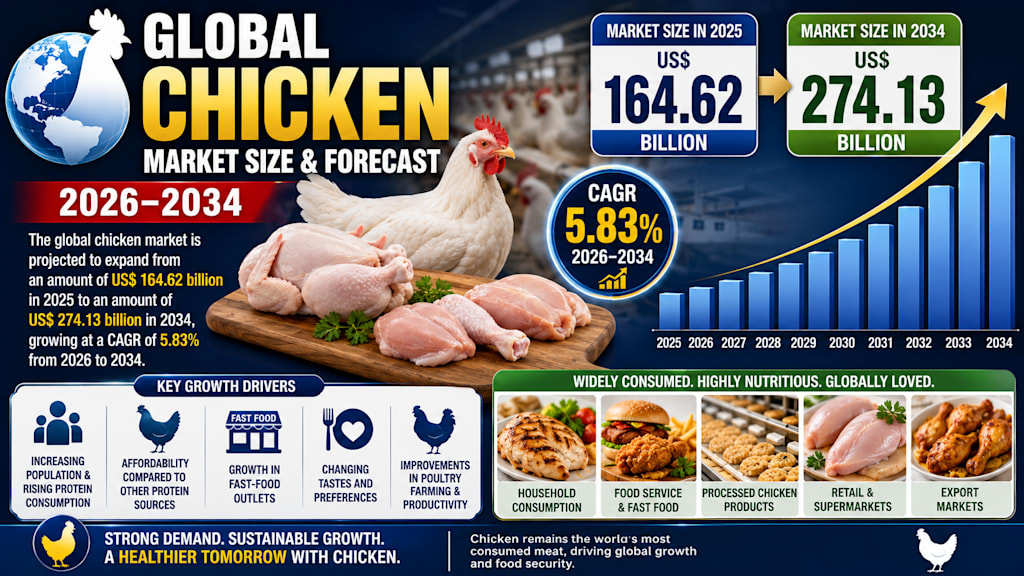
This growing importance is reflected in the market's impressive outlook. According to Renub Research, the global chicken market is expected to grow from US$ 164.62 billion in 2025 to US$ 274.13 billion by 2034, expanding at a compound annual growth rate (CAGR) of 5.83% between 2026 and 2034. Rising global demand for affordable protein, population growth, expanding fast-food chains, and advances in poultry farming are among the key drivers supporting market growth.
As consumer preferences evolve and protein demand continues to increase, chicken is positioned to remain one of the world's most important food products for years to come.
The Universal Appeal of Chicken
Chicken has earned a unique position within the global food system because it successfully combines affordability, nutrition, convenience, and cultural acceptance.
Unlike many other forms of meat, chicken faces relatively few religious or cultural restrictions. This broad acceptance has enabled it to become a preferred protein source across North America, Europe, Asia-Pacific, Latin America, the Middle East, and Africa.
Nutritionally, chicken provides high-quality protein while containing lower fat levels than many red meat alternatives. This makes it particularly attractive to consumers seeking healthier dietary options.
Its culinary flexibility is another major advantage. Chicken can be grilled, roasted, fried, baked, boiled, smoked, or incorporated into countless recipes, making it suitable for both home cooking and commercial foodservice applications.
These characteristics continue to support strong global demand across all consumer segments.
Affordable Protein Is Fueling Market Expansion
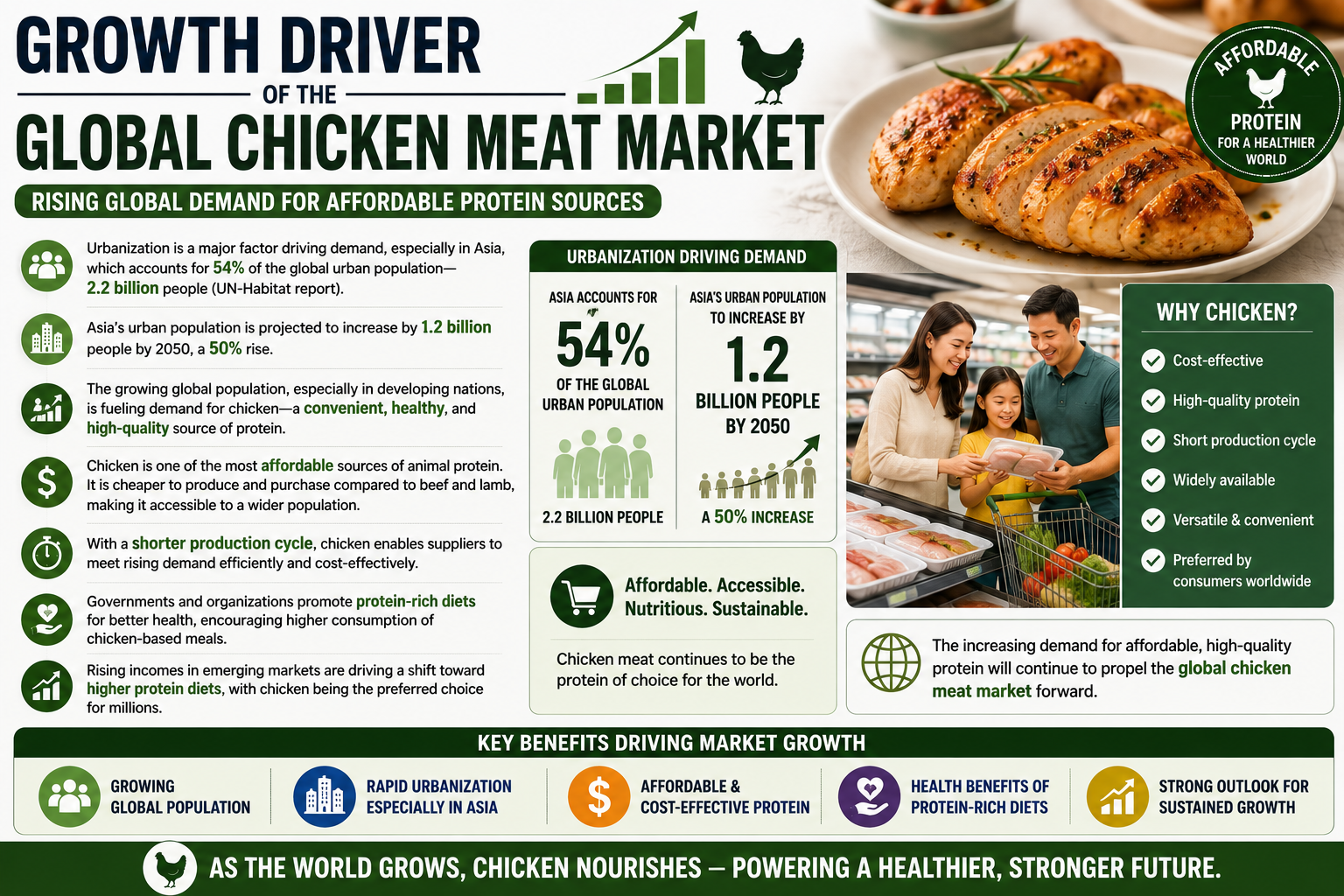
One of the most significant factors driving the global chicken market is the growing demand for affordable sources of protein.
As populations increase and disposable incomes rise in many developing regions, consumers are placing greater emphasis on nutrition and protein consumption. However, affordability remains an important consideration.
Compared with beef, lamb, and several other animal protein sources, chicken is generally less expensive to produce and purchase. Its shorter production cycle enables producers to respond efficiently to rising demand while maintaining competitive pricing.
This affordability makes chicken particularly attractive in emerging economies where growing middle-class populations are seeking access to higher-quality diets.
Urbanization is further strengthening demand. According to data highlighted in the market report, Asia currently accounts for approximately 54% of the global urban population, representing around 2.2 billion people. The region's urban population is projected to increase by an additional 1.2 billion people by 2050.
As urban consumers gain greater access to modern retail channels and processed food products, chicken consumption is expected to continue rising.
Fast-Food Chains Are Creating Massive Demand
The rapid expansion of quick-service restaurants (QSRs) and fast-food chains has played a major role in the growth of the global chicken market.
Chicken-based menu items such as fried chicken, chicken burgers, nuggets, wraps, sandwiches, and wings have become central offerings for many international restaurant brands.
Consumers appreciate chicken products because they are convenient, affordable, flavorful, and adaptable to regional tastes.
The rise of food delivery services has further accelerated this trend by making chicken-based meals more accessible than ever before.
Major global restaurant chains continue investing heavily in poultry-focused menu innovation. Chicken products often offer attractive profit margins while appealing to broad customer demographics.
In December 2023, McDonald's introduced CosMc's, a new restaurant concept focused on beverages and snacks, demonstrating the company's continued efforts to expand its presence across foodservice categories and strengthen consumer engagement.
As fast-food brands continue expanding into emerging markets, demand for chicken products is expected to grow significantly.
Health-Conscious Consumers Are Choosing Chicken
Changing consumer attitudes toward health and nutrition are creating additional growth opportunities for the chicken industry.
Many consumers increasingly view chicken as a healthier alternative to red meat due to its lower fat content and high protein value.
Fitness enthusiasts, athletes, and health-conscious individuals frequently include chicken in their diets because it supports muscle development and weight management goals.
Healthcare professionals often recommend lean protein sources as part of balanced nutrition plans, further contributing to chicken's popularity.
The growing popularity of high-protein diets, low-fat meal plans, and wellness-focused lifestyles has strengthened demand across multiple demographic groups.
Food manufacturers are also responding to these trends by introducing innovative protein-rich products. In November 2025, Maple Leaf Foods launched Maple Leaf Mighty Protein, a line of chicken protein sticks developed to meet growing consumer demand for convenient, protein-focused snacks.
As nutritional awareness continues increasing, chicken is expected to maintain its position as a preferred protein source.
Advances in Poultry Farming Are Improving Efficiency
Technological innovation has significantly improved poultry production efficiency over the past several decades.
Modern poultry operations utilize advanced breeding programs, automated feeding systems, climate-controlled housing, disease monitoring technologies, and data-driven management practices.
These improvements have helped producers increase output while maintaining product quality and controlling costs.
Automation and precision farming techniques allow producers to optimize resource utilization, improve animal health, and reduce production inefficiencies.
Enhanced genetics have also contributed to faster growth rates and improved feed conversion efficiency, helping meet rising global demand.
As technology continues advancing, poultry producers are expected to further improve productivity while addressing sustainability and animal welfare concerns.
Processed Chicken Products Are Expanding Market Opportunities
The growing popularity of processed and convenience foods is creating significant opportunities throughout the chicken value chain.
Busy lifestyles and increasing urbanization have encouraged consumers to seek food products that are quick and easy to prepare.
As a result, demand for ready-to-cook, ready-to-eat, frozen, marinated, and value-added chicken products continues to rise.
Retailers and food manufacturers are expanding product portfolios to meet changing consumer expectations.
Innovations in packaging, flavor profiles, and preparation methods are helping companies attract new customers while increasing consumption frequency.
The growth of e-commerce platforms and grocery delivery services is also supporting demand by making processed chicken products more accessible.
These trends are expected to remain important drivers of future market growth.
The United States Continues to Lead Production
The United States remains one of the largest and most efficient chicken-producing nations globally.
Its highly integrated poultry industry benefits from advanced farming technologies, sophisticated supply chains, strong domestic demand, and extensive export capabilities.
According to the market report, the United States had more than 514 million chickens on farms as of December 2024, highlighting the scale of the country's poultry industry. Chicken consumption also experienced a rebound in 2025, reinforcing the nation's position as a global leader in poultry production and consumption.
The country's ability to consistently meet domestic and international demand has made it a critical contributor to global food security.
China Is Emerging as a Consumption Powerhouse
China represents one of the fastest-growing markets for chicken consumption worldwide.
Rising incomes, rapid urbanization, changing dietary habits, and growing awareness of protein nutrition have contributed to increasing demand.
Chicken's affordability compared with other animal proteins has made it particularly attractive to Chinese consumers.
Fast-food chains, convenience foods, and online grocery platforms have further expanded access to poultry products.
The scale of growth is remarkable. According to the report, per capita chicken consumption in China increased from approximately 4 kilograms in 1962 to around 70 kilograms in 2022.
This dramatic increase highlights the significant role China plays in shaping future market trends.
Europe Continues to Prioritize Healthy Protein
The European Union remains an important market for chicken products.
Consumers increasingly favor poultry because of its reputation as a healthier and more sustainable alternative to certain red meats.
Demand for organic, free-range, and responsibly sourced poultry products continues growing throughout the region.
Food safety standards and animal welfare regulations remain particularly important considerations for European consumers and regulators.
According to market projections, poultry meat consumption within the European Union is expected to reach approximately 24.6 kilograms per capita by 2030, reflecting continued growth in consumer demand.
These trends support long-term market expansion despite regulatory complexities.
Brazil Strengthens Its Export Leadership
Brazil continues to maintain a dominant position in global chicken exports.
The country's strong agricultural sector, favorable production economics, and compliance with international food safety standards have helped establish Brazil as one of the world's leading poultry exporters.
Markets across Asia, Europe, and the Middle East rely heavily on Brazilian chicken products.
According to the Brazilian Animal Protein Association, the country exported approximately 5.294 million metric tons of chicken products in 2024, representing a 3% increase compared with 2023 and marking the highest export volume in its history.
Brazil's export success highlights the increasingly global nature of poultry trade.
Challenges Facing the Chicken Industry
Despite strong growth prospects, several challenges continue to affect the industry.
Disease outbreaks remain one of the most significant concerns. Avian influenza and other poultry diseases can result in large-scale culling, trade restrictions, reduced consumer confidence, and substantial financial losses. Maintaining strong biosecurity measures is therefore essential.
Feed costs also present ongoing challenges.
Corn and soybean meal represent major inputs in poultry production, and price fluctuations caused by weather events, geopolitical tensions, and supply chain disruptions can significantly impact profitability.
Environmental sustainability and animal welfare expectations are also becoming increasingly important factors influencing industry operations and investment decisions.
Addressing these challenges will be critical for maintaining long-term growth.
Final Thoughts
Chicken has evolved far beyond its role as a simple food staple. It has become one of the world's most important sources of affordable nutrition, supporting food security, economic development, and consumer health across diverse regions.
Its combination of affordability, versatility, nutritional value, and cultural acceptance continues to make it the preferred animal protein for billions of people worldwide.
With the global chicken market expected to grow from US$ 164.62 billion in 2025 to US$ 274.13 billion by 2034, opportunities for producers, processors, retailers, and foodservice companies remain substantial. Continued innovation in poultry farming, food processing, sustainability, and distribution will help shape the industry's future.
As populations grow and demand for high-quality protein continues increasing, chicken is likely to remain at the center of global food consumption for decades to come—proving that sometimes the most familiar foods can also be the most powerful drivers of economic and nutritional progress.
About the Creator
Enjoyed the story? Support the Creator.
Subscribe for free to receive all their stories in your feed.
Comments
There are no comments for this story
Be the first to respond and start the conversation.