
Why Automotive Motors Are Powering the Future of Transportation
From electric vehicles to smart safety systems, these hidden components are becoming the backbone of modern mobility

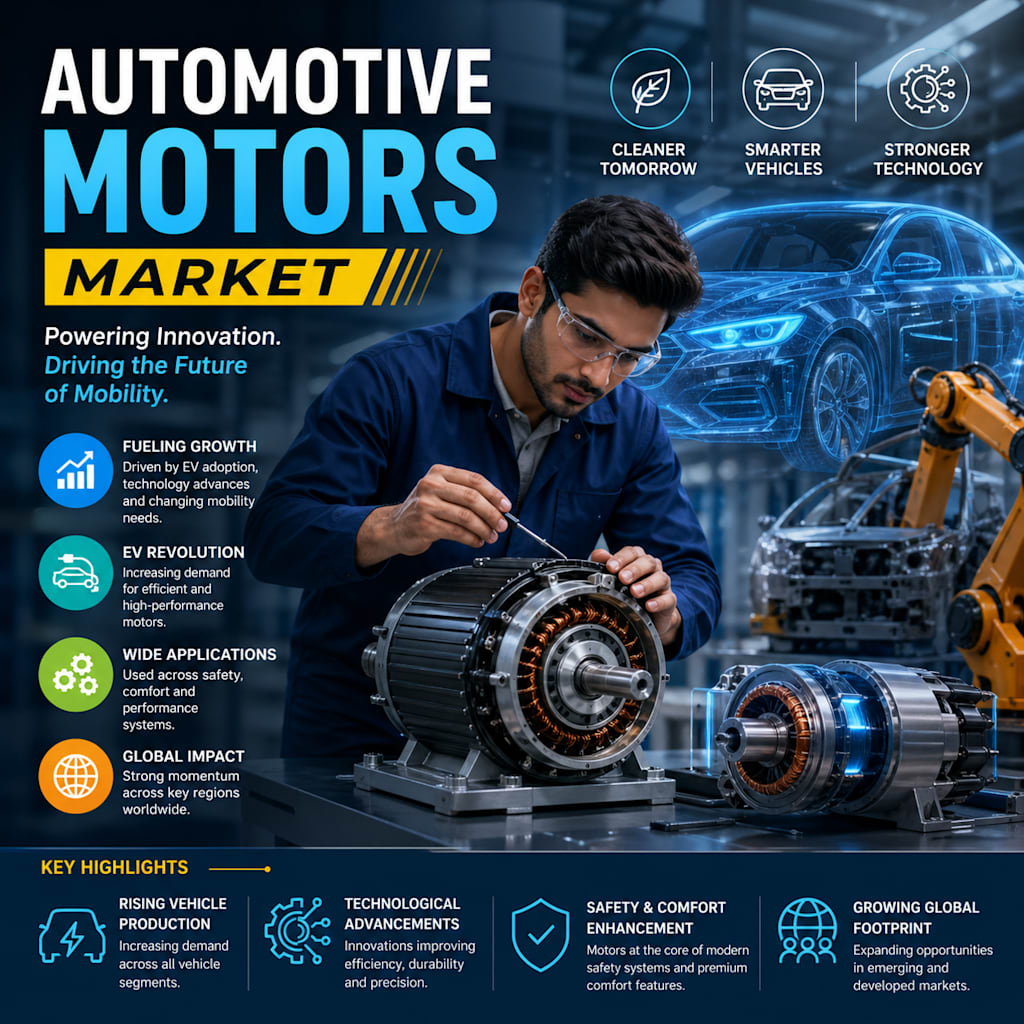
People tend to think about cars mostly in terms of the engine‚ the style‚ or the number of miles to the gallon‚ but the automotive motor is less visible and serves almost every function․
From windows to advanced driver-assistance systems (ADAS)‚ even electric vehicles‚ automotive motors are everywhere․ Automotive motors are becoming more important‚ more capable‚ and more essential as vehicles themselves become more advanced‚ cleaner‚ electrical‚ and inter-connected․
What was once still rather a supporting part in the symphony of the future of mobility is now ready to play․
A Market Growing Alongside the Automotive Revolution
The automotive motors market size is projected to increase from USD 43․4 billion in 2025 to USD 63․1 billion in 2034․
The CAGR of around 4․1% points to the continuing transformation that the automotive industry is undergoing․
As vehicles become more complicated with features such as electric powertrains‚ automation‚ and comfort features‚ the number of motors within vehicles is continuously growing exponentially․
Simply put‚ modern cars are using more motors than ever․
The Demand for Automotive Motors is Growing
The market's expansion would depend on the evolution of the vehicles themselves․
Several factors contribute to the demand:
- Growing global vehicle production‚ especially in developing countries
- Increasing use of electric and hybrid vehicles
- Increasing consumer expectation for a high standard of comfort
- Integrating safety technology such as advanced driver-assistance systems (ADAS)
Auto seat adjustments‚ braking systems‚ and dozens of other features each require their own motor or other mechanism to control their actions and performance․
This makes automotive motors near-universal in modern vehicles․
Switching to Electric Vehicles Could be an Environmental Game-changer
Growth of the EV market is one of the most important changes occurring in the automotive motors market over the last decade․
Automakers are accelerating adoption of electric vehicles in response to government and consumer pressure for lower emissions and cleaner cars․
In contrast to conventional vehicles‚ EVs have motors used for propulsion‚ but also auxiliary functions‚ and more of them․
This creates a substantial increase in demand for:
- High-efficiency traction motors
- Compact and lightweight motor designs
- Advanced motor control systems
As EV adoption increases around the world‚ the overall demand for automotive motors is expected to increase substantially․
Technology Is Making Motors Smarter and More Efficient
Automotive motors are becoming more advanced‚ more energy-efficient‚ and more smart than they have been to date․
Manufacturers are currently investigating developments in:
- Brushless DC motors are more efficient and have a longer lifespan․
- Production incorporates compact motors ideal for confined vehicle layouts․
- Components are more powerful‚ efficient‚ and reliable․
- Examples of precision control systems include automation and safety
Their continued development has improved vehicle performance while also adhering to emissions and efficiency standards․
Tremendous demand for comfort features
The less obvious driver is the desire for increased comfort and convenience in vehicles‚ which has grown markedly․
Users expect a premium experience across all price points‚ with features including:
- Power windows
- Adjustable seats
- Climate control systems
- Sunroofs and smart mirrors
All rely on automotive motors․
In fact‚ the comfort segment of the automotive motors market is one of the largest segments‚ showing how consumer needs shape a vehicle․
The motors have become important to safety systems
Safety is another area where automotive motors are very important․
Safety features of modern vehicles include:
- Anti-lock braking systems (ABS)
- Electronic stability control
- Airbag deployment systems
- Lane assist and automatic emergency braking
The systems require highly precise control of motor movements․
With tightening safety regulation and demand for high reliability and performance‚ the demand for such motors has increased․
Regional Growth: Where the Market Is Expanding Fastest
The market for automotive motors differs greatly by region․
Asia-Pacific is the largest market‚ with many automobile manufacturers located in China‚ Japan and India․ Personal income levels and urbanization are also increasing vehicle demand in this region․
North America and Europe are the major regional markets‚ as these regions have mature automotive markets and high electric vehicle adoption and stringent emission standards․
Elsewhere‚ markets such as Latin America‚ and the Middle East & Africa are gradually developing‚ with increasing wealth and vehicle ownership․
An Industry That is Competitive and Innovative
Automotive motors have a competitive market with global companies investing in research and development․
Companies are focusing on:
- Improvements in motor efficiency and durability
- Designing specialized motors for hybrid and electric vehicles
- Production capacities were expanded in high-growth markets
- Planned partnerships with automotive manufacturers
There are increasing numbers of mergers and acquisitions or collaborations and partnerships to gain a bigger market share․
Challenges that could slow down growth
The market has grown steadily‚ facing various impediments․
Considerably greater investments are necessary to fabricate motors using advanced processes‚ making cost a critical concern․
Also‚ companies have to develop products for different regions‚ which is costly and resource intensive․
Economic downturns and supply chain disruptions may impact the production and demand for diamorphine․
However‚ these pressures can force companies to innovate faster‚ which may be good for the market․
The Future of Automotive Motors
Future automotive motors are expected to become more advanced and integrated into the vehicle systems․
Future trends may include:
- Motors specifically designed for the autonomous vehicle
- Increased use of AI-based control systems
- Further miniaturization and efficiency improvements
- Greater integration with smart and connected vehicle platforms
Motors produced today will lay the foundation for future automotive technologies‚ enabling progress in mobility‚ safety‚ and comfort for years to come․
Final Thoughts
These automotive motors may not always be visible‚ but they are a key element․
These technologies will enable electric mobility and create increased comfort‚ safety and functionality that will be part of the future we are not yet aware of․
As a result of consistent market growth until 2034 and rapid technological development‚ automotive motors are one of the most important and fast-changing components in the industry․
About the Creator
Robert
Senior Market Researcher at IMARC Group, specializing in global market analysis, industry trends, and data-driven insights across diverse sectors.
Enjoyed the story? Support the Creator.
Subscribe for free to receive all their stories in your feed.
Comments
There are no comments for this story
Be the first to respond and start the conversation.