
Why Are Packaged Salads Becoming a Daily Staple for Health-Conscious Consumers Across North America?
How Convenience, Nutrition, and Product Innovation Are Driving the Rapid Growth of the North America Packaged Salad Market

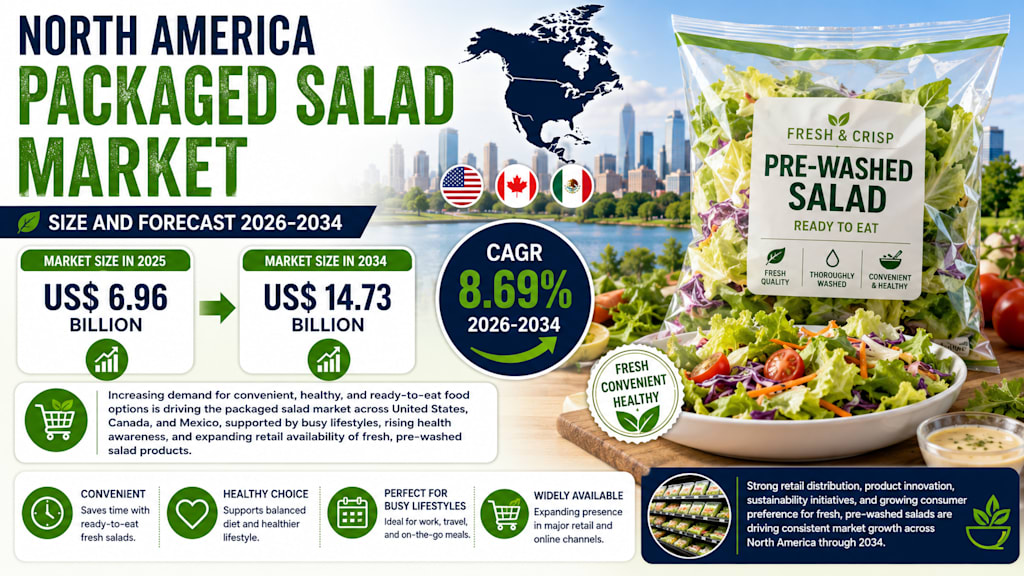
The way people approach healthy eating is changing rapidly across North America. Modern consumers are increasingly looking for food options that combine nutrition, convenience, freshness, and great taste without requiring extensive preparation. As busy lifestyles become the norm and health awareness continues to grow, packaged salads have emerged as one of the most popular ready-to-eat food categories in supermarkets, convenience stores, and online grocery platforms.
According to Renub Research, the North America Packaged Salad Market is expected to grow from US$ 6.96 billion in 2025 to US$ 14.73 billion by 2034, registering an impressive compound annual growth rate (CAGR) of 8.69% between 2026 and 2034. The market's strong expansion reflects changing dietary preferences, growing interest in balanced nutrition, and increasing demand for convenient meal solutions across the United States, Canada, and Mexico.
What was once considered a simple side dish has evolved into a complete meal category offering proteins, grains, specialty dressings, and globally inspired flavors. Today’s packaged salads are designed not only to save time but also to support healthier lifestyles while delivering restaurant-quality experiences at home.

Understanding the Growing Appeal of Packaged Salads
Packaged salads are pre-washed, ready-to-consume combinations of fresh vegetables, leafy greens, and complementary ingredients such as proteins, toppings, grains, and dressings. These products are typically sold in sealed bags, containers, or meal kits that preserve freshness and provide convenience for consumers.
Unlike traditional salads that require washing, chopping, and preparation, packaged salads allow consumers to enjoy nutritious meals immediately. This convenience makes them particularly attractive for working professionals, students, busy families, and health-conscious individuals seeking quick meal solutions.
Advancements in packaging technology and cold chain logistics have significantly improved product quality and shelf life, allowing retailers to offer fresh salads while maintaining food safety standards. As a result, packaged salads have become mainstream products rather than niche health-food options.
Today, consumers can choose from simple mixed greens, premium salad kits, protein-packed meal bowls, organic varieties, and gourmet-inspired offerings that cater to a wide range of tastes and dietary preferences.
Health Awareness Is Driving Consumer Demand
One of the strongest growth drivers in the packaged salad market is increasing awareness of health and nutrition. Consumers are paying closer attention to the foods they eat and actively seeking options that support weight management, heart health, digestive wellness, and overall well-being.
Fresh vegetables are widely recognized as essential components of a balanced diet, and packaged salads provide an easy way to increase vegetable consumption without additional effort. The growing popularity of clean eating, plant-based diets, and nutrient-dense meals has further strengthened demand for ready-to-eat salad products.
Many consumers view packaged salads as healthier alternatives to fast food and heavily processed meals. The ability to quickly access fresh ingredients aligns perfectly with modern wellness trends and encourages more consistent healthy eating habits.
As healthcare awareness continues growing throughout North America, packaged salads are expected to remain an important part of consumers' dietary choices.
Convenience Has Become a Major Purchasing Factor
Modern lifestyles leave many consumers with limited time for meal preparation. Long work hours, commuting demands, family responsibilities, and busy schedules have increased the demand for convenient food solutions.
Packaged salads address this need by eliminating several preparation steps. Because the products are pre-washed, portioned, and ready to consume, consumers can enjoy healthy meals within minutes.
The convenience factor extends beyond home consumption. Many professionals purchase packaged salads for office lunches, while students and travelers appreciate portable meal options that fit into their daily routines.
Retailers have responded by expanding their packaged salad selections, offering products in multiple formats including individual bowls, family-sized kits, grab-and-go containers, and complete meal solutions.
This emphasis on convenience continues to be one of the most powerful forces driving market growth across North America.
Product Innovation Is Transforming the Category
Innovation has become a critical factor in the success of the packaged salad industry. Manufacturers are continually developing new products that move beyond traditional leafy greens to deliver more satisfying and flavorful meal experiences.
Today's salad kits often include premium ingredients such as grilled chicken, nuts, seeds, quinoa, ancient grains, cheese, specialty dressings, and crunchy toppings. These additions transform salads into complete meals capable of competing with restaurant offerings.
In October 2024, Bonduelle introduced Bistro Loaded Bowls, featuring combinations of fresh greens, protein-rich ingredients, toppings, and dips designed to provide consumers with convenient and satisfying meal options.
Flavor innovation is equally important. Mediterranean-inspired recipes, Asian fusion concepts, Southwest flavors, tropical blends, and gourmet culinary combinations help attract a broader audience and encourage repeat purchases.
By continuously expanding product variety, manufacturers are successfully appealing to both health-conscious consumers and those seeking convenient, flavorful meal alternatives.
Packaging Innovation Supports Market Expansion
Packaging plays a vital role in the packaged salad market, influencing freshness, convenience, sustainability, and consumer perception.
Modern packaging technologies help extend shelf life while preserving product quality. Features such as resealable bags, freshness indicators, and improved moisture control systems contribute to better consumer experiences and reduced food waste.
In July 2025, BrightFarms introduced updated packaging and branding across its salad kit portfolio. The redesign emphasized pesticide-free farming practices, freshness guarantees, and improved convenience features designed to appeal particularly to Millennial and Generation Z consumers.
Packaging innovation also enhances retail performance. Attractive designs help products stand out on crowded shelves while clearly communicating nutritional benefits, sustainability initiatives, and quality assurances.
As consumers increasingly seek transparency and convenience, advanced packaging solutions continue strengthening brand loyalty and supporting market growth.
Strategic Acquisitions and Industry Expansion Fuel Growth
The packaged salad industry is also benefiting from strategic partnerships, acquisitions, and operational expansions that improve production capacity and distribution capabilities.
In December 2024, Fresh Express acquired McEntire Produce, Inc., strengthening its position within the North American food service sector. This acquisition enabled the company to expand supply chain capabilities and enhance access to institutional customers, restaurants, and catering operations.
Industry consolidation allows companies to achieve greater efficiency, improve product consistency, and expand geographic reach. Enhanced coordination between growers, processors, distributors, and retailers contributes to more reliable product availability and improved customer satisfaction.
As competition intensifies, strategic investments will remain important tools for companies seeking to strengthen their market positions.
Challenges Facing the Packaged Salad Industry
Despite strong growth prospects, the packaged salad market faces several challenges that require ongoing attention.
One of the most significant concerns is the limited shelf life of fresh produce. Leafy greens are highly perishable and sensitive to temperature fluctuations, making storage and transportation particularly challenging.
Retailers often experience losses due to unsold inventory, while consumers may hesitate to purchase products approaching expiration dates. Food waste remains both an economic and environmental concern throughout the supply chain.
Manufacturers continue investing in advanced packaging technologies, improved cold chain infrastructure, and supply chain optimization to address these issues.
Another challenge involves pricing. Packaged salads often cost more than loose vegetables due to processing, packaging, transportation, and quality-control requirements.
Price-sensitive consumers may choose to purchase fresh produce and prepare salads at home, particularly during periods of economic uncertainty. To remain competitive, manufacturers must continue demonstrating the value of convenience, quality, and nutritional benefits.
The United States Leads the North American Market
The United States represents the largest packaged salad market in North America, supported by strong consumer awareness of healthy eating and widespread demand for convenient food solutions.
Busy lifestyles, growing wellness trends, and extensive retail distribution networks contribute to strong product adoption across the country. Supermarkets, warehouse clubs, convenience stores, and online grocery platforms ensure broad accessibility for consumers.
The U.S. market is characterized by continuous innovation, including organic products, premium meal kits, protein-enriched salads, and chef-inspired flavor combinations.
Strong cold chain infrastructure and the presence of major industry players further strengthen market growth and product availability.
Canada Emphasizes Sustainability and Healthy Living
Canada's packaged salad market continues expanding due to increasing health consciousness and growing interest in sustainable food choices.
Urban populations in cities such as Toronto, Vancouver, and Montréal actively seek convenient meal options that align with healthy lifestyles. Canadian consumers also demonstrate strong interest in organic produce, environmentally friendly packaging, and clean-label products.
Government initiatives promoting balanced nutrition further support consumption of fresh vegetables and ready-to-eat salad products.
The growing popularity of plant-based eating patterns creates additional opportunities for manufacturers targeting health-conscious consumers throughout the country.
Mexico Presents Emerging Opportunities
Mexico's packaged salad market is developing steadily as urbanization, income growth, and changing dietary preferences influence consumer behavior.
Expanding supermarket networks and convenience retail formats are increasing product accessibility across major urban centers including Mexico City, Monterrey, and Guadalajara.
While traditional eating habits continue to favor freshly prepared meals, growing awareness of nutrition and increasing demand for convenient food solutions are encouraging adoption of packaged salad products.
As middle-class incomes continue rising and health awareness improves, Mexico is expected to contribute significantly to future market growth.
Recent Innovations Continue Strengthening Competition
Leading companies remain focused on introducing innovative products that attract new consumers and enhance brand differentiation.
In March 2026, Fresh Express launched four new Unexpected Chopped Salad Kits featuring globally inspired flavor combinations designed to deliver restaurant-quality dining experiences in convenient retail formats.
In January 2025, Fresh Del Monte Produce, through its Mann Packing division, introduced a new range of Newman's Own Salad Kits featuring chef-inspired recipes and premium-quality lettuce.
These product launches demonstrate the industry's commitment to innovation and its focus on meeting evolving consumer preferences.
Major companies operating within the North America packaged salad market include BrightFarms, Dole, Earthbound Farm, Eat Smart, Missionero, Gotham Greens, Mann Packing Co., Inc., Bonduelle, and Fresh Express.
Final Thoughts
The North America Packaged Salad Market is experiencing remarkable growth as consumers increasingly prioritize health, convenience, freshness, and flavor in their daily food choices. With the market projected to expand from US$ 6.96 billion in 2025 to US$ 14.73 billion by 2034, packaged salads are becoming a central component of modern eating habits.
Driven by wellness trends, product innovation, advanced packaging technologies, and expanding retail availability, the industry is well-positioned for long-term success. As manufacturers continue developing new flavors, premium meal solutions, and sustainable packaging options, packaged salads will remain an attractive choice for consumers seeking nutritious and convenient meal alternatives throughout North America.
About the Creator
Enjoyed the story? Support the Creator.
Subscribe for free to receive all their stories in your feed.
Comments
There are no comments for this story
Be the first to respond and start the conversation.