
Why Are Fast Food and Quick Service Restaurants Continuing to Dominate America’s Dining Culture?
How Convenience, Digital Ordering, Delivery Services, and Menu Innovation Are Driving Growth in the United States Fast Food & Quick Service Restaurant Market

Fast food and quick service restaurants (QSRs) have become deeply embedded in American culture. From morning coffee runs and lunchtime burgers to late-night pizza deliveries, millions of consumers rely on fast food establishments every day for convenient, affordable, and accessible meals. While the industry has long been associated with speed and value, today's market is evolving rapidly as technology, consumer preferences, and health-conscious dining trends reshape the way Americans order and consume food.
Restaurant operators are investing heavily in digital transformation, delivery platforms, menu innovation, and customer experience improvements to remain competitive in an increasingly dynamic marketplace. At the same time, consumers continue demanding greater convenience, customization, healthier menu options, and seamless digital interactions.
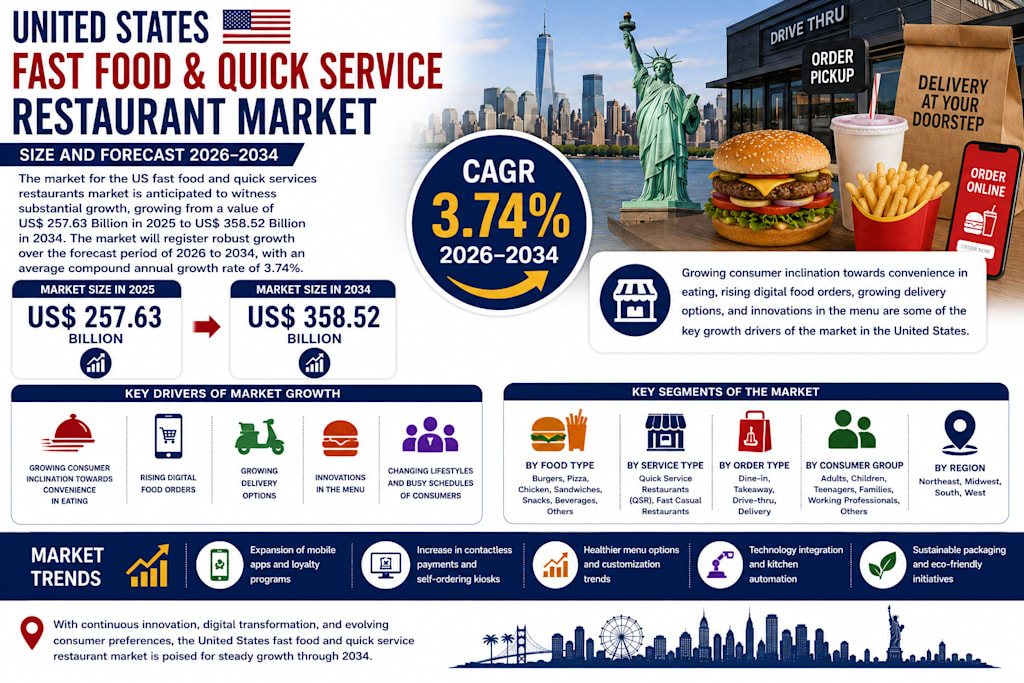
According to Renub Research, the United States Fast Food & Quick Service Restaurant Market is projected to grow from US$ 257.63 billion in 2025 to US$ 358.52 billion by 2034, registering a compound annual growth rate (CAGR) of 3.74% between 2026 and 2034. Growth is being fueled by rising demand for convenience, expanding food delivery services, increasing digital ordering, and continuous menu innovation across restaurant categories.
As consumer lifestyles continue evolving, fast food and quick service restaurants remain one of the most resilient and influential sectors within the U.S. foodservice industry.
Convenience Remains the Foundation of Industry Growth
One of the primary reasons for the continued success of fast food and quick service restaurants is their ability to deliver convenience.
Modern consumers increasingly face demanding schedules, long working hours, urban commutes, and multiple responsibilities that leave limited time for meal preparation. Fast food restaurants provide quick, affordable, and accessible solutions that fit seamlessly into these lifestyles.
Drive-thrus, takeaway services, mobile ordering applications, curbside pickup, and delivery options allow consumers to obtain meals with minimal effort and waiting time.
The appeal extends across demographics, including students, working professionals, families, and retirees who value speed and reliability when making dining decisions.
As convenience continues shaping consumer behavior, quick service restaurants remain well-positioned to capture growing demand.
Digital Ordering Is Transforming Customer Experiences
Technology has fundamentally changed how consumers interact with restaurants.
Mobile applications, online ordering systems, self-service kiosks, digital payment solutions, and loyalty programs have become essential components of modern restaurant operations. Consumers increasingly prefer ordering meals through smartphones due to convenience, speed, and personalization.
Restaurants benefit from digital ordering because it improves operational efficiency, reduces wait times, and enables data-driven marketing strategies. Customer purchasing habits can be analyzed to create targeted promotions and personalized recommendations.
Artificial intelligence is also becoming increasingly important within the sector. Automated ordering systems, predictive analytics, and customer engagement tools help restaurants streamline operations while enhancing user experiences.
The industry's ongoing digital transformation continues creating new opportunities for growth and customer retention.
Food Delivery Services Continue Expanding Market Reach
The rapid growth of food delivery services has become one of the most influential developments within the fast food industry.
Consumers increasingly prefer the convenience of ordering meals directly to homes, offices, and other locations. Partnerships with third-party delivery providers have allowed restaurants to extend their reach beyond traditional dining and takeaway channels.
The COVID-19 pandemic accelerated adoption of delivery services, and many of these behavioral changes have remained permanent. Contactless ordering, online payment systems, and real-time order tracking have become standard expectations among consumers.
Delivery platforms also allow restaurants to access new customer segments without investing in additional physical locations.
As delivery infrastructure continues improving, this channel is expected to remain a major contributor to market expansion.
Menu Innovation Keeps Consumers Engaged
Today's consumers expect more than traditional burgers and fries.
Changing dietary preferences, health awareness, and culinary curiosity have encouraged restaurants to diversify menus and introduce new offerings. Consumers increasingly seek healthier options, plant-based alternatives, customizable meals, organic ingredients, and globally inspired flavors.
Restaurant chains are responding by introducing lower-calorie dishes, vegetarian and vegan options, gluten-free products, and premium menu items designed to appeal to broader audiences.
Limited-time offers, seasonal menus, and international flavor inspirations also help generate excitement and encourage repeat visits.
Continuous menu innovation remains one of the most effective ways for restaurants to maintain relevance in a highly competitive marketplace.
Health-Conscious Dining Is Influencing Industry Strategies
Health awareness continues reshaping consumer expectations.
Many Americans are becoming increasingly concerned about nutrition, ingredient quality, calorie content, and overall wellness. Rising rates of obesity, diabetes, and cardiovascular disease have prompted consumers to scrutinize food choices more carefully.
As a result, quick service restaurants are expanding healthier menu options that emphasize fresh ingredients, lean proteins, vegetables, and balanced nutrition.
Transparency has also become increasingly important. Consumers often expect nutritional information, ingredient disclosures, and customizable meal options that allow them to make informed choices.
Restaurants capable of balancing convenience with health-conscious offerings are increasingly positioned for long-term success.
Hamburgers Continue Leading the Market
Hamburgers remain one of the most important product categories within the U.S. fast food market.
Consumers continue favoring hamburgers due to their affordability, familiarity, convenience, and versatility. Major restaurant chains regularly introduce premium burgers, gourmet toppings, and plant-based alternatives to attract diverse customer segments.
Customization has become a key trend, allowing consumers to personalize burgers according to dietary preferences and flavor preferences.
The widespread availability of hamburger-focused chains, combined with strong brand loyalty and extensive marketing efforts, ensures continued strength within this segment.
As innovation continues, hamburgers remain a cornerstone of the fast food industry.
Pizza Remains an American Favorite
Few food categories enjoy the widespread popularity of pizza.
According to industry data, approximately 93% of Americans consume pizza during a typical month, while the average individual eats roughly 23 pounds of pizza annually. More than three billion pizzas are purchased across the United States each year, highlighting the category's enormous scale and influence.
Pizza's popularity stems from its versatility, affordability, and suitability for both individual and group consumption. Consumers appreciate the ability to customize toppings, crust styles, and portion sizes according to personal preferences.
Online ordering and delivery services have further strengthened pizza's position within the quick service restaurant market.
As consumer demand remains strong, pizza continues serving as one of the industry's most important revenue generators.
Sandwiches Continue Benefiting from Customization Trends
The sandwich segment continues experiencing steady growth due to its flexibility and broad consumer appeal.
Consumers increasingly value sandwiches because they can be customized according to dietary preferences, portion requirements, and nutritional goals. Options such as grilled chicken sandwiches, wraps, vegetarian selections, artisan breads, and premium ingredients have expanded consumer choices.
Health-conscious consumers are particularly attracted to sandwiches that incorporate whole grains, fresh vegetables, and lean protein sources.
Convenience and portability further contribute to the category's popularity among busy consumers seeking quick meal solutions.
As personalization continues influencing dining decisions, sandwiches remain an important growth segment within the market.
Labor Shortages and Rising Costs Challenge Operators
Despite strong demand, the industry faces significant operational challenges.
Labor shortages remain a major concern for restaurant operators nationwide. Many businesses continue struggling to recruit and retain employees, resulting in higher wage costs and operational pressures.
At the same time, inflation has increased expenses associated with food ingredients, transportation, rent, utilities, and packaging materials. These rising costs place pressure on profit margins while making pricing decisions increasingly difficult.
To address these challenges, many operators are investing in automation technologies such as self-service kiosks, AI-powered ordering systems, and robotic food preparation equipment.
Although these solutions improve efficiency, they often require substantial upfront investments.
Successfully balancing operational costs while maintaining service quality remains a critical challenge for the industry.
California Leads Innovation and Market Size
California represents one of the largest and most innovative fast food markets in the United States.
Consumers in California frequently seek convenience while also prioritizing sustainability, ingredient quality, and healthier menu options. This unique combination encourages restaurants to experiment with organic products, plant-based meals, and environmentally friendly practices.
Major metropolitan areas such as Los Angeles, San Francisco, and San Diego serve as testing grounds for new technologies, digital ordering systems, and innovative menu concepts.
The state's diverse population also creates strong demand for international cuisines and culturally inspired food offerings.
Texas Benefits from Rapid Population Growth
Texas continues to experience significant growth within the fast food and quick service restaurant sector.
Rapid urbanization, expanding populations, and strong economic development contribute to increasing demand across cities such as Houston, Dallas, Austin, and San Antonio.
Consumers in Texas demonstrate strong interest in burgers, barbecue, Tex-Mex cuisine, and customizable menu options. Restaurant operators continue expanding locations to meet growing demand throughout suburban and urban markets.
Digital ordering, delivery services, and mobile payment technologies are also driving increased customer engagement across the state.
Florida and New York Remain Key Markets
Florida benefits from strong tourism activity, population growth, and demand for convenient dining options. Major tourist destinations and urban centers generate significant traffic for quick service restaurants throughout the year.
New York remains one of the most dynamic markets due to its dense population, fast-paced lifestyle, and diverse consumer base. Restaurants in New York frequently introduce innovative menu concepts, premium offerings, and digital ordering solutions to remain competitive.
Together, these states represent some of the most influential markets shaping national industry trends.
Recent Industry Developments Highlight Market Evolution
Recent developments illustrate the industry's commitment to innovation and customer convenience.
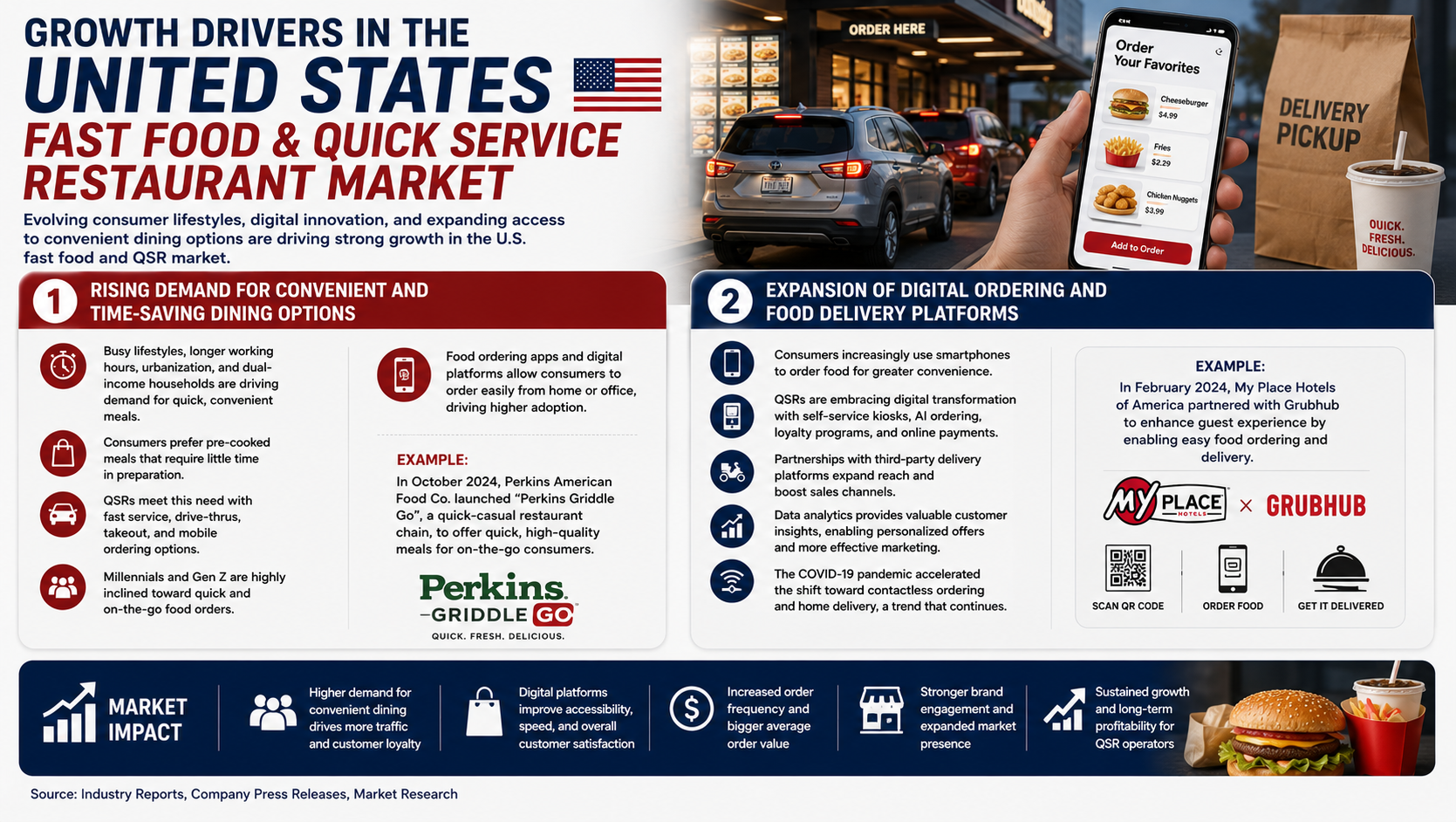
In October 2024, Perkins American Food Co. launched "Perkins Griddle Go," a quick-casual restaurant concept designed to meet growing demand for convenient dining experiences.
In February 2024, My Place Hotels of America partnered with Grubhub to improve guest access to food delivery services through QR-code-enabled ordering systems.
These initiatives reflect broader industry efforts to leverage technology and convenience to enhance customer experiences.
Leading Companies Competing in the Market
The United States fast food and quick service restaurant market includes some of the world's most recognized restaurant brands. Major participants include McDonald's, Pizza Hut, KFC, Domino's Pizza, Taco Bell, Chick-fil-A, Starbucks, and Chipotle Mexican Grill. These organizations continue investing heavily in menu development, technology integration, customer loyalty programs, and operational efficiency.
Final Thoughts
The United States Fast Food & Quick Service Restaurant Market continues evolving as consumer expectations shift toward convenience, digital engagement, healthier options, and personalized dining experiences.
With the market projected to grow from US$ 257.63 billion in 2025 to US$ 358.52 billion by 2034, opportunities remain substantial for restaurant operators that successfully combine speed, innovation, technology, and customer-centric strategies.
As digital ordering, delivery services, menu innovation, and health-conscious offerings continue shaping the industry, fast food and quick service restaurants will remain a central part of America's dining landscape for years to come.
About the Creator
Enjoyed the story? Support the Creator.
Subscribe for free to receive all their stories in your feed.
Comments
There are no comments for this story
Be the first to respond and start the conversation.