
Why America’s Fast Food and Quick Service Restaurant Industry Keeps Growing Despite Changing Consumer Habits
Digital ordering, healthier menu innovation, and convenience-driven lifestyles are reshaping the future of fast food across the United States.

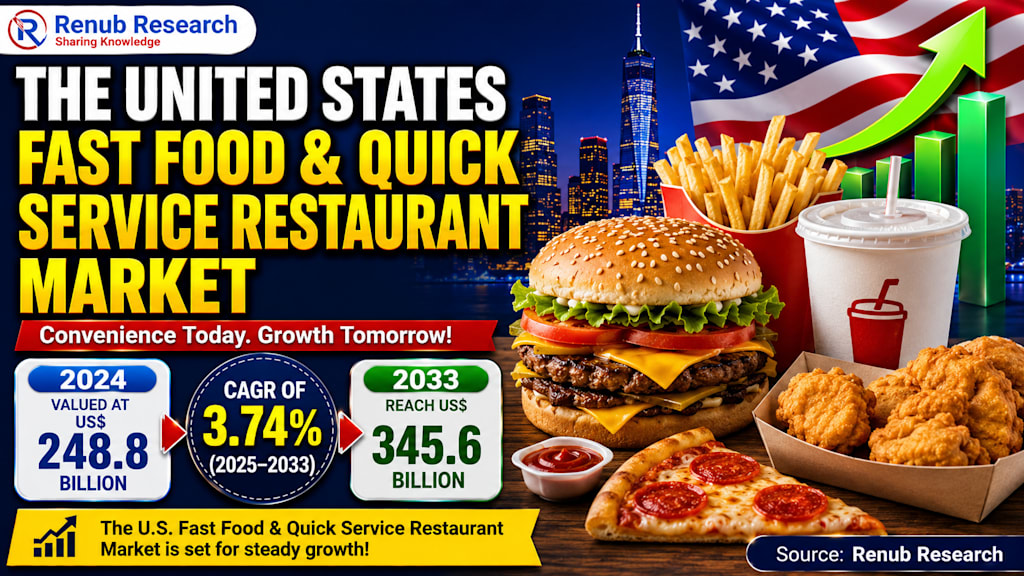
From burgers and fries to tacos, pizza, sandwiches, and fried chicken, quick service restaurants have become part of daily life for millions of consumers across the United States. Whether it’s grabbing breakfast during a morning commute, ordering dinner through a mobile app, or stopping at a drive-thru after work, fast food continues to dominate the modern dining experience.
But the industry Americans know today is evolving rapidly.
Fast food and quick service restaurants (QSRs) are no longer focused only on speed and affordability. Technology, health-conscious eating habits, delivery platforms, personalization, and changing consumer expectations are transforming the market into a far more sophisticated and competitive industry.
According to Renub Research, the United States Fast Food & Quick Service Restaurant Market was valued at US$ 248.8 billion in 2024 and is expected to reach US$ 345.6 billion by 2033, growing at a CAGR of 3.74% between 2025 and 2033. The report highlights that convenience-driven lifestyles, digital ordering growth, and menu innovation are among the major factors fueling market expansion.
The future of fast food in America is no longer simply about serving meals quickly. It is increasingly about creating seamless, personalized, technology-driven dining experiences that fit modern consumer lifestyles.
Convenience Remains the Industry’s Biggest Advantage
One of the strongest reasons behind the continued growth of fast food and QSRs is convenience.
Modern American lifestyles are busier than ever. Long work hours, hectic schedules, urban commuting, and increased reliance on digital services have reduced the amount of time many consumers spend preparing meals at home.
Fast food restaurants provide an easy solution.
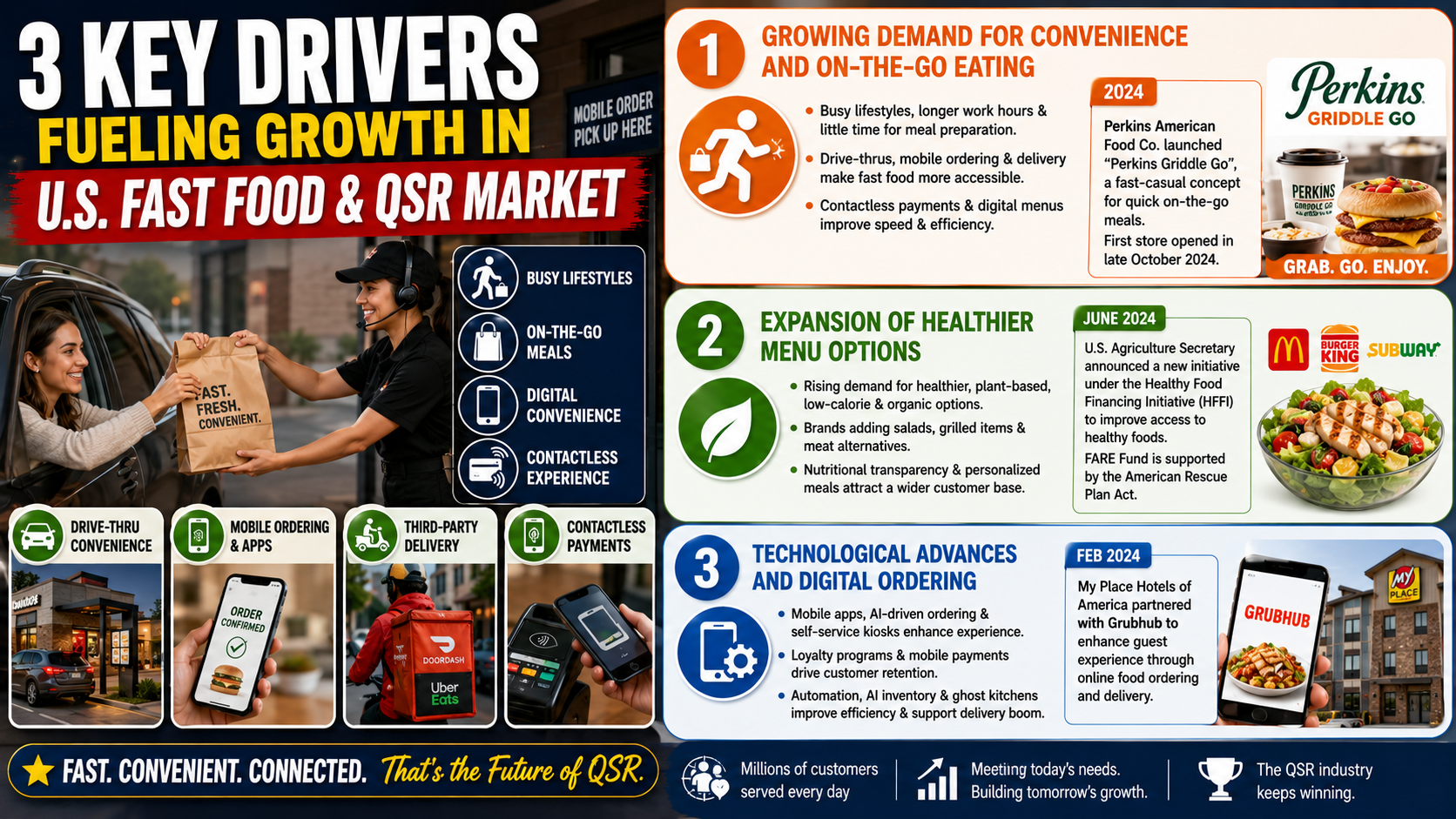
Consumers can order meals within minutes through drive-thrus, mobile apps, self-service kiosks, or delivery platforms without major time commitments. This convenience has helped QSRs remain highly relevant even as food trends continue changing.
Drive-thru culture remains especially powerful in the United States.
Chains such as McDonald’s, Chick-fil-A, Taco Bell, and Wendy’s continue investing heavily in faster service systems and digital ordering technology designed to reduce wait times and improve customer experiences.
Third-party delivery services such as DoorDash, Uber Eats, and Grubhub have further accelerated industry growth by making restaurant access easier than ever before.
Consumers no longer need to leave their homes to enjoy restaurant meals.
In 2024, Perkins American Food Co. launched “Perkins Griddle Go,” a fast-casual concept focused specifically on quick, on-the-go meals for convenience-oriented consumers.
This reflects the broader industry trend toward speed, accessibility, and frictionless dining experiences.
Technology Is Completely Transforming Fast Food
Technology has become one of the most important forces shaping the fast food industry.
Modern QSRs increasingly rely on mobile applications, AI-powered ordering systems, self-service kiosks, contactless payments, loyalty programs, and data-driven personalization tools to improve operations and customer satisfaction.
Consumers now expect digital convenience as part of the dining experience.
Many major chains allow customers to customize meals, collect rewards points, save favorite orders, and receive personalized promotions directly through mobile apps.
Brands such as Starbucks and Chick-fil-A have built highly successful loyalty ecosystems that strengthen customer retention while generating valuable consumer data.
Artificial intelligence is also beginning to reshape restaurant operations.
AI-powered systems can now help predict demand patterns, optimize inventory management, improve kitchen efficiency, and even automate parts of food preparation.
Automation is becoming increasingly important as restaurants attempt to reduce labor costs and improve service speed.
The growth of ghost kitchens and virtual restaurants is another major technological shift.
These delivery-focused operations allow brands to expand market reach without opening traditional dining spaces, helping restaurants adapt to the growing popularity of online food delivery.
Technology is no longer optional in fast food — it has become central to industry survival and growth.
Healthier Menu Options Are Reshaping Consumer Expectations
For decades, fast food was often criticized for unhealthy ingredients, oversized portions, and highly processed meals.
Today, however, consumer attitudes toward nutrition are forcing major changes across the industry.
Americans are becoming increasingly health-conscious, and many consumers now demand healthier alternatives without sacrificing convenience.
Fast food chains are responding aggressively.
Major brands such as McDonald’s, Burger King, Subway, and Chipotle have expanded menu offerings to include salads, grilled items, low-calorie meals, plant-based proteins, and customizable food options.
Consumers increasingly expect nutritional transparency as well.
Calorie labeling, ingredient information, and customizable meal choices are becoming standard features across many restaurant chains.
Plant-based innovation is also playing an important role.
Products such as Impossible Burger patties and Beyond Meat alternatives have helped fast food brands appeal to vegetarian, vegan, and flexitarian consumers seeking meat-free options.
Government initiatives are also supporting healthier food access.
In June 2024, the U.S. Department of Agriculture announced a new initiative under the Healthy Food Financing Initiative designed to improve access to healthy foods in underserved communities.
This broader focus on nutrition and accessibility is influencing restaurant strategies nationwide.
Fast food chains now understand that long-term success depends not only on affordability and convenience but also on evolving with consumer wellness priorities.
The Hamburger Market Continues Dominating Fast Food
Despite growing menu diversification, hamburgers remain the backbone of the American fast food industry.
Brands such as McDonald’s, Burger King, Wendy’s, Five Guys, and Shake Shack continue dominating this segment through constant menu innovation and aggressive marketing.
Consumers increasingly seek premium burger experiences featuring fresh ingredients, customizable toppings, gourmet sauces, and high-quality meats.
Fast-casual burger chains have especially benefited from this shift toward premiumization.
Restaurants like Shake Shack and Five Guys have built strong consumer loyalty by focusing on freshness, customization, and elevated dining experiences while still maintaining quick service convenience.
Plant-based burger alternatives have also expanded the segment’s reach.
Impossible Burgers and Beyond Meat patties have helped chains attract health-conscious and environmentally aware consumers while introducing new product diversity.
Despite intense competition, burgers remain deeply connected to American food culture and continue driving substantial industry revenue.
Pizza Chains Continue Thriving Through Delivery Innovation
Pizza remains one of the strongest-performing categories within the U.S. quick service restaurant industry.
Chains such as Domino’s, Pizza Hut, and Papa John’s continue benefiting from high consumer demand for convenient group meals and delivery-friendly dining.
Technology has become especially important within the pizza segment.
Domino’s, in particular, has positioned itself as a technology-driven company by heavily investing in online ordering systems, delivery tracking, and app-based customer experiences.
Customization trends are also helping pizza chains expand market appeal.
Consumers increasingly prefer build-your-own pizzas, gluten-free crusts, cauliflower crusts, and specialty toppings tailored to dietary preferences.
Take-and-bake pizza options and frozen QSR-inspired products are further extending the category beyond traditional restaurant dining.
Pizza’s convenience, shareability, and adaptability continue making it one of the most resilient segments in the fast food industry.
Mexican Fast Food Is Rapidly Expanding
Mexican quick service restaurants are experiencing especially strong growth across the United States.
Chains such as Taco Bell, Chipotle, and Qdoba continue attracting consumers through bold flavors, customizable meals, and fresh ingredient offerings.
Tacos, burritos, quesadillas, nachos, and bowls have become mainstream favorites among younger consumers seeking flavorful and customizable dining options.
Mexican fast food also benefits from strong cultural influence and increasing consumer interest in international cuisines.
Chipotle, in particular, has positioned itself as a leader in premium fast-casual dining by emphasizing ingredient transparency, customization, and fresh preparation methods.
Plant-based protein options such as sofritas and grilled vegetables are helping Mexican chains expand appeal among health-conscious consumers.
This segment’s combination of flavor, flexibility, and perceived freshness continues supporting rapid market expansion.
Regional Markets Reflect Different Consumer Preferences
Fast food culture varies significantly across different regions of the United States.
The Eastern U.S. market benefits from dense urban populations and strong adoption of digital ordering and delivery services. Consumers in cities such as New York and Boston increasingly demand healthier and plant-based options alongside traditional fast food.
The Western U.S., particularly California, remains a leader in health-conscious dining trends. Organic ingredients, vegan meals, and sustainability-focused restaurant concepts are especially popular across the West Coast.
The Northern U.S. market is influenced by colder climates and strong coffee culture. Chains such as Dunkin’ and Starbucks play a major role in regional dining habits alongside traditional burger and sandwich restaurants.
Meanwhile, the Southern United States remains heavily influenced by comfort food traditions. Fried chicken, barbecue, biscuits, and bold flavors dominate consumer preferences in states such as Texas, Georgia, and Florida.
Brands such as Chick-fil-A, Popeyes, and Bojangles continue thriving in the Southern market due to strong regional loyalty and cultural relevance.
These regional differences demonstrate the diversity and adaptability of the American fast food industry.
Challenges Facing the Fast Food Industry
Despite strong growth potential, the fast food and QSR industry still faces major challenges.
One of the biggest concerns involves rising labor and food costs.
Inflation, supply-chain disruptions, staffing shortages, and increasing wages continue raising operational expenses for restaurants nationwide.
Many chains have responded by increasing menu prices, but higher costs may eventually impact consumer spending behavior.
Employee retention also remains difficult in an industry historically known for high turnover rates.
Competition is another major challenge.
The U.S. fast food market is highly saturated, with traditional chains competing not only against each other but also against fast-casual restaurants, meal kits, grocery prepared foods, and independent delivery-focused brands.
Consumers today have endless dining options.
To remain competitive, QSRs must constantly innovate menus, improve technology systems, strengthen loyalty programs, and adapt to changing dietary preferences.
Final Thoughts
The United States fast food and quick service restaurant market continues evolving far beyond its traditional image.
What was once built primarily around speed and affordability is now increasingly shaped by technology, personalization, convenience, wellness, and digital connectivity.
According to Renub Research, the market is projected to reach US$ 345.6 billion by 2033, reflecting the enormous role fast food still plays in everyday American life.
Consumers today expect more than simply quick meals.
They want convenience without friction, healthier choices without sacrificing flavor, and digital experiences that make dining easier and more personalized.
Fast food brands that successfully balance innovation, affordability, and evolving consumer expectations are likely to remain dominant in the years ahead.
And in a society increasingly driven by speed and convenience, the quick service restaurant industry may continue becoming even more essential to modern American living.
About the Creator
Enjoyed the story? Support the Creator.
Subscribe for free to receive all their stories in your feed.
Comments
There are no comments for this story
Be the first to respond and start the conversation.