
What's Really Flying the Plane: Commercial Aircraft Avionics Explained
Inside the avionics systems quietly revolutionizing safety, navigation, and the future of flight.

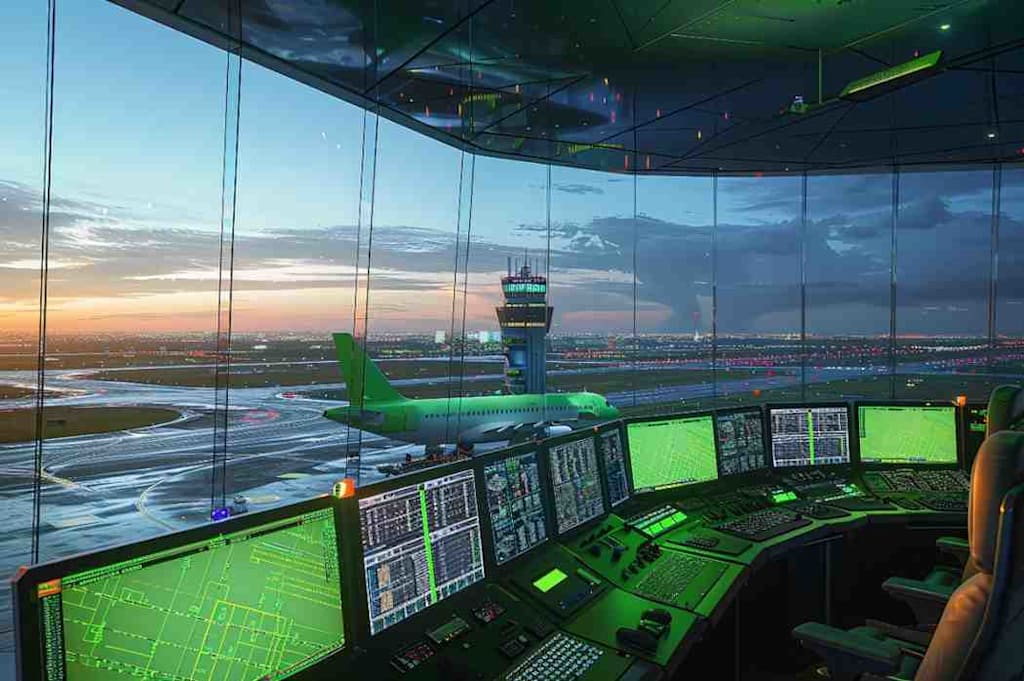
The Invisible Intelligence Running Every Modern Flight
Before a commercial aircraft pushes back from the gate, hundreds of systems have already run self-diagnostics, cross-checked navigation data, and confirmed communication links with air traffic control — all without a single manual input from the crew. The technology behind this invisible pre-flight handshake is avionics, and the Commercial Aircraft Avionics Systems Market is quietly becoming one of the most consequential segments in aerospace. As fleets modernize and airspace grows more congested, the systems guiding aircraft from pushback to touchdown are evolving faster than most passengers realize.
For anyone tracking how this segment is developing, a closer look at current research offers useful grounding — the full dataset is available for those who want to explore the numbers firsthand.
What Avionics Actually Covers
The word "avionics" gets used loosely, but it covers a precise and expansive set of systems. Flight management systems calculate optimal routes in real time, factoring in weather, fuel load, wind, and air traffic constraints. Communication systems maintain continuous links between cockpit and ground. Navigation suites — GPS, inertial reference systems, radio navigation — provide layered redundancy so that losing any single signal doesn't compromise positional awareness.
Then there's the safety layer: traffic collision avoidance systems, terrain warning systems, weather radar, and automatic dependent surveillance. Each of these operates independently but feeds into a shared cockpit picture that lets two pilots manage an aircraft carrying hundreds of people through conditions that would have grounded flights a generation ago.
Modern avionics aren't just instruments. They're the cognitive architecture of the aircraft.
Why Modernization Is Accelerating Now
Several forces are converging to drive avionics investment at an unusual pace. Regulatory mandates are a significant factor. Airspace authorities in the US, Europe, and increasingly Asia-Pacific have been rolling out Performance-Based Navigation requirements, ADS-B mandates, and datalink communication standards that require older aircraft to be retrofitted with updated systems or phased out.
Airlines face a choice: upgrade avionics on existing aircraft or accelerate new-aircraft acquisition. Many have chosen the retrofit path, particularly for mid-life narrowbodies with significant remaining service life. A single avionics upgrade program on a fleet of 100 aircraft can run into the hundreds of millions of dollars — making procurement decisions in this space consequential at the corporate level, not just the engineering level.
Researchers examining the Commercial Aircraft Avionics Systems Market have highlighted this regulatory-driven retrofit cycle as one of the primary growth mechanisms in the near term, alongside new aircraft deliveries from Airbus and Boeing resuming momentum after pandemic-era production disruptions.
A Real-World Example: The ADS-B Mandate
The FAA's ADS-B Out mandate, which required US-registered aircraft operating in controlled airspace to be equipped with compliant transponders by January 2020, is instructive. Thousands of commercial and business aircraft required hardware and software upgrades. Avionics suppliers saw a multi-year demand surge as operators raced to comply before the deadline.
The pattern is now repeating in other regions. Southeast Asian aviation authorities, the Gulf states, and parts of Latin America are implementing similar surveillance upgrade requirements. Each mandate creates a defined, time-bounded window of avionics demand — the kind of predictable procurement cycle that suppliers plan years in advance.
The Software Shift Changing the Industry
Perhaps the most structurally significant development in commercial avionics is the move toward software-defined architectures. Traditionally, avionics systems were purpose-built hardware — upgrading one function meant replacing a physical line-replaceable unit. Integrated modular avionics platforms, now standard on newer aircraft types, run multiple functions on shared hardware, allowing capability updates through software rather than hardware swaps.
This changes the economics of avionics over an aircraft's service life. Airlines can receive new functionality through certified software updates, reducing the cost and downtime associated with physical modifications. It also shifts competitive dynamics among suppliers — the ability to develop and certify software updates quickly becomes a key differentiator.
For passengers, the practical result is aircraft that keep improving in capability throughout their service lives, rather than becoming functionally obsolete years after delivery.
What Comes Next
The trajectory for commercial avionics points toward greater automation, deeper integration, and expanded connectivity. Satellite-based communication systems are replacing older ground-based datalinks. Advanced flight management systems are being developed to handle the complexity of urban air mobility corridors alongside conventional commercial traffic.
The systems running silently behind every departure board will only become more sophisticated — and more central to how the industry functions.
About the Creator
Enjoyed the story? Support the Creator.
Subscribe for free to receive all their stories in your feed.
Comments
There are no comments for this story
Be the first to respond and start the conversation.