
What's Really Driving the Natural Skin Care Products Market Growth
The $14.8B natural beauty sector is booming — but its biggest challenge is defining what "natural" actually means.
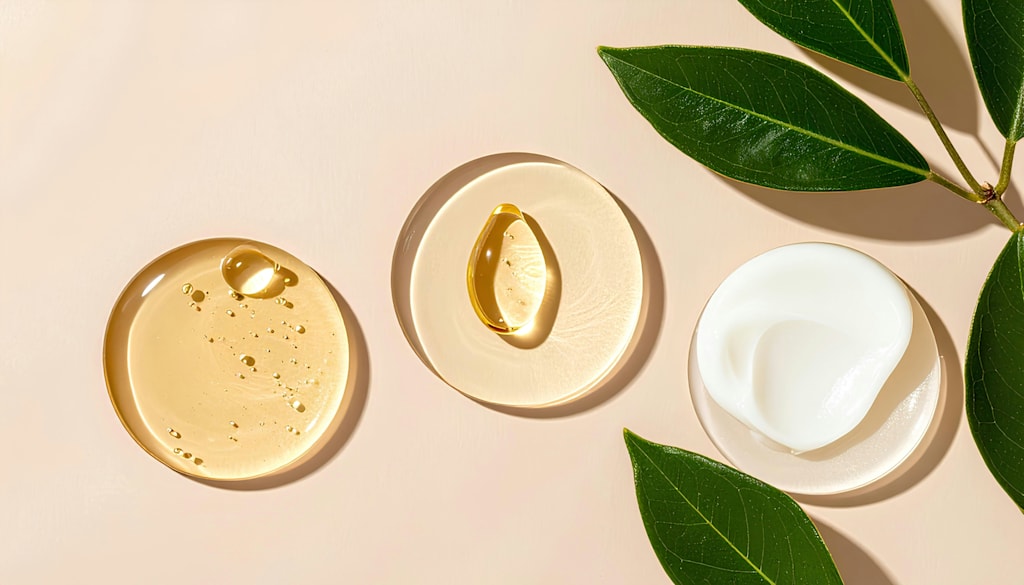
The label says "natural." The ingredient list tells a different story. According to Glamour Magazine, a product qualifies as natural under current standards even if just 1% of its contents come from plant or mineral sources — a loophole so wide that brands have been driving semi-trucks of synthetic chemistry through it for years. And yet, consumers keep buying. The global Natural Skin Care Products Market share is now valued at roughly $14.8 billion in 2025, with projections pointing toward continued expansion through the next decade — detailed segment and regional data is available in this natural skin care industry market overview. The question worth asking isn't whether this market is growing. It's whether the product category itself means anything coherent anymore.
The Clean Beauty Paradox
There is a genuine tension running through the natural skin care space that most market coverage politely ignores. Consumer demand for ingredient transparency is at an all-time high — and yet the regulatory frameworks that would enforce meaningful transparency simply don't exist in most markets. The European Union has the most stringent cosmetics regulations in the world, which partially explains why Europe currently holds a 45.8% share of global natural skin care sales, worth about $3.5 billion. Consumers there can, at minimum, trust that certain synthetic compounds won't appear in their moisturizer. In the United States, the baseline is considerably murkier.
The result is a market built partly on genuine formulation innovation and partly on sophisticated marketing. A 2025 study analyzing 27 green cosmetic advertisements from brands including Clarins and Clinique found that systematic semiotic analysis is now necessary just to decode how natural beauty claims actually function in advertising. That's not a neutral academic observation — it's a quiet admission that this category communicates through implication as much as information.
What Consumers Are Actually Buying
Despite the definitional fog, the category's internal patterns are instructive. Facial care dominates with a 71.4% product share, which tracks with where consumers concentrate their attention and their spending. The cleanser and moisturizer subcategories in particular have seen sustained volume growth, driven by the double-cleansing trend and dermatologist-endorsed plant-based formulations. Mass-tier products account for 78.2% of total market volume — meaning the "natural" shift is not primarily a luxury phenomenon. Middle-income households are driving it.
Women remain the dominant consumer group at 78.1% of end-use, though that figure is shifting. The men's grooming segment is accelerating, with brands ranging from Unilever's portfolio to smaller indie labels launching gender-neutral and specifically male-targeted natural skin care lines. India's Mama Earth is one of the more interesting case studies here — built entirely on a toxin-free positioning, it has captured significant market share across Asia Pacific through a direct-to-consumer digital model that older beauty conglomerates have struggled to replicate at the same speed.
The Supply Chain Behind the Label
One thing the clean beauty conversation rarely surfaces: the production complexity that genuine natural formulations require. Without synthetic preservatives, natural products have shorter shelf lives and are more vulnerable to microbial contamination and oxidation during shipping and storage. Manufacturers working with botanical actives like neem, turmeric, or adaptogenic plant extracts must invest in alternative preservation technologies that add meaningful cost to production. This is a real constraint, not a minor technical footnote.
It also explains something that industry analysis of Natural Skin Care Products Market growth tends to underemphasize — the consolidation pattern. In December 2024, Brazilian beauty company Granado acquired Care Natural Beauty to expand its clean beauty footprint. In February 2026, Solabia acquired Mibelle Biochemistry specifically to scale its bio-based ingredient innovation capabilities. These aren't small moves. They reflect a broader industry conviction that proprietary natural ingredient technology will be a competitive differentiator over the next decade, and that acquiring it is faster than building it. Large players like Estée Lauder and Procter & Gamble have been pursuing similar logic through portfolio acquisitions and in-house reformulation programs.
The Decade Ahead
The market is projected to grow at a 6.6% compound annual rate through 2035, reaching approximately $7.9 billion — though the methodological framing of that figure warrants scrutiny, as some reporting aggregates only premium-positioned naturals while others include mass-market products with minimal botanical content. Regardless of the precise number, the directional trend is clear. E-commerce continues to lower barriers for smaller natural brands to reach global audiences. Emerging markets in Asia, Latin America, and Africa represent meaningful growth frontiers as disposable incomes rise and K-beauty and Ayurvedic traditions drive mainstream interest in botanical formulations. The harder structural question — whether labeling standards will evolve quickly enough to give "natural" a definition with teeth — may ultimately determine how durable this growth trajectory actually proves to be.
About the Creator
Mark K. Belton
I’m Mark K. Belton, 26 years old, currently working as a Digital Marketing Intern. I have a strong interest in digital marketing and have been developing my skills in SEO, social media marketing, content creation, and online campaign
Enjoyed the story? Support the Creator.
Subscribe for free to receive all their stories in your feed.
Comments
There are no comments for this story
Be the first to respond and start the conversation.