
What's Really Driving the $52 Billion Aircraft Cabin Interiors Market
Retrofit spending, fuel math, and a connectivity arms race are reshaping what flies inside every plane.
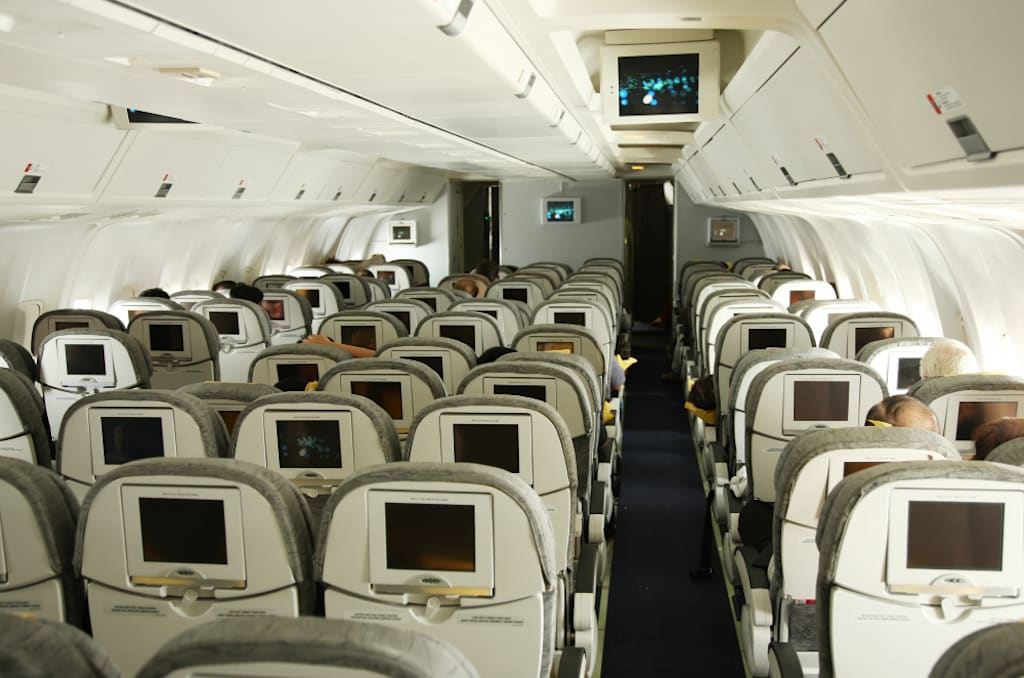
The Seat You're Sitting In Is Worth More Than You Think
Most passengers board a flight and think about legroom, maybe the entertainment screen, occasionally whether the overhead bin will close. Few consider that the chair beneath them — just that one seat — is a small node in a global industry now valued at $27.7 billion and climbing toward $52 billion within the next decade. That's not the aircraft. That's just what's inside it.
The aircraft cabin interiors market, a segment covering everything from stowage bins and lavatory panels to mood lighting and in-flight entertainment systems, is expanding at a compound annual growth rate of 6.5% through 2035, according to this global aircraft cabin interiors industry overview. The numbers are striking on their own, but the more interesting question is why — because the reasons say something revealing about how airlines actually think about the cabins we fly in.
Retrofit Is Quietly Running the Show
Here's the part that surprises people: most of the money in this market isn't coming from new aircraft orders. It's coming from airlines tearing apart existing fleets and rebuilding them from the inside out.
The aftermarket segment commands the majority of spending precisely because airlines can't wait years for fresh deliveries every time passenger expectations shift. Retrofitting is faster, often cheaper per aircraft, and far more controllable. Air India made this logic explicit in September 2024 when it launched a $400 million interior retrofit programme across 67 legacy aircraft, starting with 27 A320neos. That's a substantial capital commitment for a carrier that's been restructuring its entire operation — and it signals something broader. Cabin upgrades are no longer treated as routine maintenance. They've become strategic, investment-grade fleet decisions.
The knock-on effect for suppliers is significant. Companies like Safran, Collins Aerospace, and Recaro have built durable, recurring revenue streams around this retrofit cycle. When an airline like Emirates or Singapore Airlines refreshes its long-haul premium cabin every few years to stay competitive, that's not a one-off event — it's a predictable spending pattern that insulates the market from the boom-and-bust rhythm of new aircraft orders.
Weight Is Money, and Everyone Is Finally Doing the Math
Cabin economics have always involved trade-offs, but the financial calculus around weight has sharpened considerably. Research attributed to simpliflying.com found that 97% of an aircraft seat's total environmental footprint occurs during its operational life — driven almost entirely by the fuel required to carry that seat's weight through thousands of flight cycles. That reframes the engineering obsession with lighter materials as something more fundamental: a direct cost variable, not just a design preference.
Southwest Airlines ran this experiment at scale. A cabin interior retrofit reportedly saved the carrier 6 million gallons of fuel in a single year, translating to roughly $36 million in annual savings. That is a compelling number, and it explains why the aircraft cabin interiors market size and share data consistently shows rising composite material adoption even as alloys — primarily aluminum — still hold a dominant 53.7% material share today. Alloys remain the cost-effective default. Composites are where the long-term math is trending.
Seating Leads, But the Real Competition Is Happening Overhead
Aircraft seating holds the largest single segment share at 32.8%, which makes intuitive sense. Seats are what passengers interact with most directly, and airlines know it. The wars over lie-flat beds in business class, ergonomic economy seats, and slim-line configurations that squeeze in additional rows without technically reducing legroom have driven enormous supplier investment in seat engineering.
But there's a quieter battle happening in connectivity and in-flight entertainment. Passengers in 2026 expect the cabin to behave like an extension of their digital life — fast Wi-Fi, seamless streaming, USB-C charging at every seat. Airlines that can't deliver this face a different kind of complaint than the one about legroom. It's not discomfort; it's irrelevance. Panasonic Avionics and Thales Group have both poured significant resources into next-generation IFE systems, and the integration of satellite-based connectivity — particularly with providers like Starlink entering the aviation space — is reshaping what the interior technology stack looks like entirely.
Asia-Pacific Isn't Catching Up Anymore — It's Setting the Pace
The regional dimension of this market deserves more attention than it typically gets. North America and Europe built the foundational supplier ecosystems, but the growth story has shifted. Asia-Pacific is now home to the fastest-expanding aviation fleets in the world, driven by IndiGo in India, Lion Air in Southeast Asia, and the explosive expansion of Chinese carriers pursuing wide-body route growth. Each new aircraft is a cabin interior contract. Each fleet expansion feeds retrofit demand within a decade. The supply chain has begun responding accordingly, with manufacturing partnerships and MRO facilities proliferating across the region.
The decade ahead for cabin interiors is likely to be defined less by one breakthrough product and more by compressing upgrade cycles — airlines refreshing interiors faster than before, passengers expecting more from every square foot of pressurized space, and regulators pushing weight and emissions targets that make material choices genuinely consequential. The seat you're sitting in, it turns out, is doing a lot of work.
About the Creator
Mark K. Belton
I’m Mark K. Belton, 26 years old, currently working as a Digital Marketing Intern. I have a strong interest in digital marketing and have been developing my skills in SEO, social media marketing, content creation, and online campaign
Enjoyed the story? Support the Creator.
Subscribe for free to receive all their stories in your feed.
Comments
There are no comments for this story
Be the first to respond and start the conversation.