
What's Quietly Powering the Submersible Pump Market's Rise
From flooded basements to dry farmland, one unglamorous machine keeps showing up as the fix.

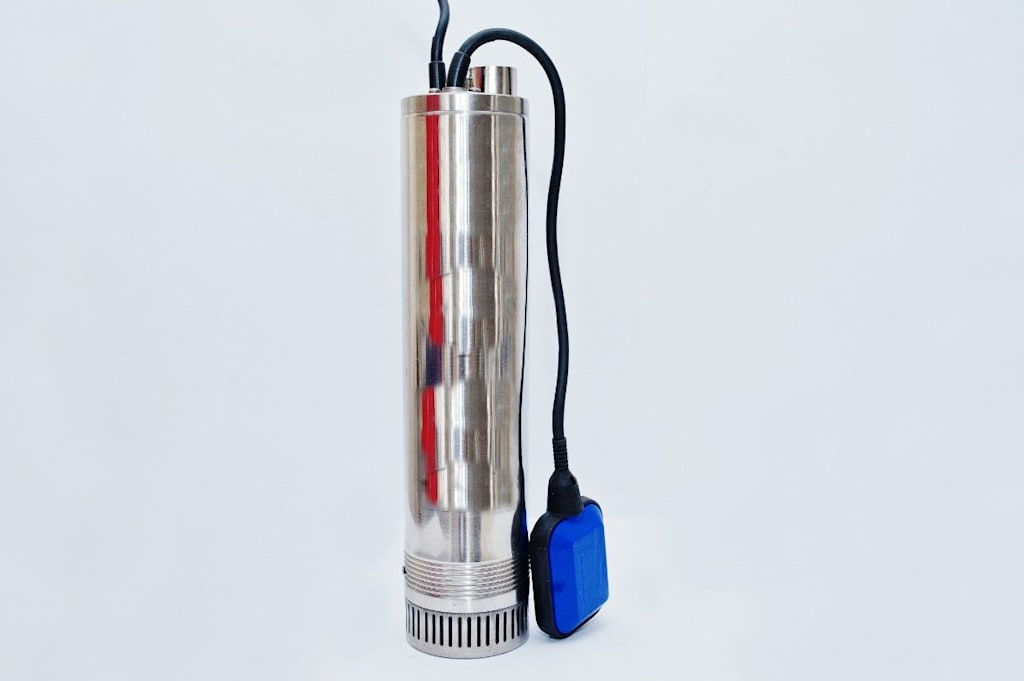
Most people never think about submersible pumps until something goes wrong, a flooded basement, a dry well, a sewage backup. But that "out of sight, out of mind" quality is exactly why the submersible pump market keeps expanding without much fanfare. Valued at around 13.4 billion dollars in 2025, the market is projected to reach roughly 20.7 billion dollars by 2035, growing at a steady 4.5 percent annually. These sealed, motor-driven devices operate fully underwater, converting rotary motion into the force needed to push water or wastewater back to the surface, and demand for them tends to track something as basic as population growth and farmland expansion.
Those who want to dig into how this growth splits across product type, capacity, and end-use sector can look through a complimentary preview of the report's underlying figures before deciding whether to go deeper.
Farming Still Calls the Shots in This Market
Agriculture remains the single largest end-use category, claiming 30.8 percent of total demand, and the reason is almost embarrassingly simple: crops need water, and in plenty of regions, that water sits underground rather than in a convenient reservoir. Bore well submersible pumps, purpose-built for deep groundwater extraction, dominate the product landscape as a result, holding 45.5 percent share. When a farming region depends on irrigation rather than rainfall, this isn't optional equipment, it's the infrastructure that determines whether a harvest happens at all.
Electric-powered systems lead operation type with 70.7 percent share, partly because grid electricity is widely available and partly because electric pumps integrate far more easily with the automated monitoring tools that are becoming standard across the industry.
The Performance Data Has Gotten Unusually Specific
For years, pump efficiency claims tended to stay vague. That's no longer really true. Sulzer reports that modern submersible sewage pumps have hit total system efficiencies as high as 77.87 percent during wastewater plant modernization work, with some plants seeing overall energy efficiency improve by more than 20 percent after the upgrade. Franklin Water adds that permanent magnet motors now deliver up to 20 percent in energy savings compared to standard induction motors, a difference that adds up fast on equipment running continuously.
Diagnostics have caught up too. According to research published via arXiv, encapsulated accelerometer sensors mounted directly on submerged pump impellers reached 91.3 percent accuracy in detecting mechanical faults, a meaningful number for equipment that's buried and impossible to casually inspect. Separately, ScienceDirect found that simple mechanical attachments in the delivery pipe boosted efficiency by up to 8 percent, a modest-sounding gain that compounds significantly at industrial or municipal scale.
One Region Dominates, But Not for One Reason
Asia Pacific leads the submersible pump market by a wide margin, controlling 40.6 percent of global share, worth about 5.4 billion dollars in 2025. That lead isn't owed to a single factor. It's the layering of large-scale agriculture, rapid urban growth, and heavy government spending on water infrastructure across China, India, and Southeast Asia, three forces converging in the same region at the same time.
Elsewhere, the drivers look completely different. North America's demand leans on oil and gas extraction and the slow, steady replacement of aging municipal systems. Europe's growth is largely regulation-driven, with countries like Germany and France investing in wastewater modernization to satisfy sustainability mandates. The Middle East and Africa, meanwhile, are scaling up around desalination and water-scarcity projects, a motivation that has nothing to do with farmland and everything to do with basic water access.
Manufacturers Are Buying Their Way Into Strategic Positions
The clearest evidence that this market still has real weight behind it shows up in recent deal-making. In March 2026, Flowco Holdings announced a 200 million dollar acquisition of Valiant Artificial Lift, a move specifically aimed at deepening its submersible pump presence across North American oil and gas operations. Earlier, in February 2025, Franklin Electric acquired PumpEng in Australia, extending its distribution and service footprint into the exact region already driving the bulk of global demand.
These aren't speculative plays on an unproven technology. They're calculated moves by established manufacturers to lock down distribution and service capacity in markets where demand is already established and still climbing.
Nothing about this market is likely to make headlines in the next decade, and that's sort of the appeal. Between tightening water-security regulation, increasingly precise fault-detection technology, and steady consolidation among the manufacturers who keep this equipment running, submersible pumps are set to keep doing what they've always done: working quietly underground, mostly unnoticed, until the day something finally needs fixing.
About the Creator
Enjoyed the story? Support the Creator.
Subscribe for free to receive all their stories in your feed.
Comments
There are no comments for this story
Be the first to respond and start the conversation.