
What's Driving Growth in the Touch Controller IC Market
As screens get bigger, foldable, and more demanding, the chips that sense your touch are quietly evolving too.

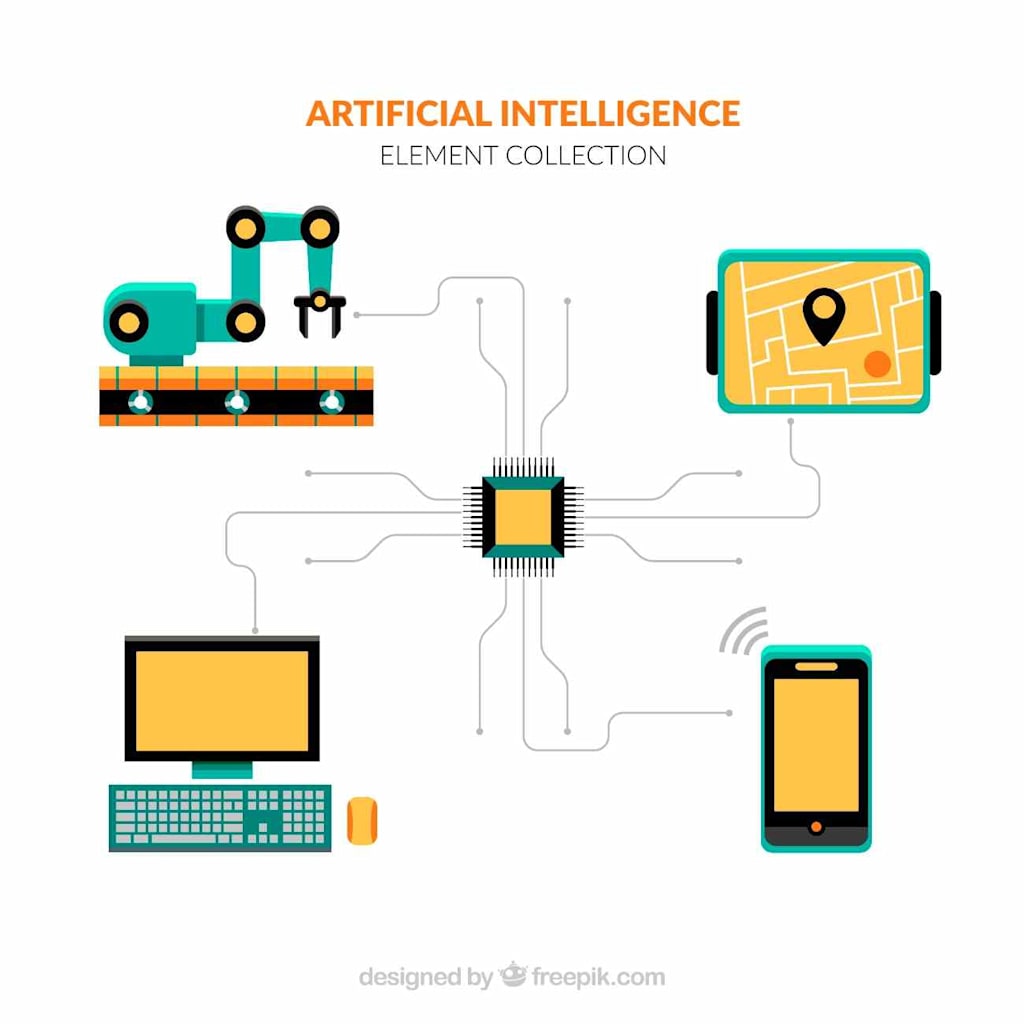
Every time someone taps, swipes, or pinches a screen, a small chip buried beneath the glass does the actual work of figuring out where that touch landed and what it means. These chips have become so reliable that most people never think about them — which is exactly the point, and exactly why the Touch Controller IC Market has grown into a meaningful slice of the semiconductor industry. From foldable phones to car dashboards to factory control panels, the number of surfaces expecting a confident, accurate touch response keeps expanding, and market.us research puts industry growth at a steady pace through the next several years.
For a closer look at how that growth splits by device category, region, and touch technology, the free sample report market.us provides for this study breaks the segment-level numbers down in detail.
Why Screens Keep Getting More Demanding
Touch controllers used to have a fairly simple job: detect a finger, report a coordinate, move on. That's no longer enough. Bezel-less phones, curved automotive displays, and foldable screens all push controllers to handle larger sensing areas without adding latency. Multi-touch and gesture support — pinch-to-zoom, multi-finger swipes, palm rejection — are now baseline expectations rather than premium features. On top of that, devices increasingly need to work reliably with wet screens, gloved hands, or heavy electrical noise from fast chargers and nearby displays, which has pushed chipmakers toward more sophisticated signal processing rather than simply faster chips.
A Real Chip Built for a Real Problem
It helps to see this play out in an actual product rather than a forecast. At Computex 2025, Synaptics showcased its S3930 touch controller, built specifically for foldable OLED panels up to nine inches. The chip handles up to 80 sensing channels and uses a patented multi-frequency sensing approach to filter out the kind of charger and display noise that tends to confuse touch detection on large, flexible screens. Synaptics has paired that with a separate automotive-focused chip, the TD7850, which merges touch and display control into a single die and has already been picked up by display manufacturers and Tier-1 suppliers for touchscreens up to 15 inches in upcoming vehicle models. Between the two, you can see the same underlying pressure showing up in different industries: bigger, more complex displays that still need to feel instant and precise under someone's finger.
That dual focus — consumer foldables on one side, automotive cockpits on the other — is a fairly accurate snapshot of where the broader touch controller IC market is actually headed, with both segments pulling demand in the same direction even though the engineering challenges differ.
Automotive Is Turning Into a Real Growth Lever
Cars used to have a handful of buttons and maybe one small touchscreen. Now it's common to see a full digital cockpit: a driver display, a center infotainment screen, sometimes a passenger display too, often spanning curved glass. Each of those needs a controller that can survive vibration, temperature swings, and years of continuous use without degrading — a much higher bar than a phone screen that gets replaced every couple of years. As more automakers move toward fully digital interiors, this segment is becoming one of the more durable demand drivers for the industry, less tied to the boom-and-bust cycles of consumer electronics.
What Could Slow the Momentum
It's not all smooth scaling. The market has a long list of competing suppliers — from established names to smaller specialists in Taiwan, China, and South Korea — which keeps pricing pressure high and margins thin for anything that isn't clearly differentiated. Component sourcing has also gotten less predictable in recent years, and a controller that depends on a specific sensor or substrate can stall a whole product launch if that part falls behind schedule. There's also a quieter risk of commoditization: as basic capacitive touch becomes table stakes, the real competition is shifting toward who can handle foldables, automotive-grade reliability, and noise-heavy environments best — and not every supplier will make that jump.
Looking Ahead
None of this is really about touchscreens anymore — it's about how confidently a device can interpret a human gesture under increasingly difficult conditions: folded glass, a wet finger, a vibrating dashboard. The companies solving that problem well, rather than just cheaply, are likely to pull further ahead as foldables move from novelty to mainstream and digital cockpits become the automotive default. The chip itself will probably stay invisible to the person using it. That's the job. But the engineering quietly sitting behind every tap is only going to get more interesting from here.
About the Creator
Enjoyed the story? Support the Creator.
Subscribe for free to receive all their stories in your feed.
Comments
There are no comments for this story
Be the first to respond and start the conversation.