
What's Actually Driving the Three Screw Pump Market
Behind a modest growth rate is one of industrial equipment's most quietly reliable workhorses.

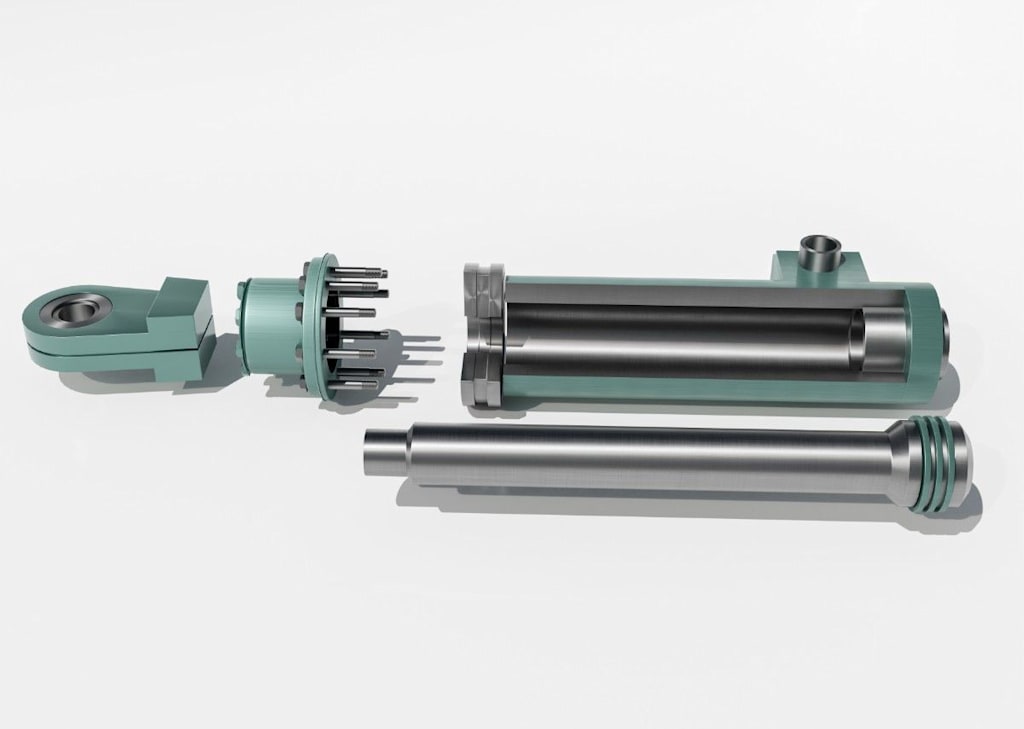
Crude oil doesn't move through a pipeline on its own, and neither does the lubricant keeping a turbine from grinding itself apart. Somewhere behind both processes sits a pump engineered to handle fluids that range from thin and slippery to thick enough to barely flow at all — which is exactly the niche occupied by the Three Screw Pump Market. Industry research projects the market growing from $605.8 million in 2025 to $914.1 million by 2035, a modest 4.2% annual growth rate that says less about stagnation and more about how mature and specialized this equipment category already is.
A closer look at how that total splits by capacity range, pump type, and application is available in a standalone excerpt of the same report.
A Pump Built to Measure Crude Oil Precisely
In mid-2024, CIRCOR International launched its IMO LB6D three-screw pump series, purpose-built for Lease Automatic Custody Transfer systems used in oil and gas operations. LACT units are the equipment responsible for measuring crude oil accurately as ownership transfers between parties — a job where even small measurement errors translate directly into disputed invoices and lost revenue. Designing a pump specifically for that function says something about where this market's real value lies: not in moving more fluid faster, but in moving exactly the right amount, consistently, in an application where precision has a direct dollar value attached to it.
Why Medium-Pressure Dominates
Medium-pressure pumps hold nearly two-thirds of the market by type, at 62.3%, largely because they handle variable industrial loads more reliably than low-pressure alternatives without requiring the more specialized engineering that very high-pressure systems demand. The 50 to 200 cubic-meter-per-hour capacity range leads by volume, capturing 43.7% of demand, since that band covers the bulk of lubrication, marine, and fuel-transfer applications without forcing operators into custom-engineered territory. What's genuinely impressive about this equipment class is its working range: manufacturers test these pumps across viscosities from 0.3 to 100,000 centistokes and gas content up to 100%, meaning a single product family can plausibly handle anything from light lubricating oil to near-solid industrial sludge. That range is exactly why the broader three screw pump market size has stayed relevant even as more specialized pump types have emerged for narrower applications.
Where These Pumps Actually Go to Work
Lubrication systems account for the largest application share, at 37.4%, driven by the constant, unglamorous need to keep industrial machinery running without excess friction or downtime. Fuel oil transfer and marine and offshore applications follow closely, supported in part by compliance pressure — pumps built to API 676 and 682 standards are increasingly preferred by operators who can't afford a failed safety audit. Chemical processing rounds out the major use cases, where the pump's low-shear operation matters more than raw throughput, since aggressive agitation can degrade sensitive process fluids before they ever reach the next stage of production.
Who's Buying, and Why Adoption Is Slow at the Edges
North America holds the largest regional share, at 38.3% and roughly $232 million, supported by deep industrial infrastructure and steady equipment-replacement cycles in energy and marine sectors. Europe follows with mature, regulation-driven demand, while Asia Pacific is industrializing fast enough to represent the most interesting growth story over the next decade. The friction point, consistently, is cost: these pumps carry a meaningfully higher upfront price than simpler alternatives, and they require trained technicians to service properly. That combination keeps smaller operators on older equipment longer than larger industrial players, who can absorb both the purchase price and the ongoing maintenance commitment more easily.
Looking Ahead
The next stretch of growth here probably won't come from a fundamentally new pump design, but from what gets bolted onto the existing one. IoT-enabled monitoring that tracks wear patterns and flags maintenance needs before a failure happens is already moving from a nice-to-have into something buyers actively request, and retrofit demand is growing as operators replace aging systems rather than build new ones from scratch. Renewable energy and biofuel production are quietly becoming a meaningful new customer base too, since both rely on exactly the kind of viscous, sensitive fluid handling this pump category was built for in the first place. None of it changes the core job. It just makes the equipment a little smarter about doing it.
About the Creator
Enjoyed the story? Support the Creator.
Subscribe for free to receive all their stories in your feed.
Comments
There are no comments for this story
Be the first to respond and start the conversation.