
What Makes Today's Military Equipment Smarter Than Ever?
The answer lies in the evolution of load carriage systems that combine advanced materials, ergonomic engineering, and integrated technology.

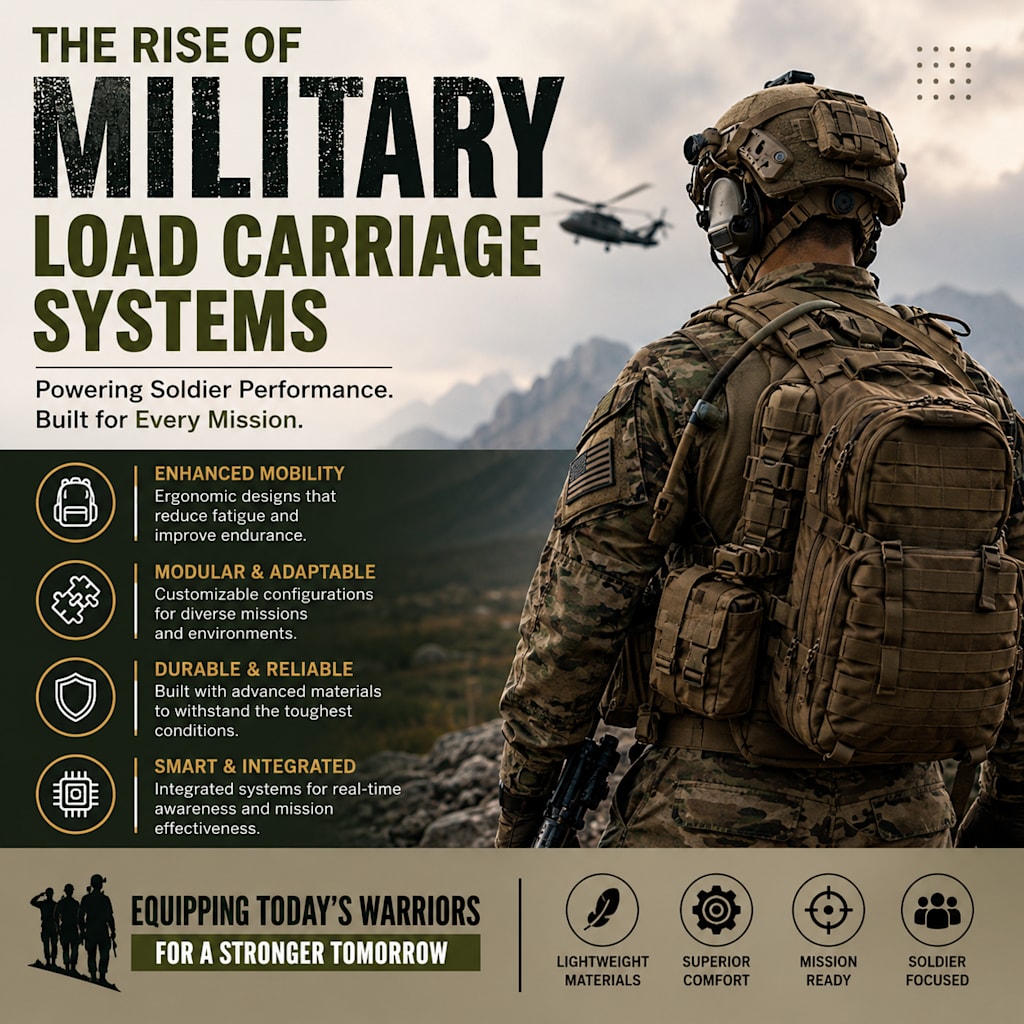
Modern warfare isn’t only a matter of cutting-edge airplanes, drones or missile systems. But many have overlooked a critical element of the success of a soldier on the ground: his everyday carry equipment. The army of the 21st century carries so much more than his predecessors, be it ammunition, medical kit, or communication device.
Thus the rapidly developing sector of Military Load Carriage Systems (MLCS).
Once little more than backpacks and webbing systems designed to lug gear, MLCS are evolving rapidly into highly specialized, lightweight equipment packages to enable greater mobility, reduce soldier fatigue, and maximize mission effectiveness. Market Seeing Sustained Growth The global military load carriage systems market size was worth approximately US$8 billion in 2025 and is poised to hit nearly $10.7 billion in value by 2034. Whilst the annual growth rate of approximately 3.3% seems rather slow in comparison to other segments within the military technology space, it demonstrates rather the sustained investment in soldier modernization programs throughout the world. Many governments across the globe recognize the important impact improved mobility can have in overall mission success.
More Equipment on soldier ‘s back For decades, each year, armies the world over have outfitted their soldiers with increasingly complex array of military gear.
Beyond their personal weaponry, troops can now be seen lugging around some or all of the following: Personal protection and armor; Night and day vision equipment; Navigation systems (GPS, compass); Communication devices; Water sources ( hydration systems); Batteries and portable electronics; Ruck sacks or pack that can carry much of it along; And survival kit (such as, flint and steel); More than a few pounds in many instances - upwards of 30kg in fact. Given the increased reliance on electronics and other technologies as modern fighting gets more hi tech than ever, ensuring equipment isn’t an encumbrance but an aid has become an all too critical task. Lighter Materials In use Traditionally the military packs we are used to were heavy duty items, very hardwearing but also quite heavy themselves.
But these days many manufacturers of carry gear are developing products that use a wealth of lightweight new materials. Carbon fiber in military equipment for example, reinforced nylon fabrics with their strength to weight ratios; High performance synthetic textile; High strength plastic composite material… the list grows annually, offering the benefits of traditional strength and durability at a much lighter weight to ensure reduced fatigue, fatigue and better ergonomic performance during protracted ops. Smart Gadgets in the Carry For the first time military load carriage systems are starting to benefit from what we may know as “wearables” – the integration of smart technology.
For example, you can start seeing: Advanced GPS trackers; Smart and interconnected comms gear; Embedded health and hydration monitoring systems; Biometric sensor integration; On-board data logging and mission playback; Many military organizations are already looking at integrated power management solutions, and soldier power packs that ensure their comms are always ‘up’.
The ‘Modular Design’ approach For various missions a soldiers needs change as often as he changes his socks. For the purpose of example – one such set of kit won’t cut it for a combat operation in Iraq as it would a peacekeeping mission for the UN in Chad. This is leading to manufacturers offering so called ‘modular design’. It means a soldier, on the command of mission head, can pick and chose the pouches he may have for comms gear, medical gear, or for the weapons which may or may not be issued depending on the environment of the operation.
Asia-Pacific – the Key market place While it might be somewhat of an expected assumption the highest demand for MLCS will naturally be generated from the major global military powers in what would be historically recognized as the Asia-Pacific market, and specifically including as always The United States of America.
Many governments throughout The Asia Pacific – to include; Japan, the Peoples’ Republic of China, South Korean, India, and Australia – continue to ramp up their defences to help them secure their increasingly porous boarders in an expanding global defence environment. Their ongoing military modernization is expected to include MLCS for soldier improvement as well. Governments See Soldier Modernization As a ‘Key’ component A vital, if often under reported, segment of modernization programs across globe remains soldiers, in person.
Governments, realizing the significance of their personnel to mission execution, continue to invest heavily in equipping individual service members more effectively with lighter and yet more capable equipment – Body Armor and Helmets, comms systems, and Wearables that will include in time… MLCS. Manufacturer ‘Innovation’ Is Competitive Differentiator Innovation remains the key in a mature and competitive MLCS market where manufacturers find themselves increasingly differentiated on performance and quality not just on the basis of the unit’s durability. Here it includes such things as: Comfortable designs (ergonomics are crucial for prolonged periods of wear) Lighter weight materials of construction Light and heat dissipation techniques Improved compatibility with Armor systems Moisture-wicking technologies Smart/wearable integration Support for communications and networking devices But they are also looking very hard at ensuring their designs complement whatever mission a war-fighter may be undertaking as they develop a whole plethora of support mechanisms for their designs.
Challenges Remain Manufacturers in the MLCS space still face several important hurdles: Heavy, electronic-rich personal equipment is making weight reduction increasingly difficult.
Many companies will also look to ensure both strength of their MLCS as well as affordability are integrated along with the technological integration for war fighter equipment. Supplier reliability for key components and systems used in military grade load bearing systems becomes paramount to security interests of any Government. All of these issues drive manufacturers to focus more heavily on not only material science, research and development… but increasingly on developing strategic and localized supply chains to manufacture MLCS. ‘Looking Back – and Forward’ Military load carrying systems, may never be seen to be in the forefront of military technology such as a new drone aircraft or stealth fighter jet, however these products continue to remain some of the most essential pieces of equipment that our war-fighters are using today and in the future.
More affordable lightweight material options, better ergonomic designs, and improved smart / wearable technology is the path forward to helping soldiers improve operational effectiveness while reducing their overall physical load on the mission and ultimately ensuring our forces win on the battlefield.
As nations globally continue their military modernization programs the segment will almost certainly benefit significantly. Often the ‘best’ solutions on the battlefield often go unnoticed.
About the Creator
Robert
Senior Market Researcher at IMARC Group, specializing in global market analysis, industry trends, and data-driven insights across diverse sectors.
Enjoyed the story? Support the Creator.
Subscribe for free to receive all their stories in your feed.
Comments
There are no comments for this story
Be the first to respond and start the conversation.