
What Is Forage and Why Is Mexico's Livestock Sector Demanding More of It in 2026?
Mexico's forage market is expanding as livestock producers seek high-quality, climate-resilient feed solutions to support growing meat and dairy production.

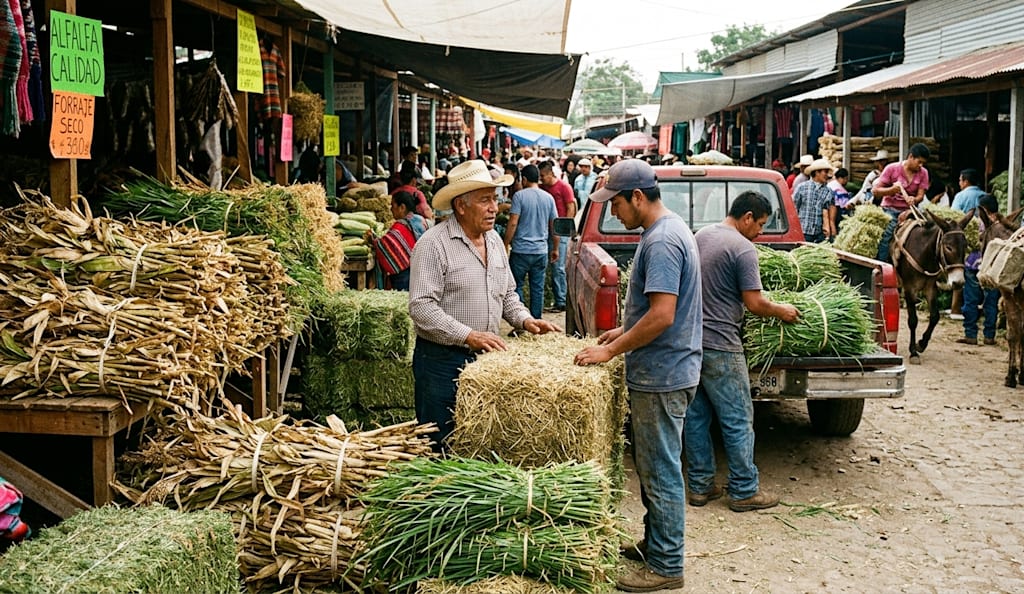
Most of us, when thinking about livestock, imagine cows, dairy farms, or meat processing plants. But there is a vital component of animal agriculture receiving surprisingly little attention; it’s forage.
In essence, forage is any plant material grown and used for the purpose of feeding livestock. It encompasses crops like alfalfa, clover, grasses, sorghum, hay, silage maize, and other nutrient-rich plants fed to cows, sheep, goats and other farm animals. It is forage that supplies the energy, fiber and nutrients required for animal growth, milk production, and overall well-being.
By 2026, forage is set to play an ever more critical role within Mexico as its livestock and dairy industries expand. Both ranchers and dairymen have placed greater emphasis on the consistency of high-quality feed supplies to drive efficiency, enhance productivity, and satisfy increasing consumer demand for meat and dairy products.
According to IMARC Group, in 2025 the Mexican forage market generated revenue of USD 1,465.3 million, a figure that is expected to grow to USD 2,054.8 million by 2034 at a CAGR of 3.71% during the period 2026-2034.
So why is forage becoming an integral part of Mexico’s agriculture market?
One of the leading factors influencing demand for forage is the sustained growth within Mexico’s livestock and dairy sectors. As demand for beef, milk and dairy products rises across the country, cattle populations and intensity of animal production are growing, thus requiring sufficient feed resources capable of supporting increased levels of productivity. With large livestock producing states like Jalisco, Veracruz, and Chihuahua depending on feed sources that can ensure productivity levels year-round, forage crops can provide an efficient, nutrient-dense solution.
Another significant trend is climate variability. Many areas of Mexico are prone to drought, water scarcity and fluctuating rainfall patterns which can impact the availability of natural pastures. Farmers are therefore looking more and more to cultivated forage crops to ensure a predictable and reliable feed source. Drought tolerant forage varieties like sorghum, Sudan grass and hardy legumes are proving indispensable to ranchers seeking stable production in tough conditions.
As a major trend for 2026, climate smart agricultural practices have gained significant traction. Farmers have begun investing in forage systems which reduce water consumption, enhance soil health and improve long-term sustainability. Sustainable crop rotation, no-till farming and efficient irrigation management strategies have allowed producers to maximize forage yield while minimizing the impact on the environment. This is just one reason why forage cultivation is increasingly being integrated into sustainable livestock operations.
The dairy sector is another major driver of demand. High-yield dairy cows demand carefully balanced and nutrient-rich feed to maintain milk production and animal health. Forage types like alfalfa and silage maize are widely employed for their nutrient density while enabling cost-efficient feeding. Quality forage plays a critical role in operations of all sizes within the modernizing dairy industry.
Increasing adoption of systematic feeding regimens has been another catalyst for market growth. Livestock producers are moving away from relying solely on natural pasture to adopting scientific feeding systems designed to improve meat quality, animal well-being and overall production efficiency. At the heart of many feeding systems lie forage crops.
From a market segmentation standpoint, the market can be further broken down by crop type: cereals, legumes and grasses. Cereals constitute a key part of this market, providing highly nutritious feed options suitable for various livestock. Staple forage cereals include maize, barley, oats and sorghum.
By product type, the market is separated into fresh and stored forages. Products like hay and silage belong to the stored category, enabling farmers to meet feed requirements throughout the year. Availability of stored forage is often critical during arid periods and seasons of pasture scarcity and is vital for securing consistent feed resources.
The market is segmented by animal type: ruminants, swine, poultry and others. Ruminants (including cattle, sheep, goats) are by far the largest consumers of forage due to the capacity of their digestive system to process plant-based materials effectively.
Geographically, strong demand is being experienced in Northern and Central Mexico due to high populations of livestock and expanding commercial feeding operations. These regions have significantly invested in forage cultivation, as part of broader efforts to increase overall productivity and resilience.
A significant trend has also been evident in the support offered by government programs and development initiatives designed to promote scientific livestock feeding and improve agricultural productivity. This has provided farmers with incentives to invest in forage production.
The reason why the forage market is so significant in Mexico is because it sits at the nexus of food security, livestock productivity and climate resilience. While facing a multitude of environmental challenges, farmers have recognized forage as a strategic agricultural resource beyond merely a feed crop in their efforts to supply a growing population with meat protein.
Moving forward, increased livestock production, a rising demand for dairy products and the widespread implementation of climate-smart agriculture are all set to fuel growth. While agriculture in Mexico continues to undergo an evolution, forage will remain an integral part of livestock farming in the years ahead.
About the Creator
michael matthew
I’m a market researcher passionate about understanding people, markets, and motivations. My work blends data analysis, consumer psychology, and strategic insight to help brands and businesses make informed, human-centered decisions.
Enjoyed the story? Support the Creator.
Subscribe for free to receive all their stories in your feed.
Comments
There are no comments for this story
Be the first to respond and start the conversation.