
What Is Driving the United States Virtual Reality Gaming Market in 2026?
The United States virtual reality gaming market is expanding rapidly as advanced VR hardware, immersive content, AI integration, and growing demand for interactive entertainment fuel industry growth.

Video games have come a long way in just a few decades. The game itself has transformed drastically from what was once simple arcade-based games, to now even "cloud gaming" and highly interactive online-based experiences. By 2026, one of the fastest growing areas in the gaming sector is the burgeoning virtual reality (VR) gaming market.
Virtual reality gaming involves allowing users to be 'inside' of what they are gaming on rather than 'looking' at it on a screen. Via the use of VR headsets, movement controls and a range of sensors gamers are capable of interacting in real-time inside of a game environment, thus providing a very 'immersive' feel that is completely different than conventional games. Something that we have been promised in fiction for a long time is rapidly developing as a very mainstream part of the world of entertainment.
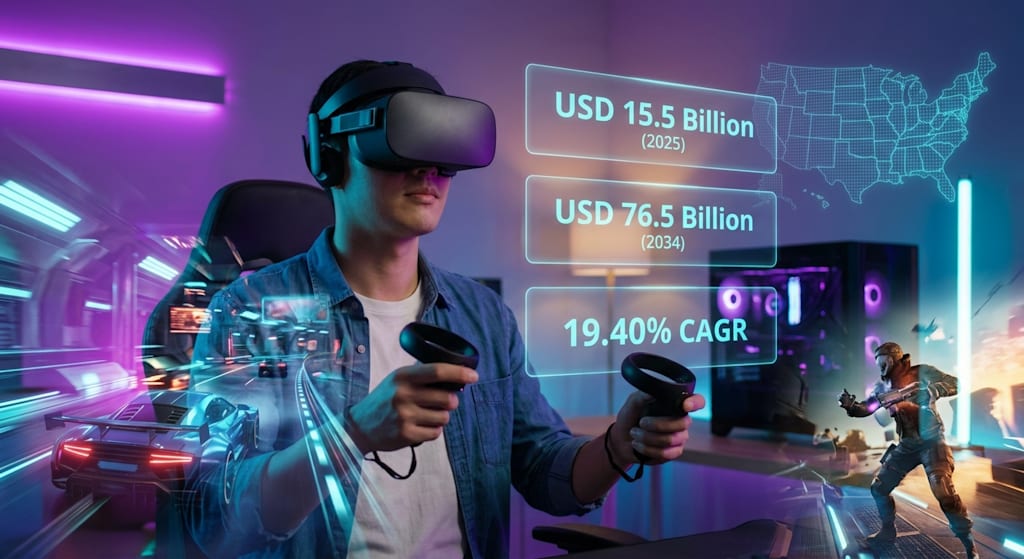
The US virtual reality gaming market reached 15.5 Billion dollars in 2025 and is predicted to grow to 76.5 Billion by 2034, with a compound annual growth rate of 19.40% during 2026-2034.
But what is it that makes the United States virtual reality gaming market a growth market in 2026?
One reason behind the increase in virtual reality gaming is the constant upgrades in the virtual reality hardware itself. The systems that we use to enter these worlds of virtual reality are becoming significantly better with regards to picture quality, movement sensors and ease of use. The VR headsets available today offer much better displays than a few years ago, the movement control accuracy and responsiveness is increasing and not only that but the devices are become significantly more comfortable to use during prolonged sessions. The reality of virtual reality has taken a significant jump from science fiction and is now a mainstream part of the entertainment world.
Another huge growth factor comes in the form of the increasing supply of high-quality gaming experiences, both in terms of new game releases and general content. The virtual reality games released are continually being more sophisticated and developed. Many are solely 'VR' titles as opposed to adaptations from a console or pc title and cover a range of genres that includes adventure, racing, shooting, puzzlers and science fiction all through to multiplayer games. This wide and growing array of VR specific games has made it easier for more consumers to want to enter the virtual reality world.
One key factor is the increased convergence of virtual reality gaming with virtual environments and AI. Technologies such as cloud computing and high speed networks make these worlds feel even more realistic and interactive with the AI of characters providing them with more responsive interactions and the faster speeds helping to reduce latency of gameplay.
This development is all being accelerated by the growing fascination that people are have with what we now call "Immersive Entertainment". Humans are becoming more and more accustomed to this digital world as people want to engage with entertainment in more involved ways than ever before. VR gaming provides this by literally putting the gamer inside the virtual environment in a way that is physically involving.
Another driving force behind VR gaming growth is that it is becoming ever more affordable and accessible. With the proliferation of "standalone" systems that do not require an expensive PC as a companion to a VR headset, many more consumers are able to purchase VR games with relatively less investment required.
The emergence of physical entertainment centres, which are often VR locations such as arcades etc. Allow individuals to experience these advanced virtual worlds before committing themselves to a purchase and are helping to boost overall consumer interest in VR gaming.
Market segmentation currently consists of two main sectors: Software, the games themselves and hardware, the machines that you play the games on. The Software market continues to be a growth area as more games are developed but the hardware segment is just as important as it allows the games to be visually better, run more smoothly and be more comfortable to use over longer sessions.
There are currently 3 main types of device included in the market: personal computers (PCs), games consoles and mobile devices. Personal computers currently remain top for providing premium graphical experiences for games but mobile based devices and stand-alone systems are becoming ever more popular for the ease of access they offer users.
By type of game the market is split into the following categories:racing games, adventure games, fighting games, shooting games, mystery thriller games, puzzle games, science fiction games and 'other' game types. Adventure games and shoot 'em up style games have so far proved most popular as they showcase what the virtual reality system is capable of.
The main user base at the moment is the adult gaming population although young people are starting to gain more interest in virtual reality games as there is an increasing array of different styles of game. The rise in VR based training courses, fitness applications and social programs are all helping to create new kinds of VR games beyond those with only entertainment values.
A noticeable trend is the increase in support for virtual reality, augmented reality and other 'metaverse'-related technologies. Increased interest and investment into these types of projects show that they will become increasingly popular across the next generation.
So why is the United States virtual reality gaming market such a key player in 2026? It is far more than just another type of video game; it is the first step towards truly immersive digital environments and experiences, one where digital entertainment, social interaction and cutting-edge technology all intertwine.
As virtual reality hardware continues to improve and developers further explore how virtual reality games can best exploit this advanced technology combined with cloud integration of AI and a growing desire among consumers for increasingly engaging experiences, VR gaming will continue to flourish and become a key aspect of interactive entertainment's future.
About the Creator
michael matthew
I’m a market researcher passionate about understanding people, markets, and motivations. My work blends data analysis, consumer psychology, and strategic insight to help brands and businesses make informed, human-centered decisions.
Enjoyed the story? Support the Creator.
Subscribe for free to receive all their stories in your feed.
Comments
There are no comments for this story
Be the first to respond and start the conversation.