
What Is Cellulose Acetate and Why Is It Becoming a Sustainable Alternative to Traditional Plastics in 2026
Cellulose acetate is emerging as a sustainable bio-based alternative to traditional plastics across packaging, fashion, healthcare, and consumer goods industries.

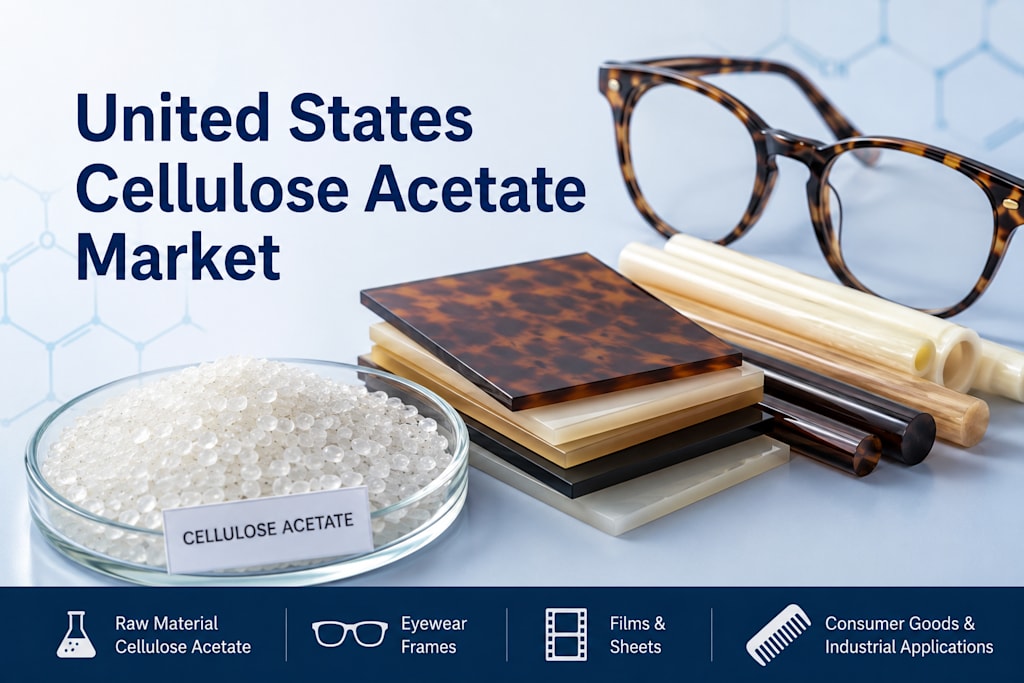
For decades, conventional fossil fuel-based plastics have dominated global manufacturing due to their affordability, durability, and versatility. However, industries throughout the United States are quickly turning toward more sustainable materials that offer strong performance characteristics and reduce their environmental impact as of 2026. One material gaining significant popularity is cellulose acetate.
A bio-based polymer derived largely from natural cellulose extracted from wood pulp and cotton fibers, cellulose acetate is created using renewable sources unlike fossil fuel-based plastics. This is one of the many factors contributing to its increasing popularity amongst sustainable businesses looking to establish and maintain eco-friendly manufacturing practices.
While consumers may not always know what the material is, cellulose acetate is present in many common products, such as cigarette filters, textiles, films, eyewear frames, packaging, and other medical applications. Its usage is only accelerating as the desire for biodegradable alternatives continues to grow in 2026.
According to IMARC Group, the U.S. Cellulose acetate market stood at USD 1. 8billion in 2025 and is estimated to reach USD 2.8 billion by 2034, growing at a Compound Annual Growth Rate (CAGR) of 4.75% during 2026-2034.
So, what is it about cellulose acetate that is causing such a ripple effect in 2026?
One major reason is the growing trend in global sustainability. Businesses, governments, and consumers are continuously pressuring the world's leading manufacturers to shift away from the current petrochemical plastics toward renewable and biodegradable alternative solutions. Being derived from plant-based sources allows cellulose acetate to fulfill a wide variety of environmental objectives and the concept of a circular economy.
Another primary driver behind its growing market presence is the ever-increasing demand for sustainable packaging materials. Food packaging, consumer goods, and cosmetics companies are exploring new bio-based materials that reduce waste while preserving product quality and integrity. Cellulose acetate has high transparency, a flexible nature, and strong film-forming properties that make it ideal for many different packaging needs.
2026 has also seen an accelerated use of cellulose acetate within the fashion industry as well as eyewear markets. Increasingly popular in luxury eyeglasses, cellulose acetate can be a lightweight, durable, and flexible alternative. With an appearance more akin to traditional plastics while remaining biodegradable, many manufacturers are switching from the current inexpensive fossil fuel-based alternatives toward a more high-quality option.
Also contributing to the growth are textile industries that utilize cellulose acetate fibers to create textiles that offer a silk-like quality, softness, and breathability. In the rise of fast-fashion becoming more about slow and sustainable fashion, this is leading more brands to turn to bio-based fibers and materials.
Finally, technology and material innovation are continually adding to the expansion of the cellulose acetate market. Manufacturers are developing new types of formulations with better biodegradability and enhanced durability, which are further expanding the potential of the material into medical devices, automotive components, electronics and even certain specialty industries.
Another significant factor impacting the market is increased focus on sustainable supply chains. Companies are not only looking at material performance and cost, but also at the environmental footprint, recyclability, and renewability of their source materials. This is leading many businesses to embrace cellulose acetate due to its ability to aid in achieving corporate sustainability targets and reducing reliance on petroleum.
Healthcare industries are also a new and growing sector for the material. Because it's biocompatible, cellulose acetate can be used in applications like filtration membranes, drug delivery systems and medical packaging due to its inherent chemical stability. New advancements in the medical field are calling for new material types to enable increased growth in this area.
From a segmentation perspective, markets include fibers, films, and plastics, all having varying market shares, with fibers taking a significant portion due to its prevalence in cigarette filters and textiles. Plastics and films, while smaller, are expected to rise sharply in terms of market share due to its use in packaging and other industrial applications.
As for its application, the material can be used in textiles, cigarette filters, photographic films, tapes and labels, eyewear frames, packaging, and even healthcare industries. Eyewear and packaging are among the segments expected to see rapid growth due to the demand for premium quality and sustainability.
A new emerging trend in 2026 includes its growing application within eco-friendly consumer products. Many businesses are taking sustainability and biodegradability and branding it for consumers, who respond favorably to eco-friendly products that also appear to be high quality.
What's so interesting about the United States market for cellulose acetate is that it lies directly at the crossroads of material science, sustainability, and consumer behavior. It is an ideal example of the ongoing shift toward renewable materials and away from petroleum dependency within a number of sectors.
Looking towards the future, continued innovation in bio-based materials coupled with an increasing consumer demand for sustainable solutions will only further boost the market. By investing in sustainable supply chains and eco-friendly alternatives, the material is expected to become more integral in the future of manufacturing.
In many respects, 2026 will be seen as a turning point where alternative materials are not viewed as niche alternatives, but rather mainstream solutions which are addressing both the needs for performance, quality and environmental responsibility in industry.
About the Creator
michael matthew
I’m a market researcher passionate about understanding people, markets, and motivations. My work blends data analysis, consumer psychology, and strategic insight to help brands and businesses make informed, human-centered decisions.
Enjoyed the story? Support the Creator.
Subscribe for free to receive all their stories in your feed.
Comments
There are no comments for this story
Be the first to respond and start the conversation.