
What Are Bioplastics and Why Are They Disrupting Conventional Plastic Supply Chains in 2026
Bioplastics are rapidly transforming packaging, manufacturing, and supply chains as businesses shift toward sustainable and renewable alternatives to conventional plastics.

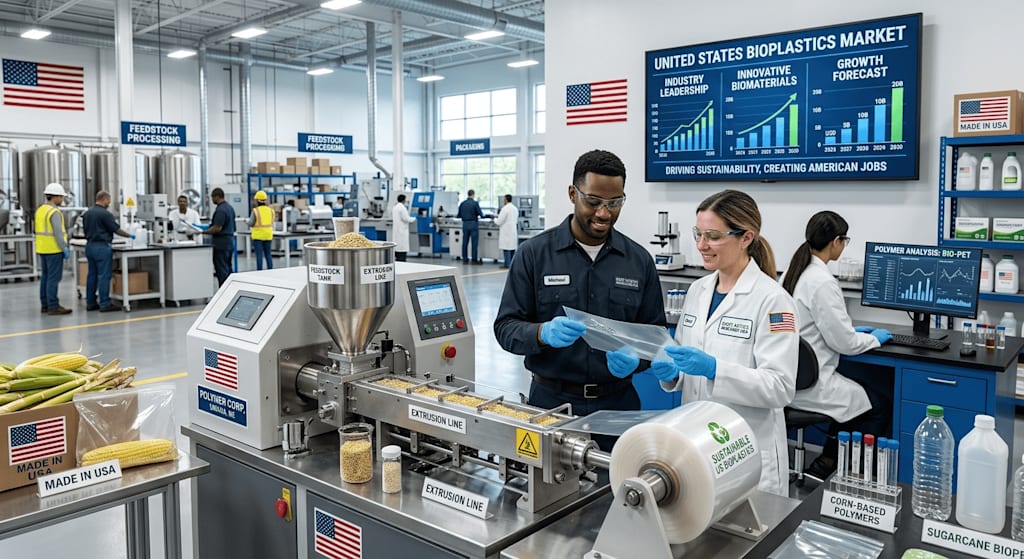
For decades, plastics have been one of the world's most crucial industrial materials. Cheap, lightweight, and strong, plastics are everywhere-from packaging and consumer goods to car manufacturing and health care. But in 2026, everything's changing.
The Common Thread runs across this change, at the heart of it lies the ever increasing rise of bioplastics.
Bioplastics are one of the most important replacements for traditional petroleum based plastics as bioplastics are produced from renewable biological resources such as corn starch, sugarcane, cellulose, vegetable oils and other plant materials. Some bioplastics are biodegradable or compostable however others are meant to replace petrol based plastics and also has significant carbon reduction during production.
The United States bioplastics market size was valued at USD 4.4 billion in 2025 and is forecast to reach USD 19.1 billion by 2034, growing at a CAGR of 17.23% during 2026-2034.
What has caused all the controversy in 2026 to bring about such a focus on bioplastics?
One of the strongest drivers is the mounting worldwide pressure to be greener and lower the impact on plastic waste and the environment. Politicians are regulating landfill waste and carbon emissions of packaging, especially in developed countries, forcing companies to seek alternative materials and packaging solutions.
This is where bioplastics are making a difference.
While traditional plastics are largely dependent on fossil fuels, many bioplastics are derived from renewable resources. Use of renewable materials means that companies can be less dependent on petroleum chains of supply, and reduce their overall environmental impact. Bioplastics are rapidly gaining international attention as a realistic and sustainable material in many industries where "being green" has become of significant competitive advantage.
Another key factor leading to this change is consumer consumption. Consumers around the world are becoming much more environmentally aware today. They prefer such product packages which could be recyclable, compostable, or bio-based packages. These kinds of sustainable packages exert a significantly positive impression on consumers, especially on young consumers, who purchase the most.
The use of bioplastics in packaging is at present the leading application. The food and beverage industry, e-commerce and FMCG businesses are more and more replacing traditional plastic packaging by biodegradable packaging, compostable boxes or plant-based films. The demand for these products is growing fast, due to more and more restrictive packaging regulations.
One of the hot new trends in 2026 is the expanding usage of up to date biopolymer products. Scientists and manufacturers are working on stronger, more heat tolerant and high pressure bioplastics which will shift from being just a packaging material to replacing plastics in quite a lot of other fields. These new bioplastics have been adopted for car parts, fiber, films, agriculture, medical devices and electronic appliances.
Another significant area of expansion is in the automotive sector. Car manufacturers are using lighter weight, greener interior materials to minimize emissions and achieve specific environmental goals. Interiors-including dashboards, trims, seating materials, and interior panels-are incorporating bio plastics incorporating natural fibers and bio polymers.
The market is being driven to grow by technlogy innovation. Companies are making investments in third generation new materials such as polylactic acid (PLA), polyhydroxyalkanoates (PHA), starch blends and cellulose based plastics. These improved materials are delivering products that are more durable, flexible and compostable, thus bringing them closer to traditional plastic products.
Another major element affecting normal supply chains is corporate sustainability commitments. Several large global brands are committed to having their packaging products be recyclable or compostable by 2020. This is creating a demand for bio-based materials in the long-term for consumers and pushing manufacturers to more widely source them from alternate sources other than petroleum-based plastics.
According to the segmentation, the market has biodegradable and non-biodegradable bioplastics. The biodegradable plastics are the more favorable ones, as they begin to be a solution for the landfill waste problem and the circle economy. According to the material type, the bioplastic type are PLA, bio-PET, starch mixes, bio-PE and biodegradable polyesters.
Application-wise, the market caters to packaging, textiles, agriculture, automotive, consumer goods and health care industries. Packaging is still dominating category owing to surging requirement of sustainable food packs, films and transit boxes.
A continuing significant trend is that of the growth of composting and recycling capabilities. As waste management infrastructure is strengthened by cities and municipalities; there is now a higher market for compostable and biodegradable raw materials. This enhanced infrastructure is helping bioplastics to become much more predominantly industrial materials.
One thing that makes the US market for bioplastics so significant is that it is indicative of a much broader change happening in the world of manufacturing and supply chains. Businesses are moving beyond simple price and functionality to look at both the carbon footprint of various materials and the potential for future recycling and sustainability risks.
In the near future, bioplastics will be more widely recognized as a key feature of non-plastic waste reduction and sustainable manufacturing processes. With advances in technology and the expansion of processing capacities, bioplastics may be expected to become one of the defining materials of the next industrial economy.
Many will look back on 2026 as the year when bioplastics moved from an environmental curiosity into a genuine disruptor of the global plastics industry.
About the Creator
michael matthew
I’m a market researcher passionate about understanding people, markets, and motivations. My work blends data analysis, consumer psychology, and strategic insight to help brands and businesses make informed, human-centered decisions.
Enjoyed the story? Support the Creator.
Subscribe for free to receive all their stories in your feed.
Comments
There are no comments for this story
Be the first to respond and start the conversation.