
Wearable Medical Devices Market Trends: ECG Monitoring, Smart Patches & Industry Forecast to 2034
How continuous glucose monitoring, wearable ECG devices, and chronic disease management solutions are reshaping healthcare delivery within the wearable medical devices market

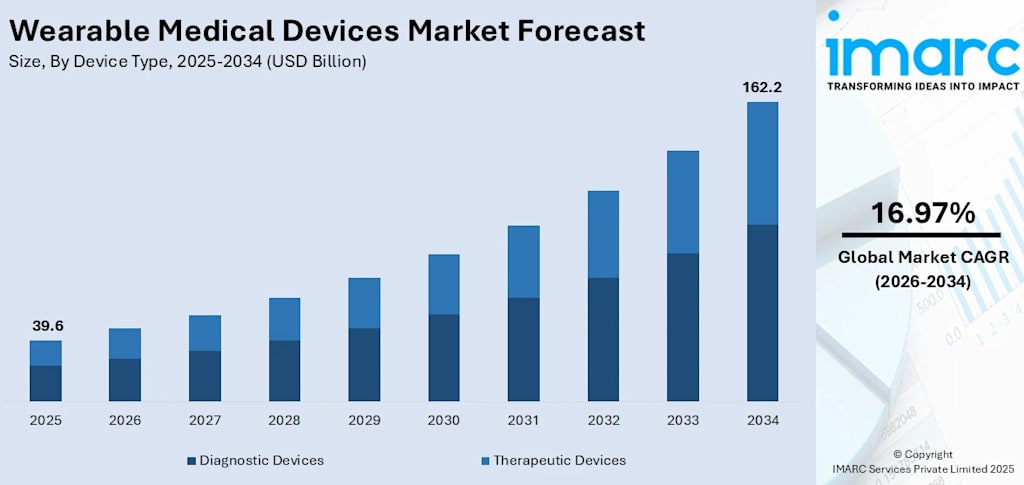
Rapid advancements in sensor technology and the increasing need for continuous health monitoring are fundamentally reshaping the healthcare landscape. Wearable medical devices have transitioned from simple fitness trackers to sophisticated diagnostic tools, enabling real-time data collection for chronic disease management and preventive care. According to IMARC Group’s latest data, the global wearable medical devices market size was valued at USD 39.6 Billion in 2025. Looking forward, IMARC Group estimates the market to reach USD 162.2 Billion by 2034, exhibiting a CAGR of 16.97% from 2026-2034.
Wearable medical technology has evolved into a vital pillar of modern medicine, providing patients and clinicians with actionable physiological insights outside of traditional hospital settings. This growth is propelled by the integration of AI-driven analytics, the proliferation of specialized sensors for cardiac and diabetic care, and a significant shift toward decentralized healthcare. As consumers become more proactive about their wellness and healthcare providers seek ways to reduce hospital readmissions, these devices are becoming indispensable.
Wearable Medical Devices Market Growth Drivers:
- Increasing Prevalence of Chronic Diseases
The global rise in chronic conditions like diabetes and cardiovascular disorders is a primary catalyst for market expansion. With over 500 million people worldwide affected by heart-related issues, there is an urgent need for continuous monitoring solutions that can detect anomalies before they become emergencies. Wearable ECG monitors and continuous glucose monitoring (CGM) systems allow patients to manage their health autonomously while providing doctors with high-fidelity data. This shift reduces the burden on clinical infrastructure and empowers individuals to make informed lifestyle adjustments based on real-time biometric feedback.
- Technological Miniaturization and AI Integration
Innovations in system-on-chip (SoC) and sensor miniaturization have made medical-grade wearables more ergonomic and less intrusive for daily wear. The integration of Artificial Intelligence (AI) takes this further by processing vast amounts of raw data to identify patterns, such as early signs of atrial fibrillation or sleep apnea. These advanced algorithms help in filtering "noise" from accurate health signals, significantly improving diagnostic precision. As devices become smaller and smarter, they are moving beyond wrist-worn formats into smart patches and clothing, making health tracking a seamless part of the user's attire.
Get the Latest "Wearable Medical Devices Market" Research Sample Delivered Instantly!
- Shift Toward Remote Patient Monitoring (RPM)
Healthcare systems are increasingly adopting remote monitoring to manage aging populations and reduce the costs associated with long-term hospital stays. RPM programs use wearables to track vital signs like oxygen saturation and heart rate, transmitting data directly to healthcare portals. This is particularly effective in post-surgical recovery and geriatric care, where early intervention can prevent complications. Governments are supporting this transition through updated reimbursement policies and digital health initiatives, recognizing that home-based monitoring is often more comfortable for patients and more cost-effective for the overall healthcare budget.
Wearable Medical Devices Market Trends:
- Evolution of Biowearables and Functional Sensors
The industry is moving past basic step counting toward "biowearables" that measure complex biochemical markers. Modern sensors can now track hydration levels, lactic acid buildup, and even cortisol levels through sweat analysis. These functional insights are highly valued by professional athletes for performance optimization and by medical professionals for stress management and metabolic tracking. The ability to monitor internal chemistry non-invasively represents a major leap in medical technology, turning wearable devices into mobile laboratories that provide a holistic view of an individual's physiological state.
- Focus on Clinical-Grade Accuracy in Consumer Devices
There is a narrowing gap between consumer-grade fitness trackers and clinical-grade medical equipment. Tech giants are increasingly seeking FDA and CE certifications for their heartbeat and blood oxygen sensors, ensuring that the data generated is reliable enough for medical consultation. This trend toward "med-tech" branding helps build trust with both users and physicians. Consequently, smartwatches are now being used in large-scale clinical trials and decentralized research, as they provide a cost-effective way to gather high-quality health data from thousands of participants in real-world environments.
- Growth of Smart Clothing and Specialized Form Factors
Innovation is diversifying away from the wrist, with a surge in smart clothing and "hearables" designed for specific medical applications. Smart socks for diabetic patients can detect temperature changes that indicate potential foot ulcers, while sensor-embedded shirts monitor respiratory patterns in patients with COPD. In-ear devices are also gaining traction for their ability to provide highly accurate core temperature and heart rate readings. These specialized form factors offer better contact with the body and improved data accuracy, catering to patients who require targeted monitoring for specific health conditions.
Recent News and Developments in Wearable Medical Devices Market
- January 2026: A major technology firm introduced a refined line of smartwatches featuring advanced sleep score tracking and refined health sensors, emphasizing "hidden displays" and long battery life to blend medical functionality with everyday fashion.
- March 2025: The SynPhNe™ platform launched a next-generation connected wearable designed to train both the brain and body simultaneously. This device aims to restore independence for patients with functional or cognitive disabilities by using neuro-feedback loops.
- January 2024: Industry leaders in the diabetes space reported significant margin improvements and market expansion following the launch of meal-logging integration features within their wearable glucose monitoring platforms, catering to a broader health-conscious consumer base.
Note: If you require specific details, data, or insights that are not currently included in the scope of this report, we are happy to accommodate your request. As part of our customization service, we will gather and provide the additional information you need, tailored to your specific requirements. Please let us know your exact needs, and we will ensure the report is updated accordingly to meet your expectations.
About the Creator
Andrew Sullivan
Hello, I’m Andrew Sullivan. I have over 9+ years of experience as a market research specialist.
Enjoyed the story? Support the Creator.
Subscribe for free to receive all their stories in your feed.
Comments
There are no comments for this story
Be the first to respond and start the conversation.