
Waterproof Makeup Is Quietly Doubling in a Decade
A 7.7% CAGR in a saturated beauty category is unusual — here's what's actually behind it.

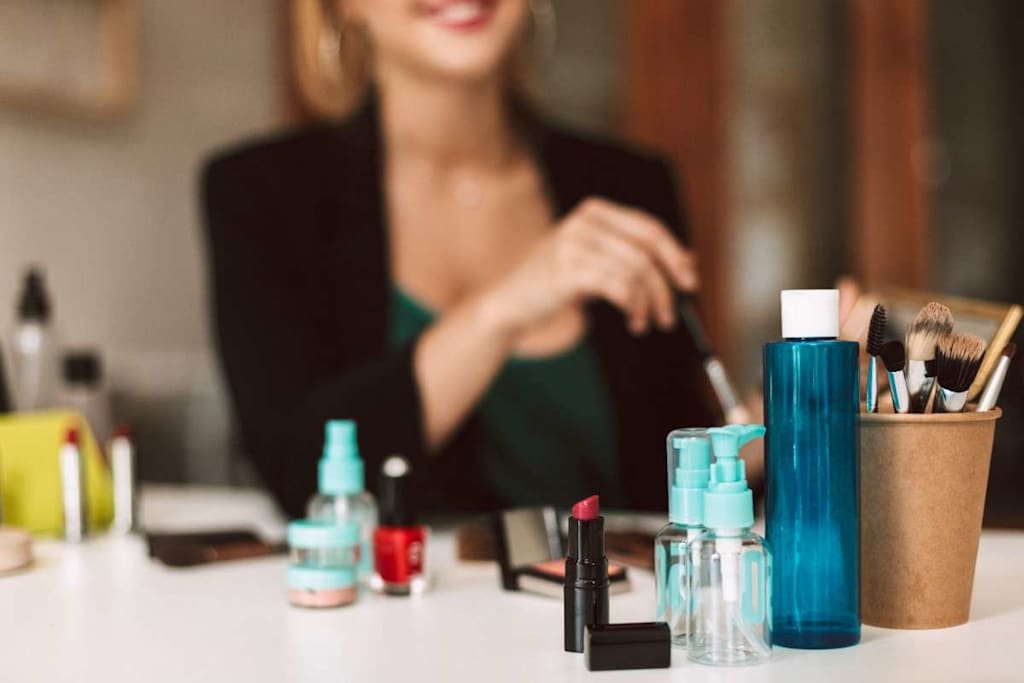
Waterproof Makeup Is Quietly Doubling in a Decade
Most mature beauty categories grow at 3–4% annually. That's the baseline expectation for a space where shelf space is finite, consumer attention is fragmented, and product differentiation is increasingly difficult to sustain. The waterproof makeup market is growing at nearly double that rate — a projected 7.7% CAGR from 2025 through 2035, which carries the category from $17.8 billion to an estimated $37.5 billion. For a segment that's been around for decades, that kind of sustained acceleration warrants some explanation.
The Market.us report behind these figures breaks down the category by product type, distribution channel, and region across a ten-year forecast window — the underlying data is available as a free sample for those tracking the space closely.
Eye Products Lead, But Foundations Are Closing Ground
Eye makeup — mascaras, liners, brow products — has historically anchored the waterproof segment, and it still holds the largest share. The logic is straightforward: eye products are the most visible failure point when makeup breaks down, and consumers learned early that waterproof formulations solved a practical problem. That established behavior created a durable base.
What's shifted more recently is momentum in the face category. Transfer-resistant foundations, waterproof BB creams, and long-wear setting products are now the fastest-growing sub-segment. This reflects a broader consumer expectation: if the technology exists for eye products, there's no reason foundations should behave differently. Brands that recognized this early — L'Oréal's Infallible range, Shiseido's Synchro Skin line — built meaningful market positions by applying waterproof-grade performance standards to products that had previously accepted shorter wear times as normal.
Geography Explains a Lot of the Growth Story
North America and Western Europe are stable markets for waterproof makeup — consistent demand, modest growth, high competition. The growth rate is being pulled upward by different dynamics elsewhere.
In Southeast Asia, India, and parts of Latin America, climate is a functional driver. Humidity and heat make standard formulations genuinely impractical for a large portion of the year. Waterproof products aren't a premium choice in these markets — they're the rational default. As middle-class consumer bases in these regions expand and per-capita beauty spending rises, volume growth follows almost mechanically.
Asia-Pacific is also where the formulation bar is highest. South Korean and Japanese brands have spent years developing waterproof products that don't carry the tradeoffs — heavy texture, difficult removal, skin occlusion — that made earlier generations of the category less appealing to daily users. Those products are now in Western markets, and they've moved the standard upward for everyone.
The Formulation Gap Is Where Competitive Advantage Actually Lives
Reviewing the waterproof makeup market through a purely financial lens misses the more interesting story, which is happening at the ingredient level. Film-forming polymers, acrylate copolymers, and silicone-based delivery systems have improved enough that the old performance-comfort tradeoff — waterproof or wearable, not both — is largely resolved in higher-end formulations. What remains is the cost and complexity of bringing that chemistry into mass-market price points.
This is where the next few years of competitive differentiation will play out. Brands that can produce genuine waterproof performance at accessible price points, without relying on ingredients that conflict with clean beauty positioning, will have a structural advantage in a market where those two demands are increasingly simultaneous. Several Korean DTC labels entering Western retail in 2024 and 2025 are testing exactly this — with early results suggesting the formula-first approach generates repeat purchase rates that marketing spend alone doesn't replicate.
What Sustains the Trajectory
The 7.7% growth rate looks durable because it isn't dependent on a single driver. Climate and geography create demand in emerging markets. Performance expectations, shaped by social media and longer, busier daily schedules, sustain it in developed ones. Formulation innovation keeps the category technically interesting enough to support new product launches and genuine consumer upgrades.
What could slow it is regulatory pressure on specific film-forming compounds in the EU and increasing scrutiny around PFAS-adjacent ingredients used in some waterproof formulations. Brands navigating those constraints early are better positioned. Those that aren't may find that the same chemistry giving them performance today becomes a liability in the next regulatory cycle.
About the Creator
Enjoyed the story? Support the Creator.
Subscribe for free to receive all their stories in your feed.
Comments
There are no comments for this story
Be the first to respond and start the conversation.