
Vinyl Record Market Trends: Retro Music Revival, Collector Demand & Forecast to 2034
How nostalgia-driven demand, superior analog sound quality, and collector culture are reshaping consumer preferences and driving renewed interest in the vinyl record market

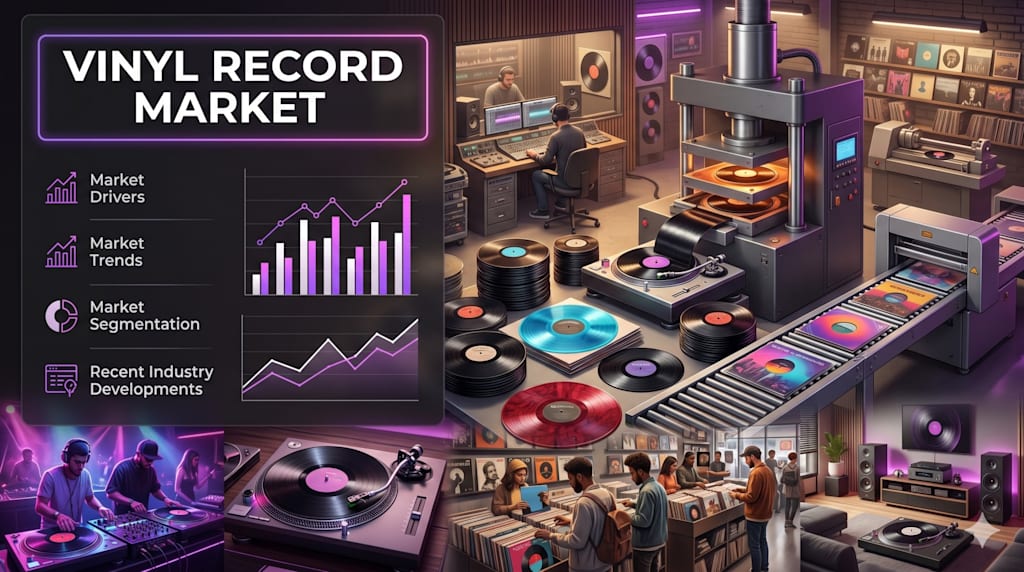
According to IMARC Group's latest research publication, the global vinyl record market size reached USD 2.1 Billion in 2025. Looking forward, IMARC Group expects the market to reach USD 3.6 Billion by 2034, exhibiting a growth rate of 6.50% during 2026-2034. The strategic adoption of omnichannel retail practices by vendors, the increasing promotional efforts of celebrities and music industry luminaries, and the incorporation of advanced technologies into vinyl record products are some of the major factors propelling the market.
How AI is Reshaping the Future of the Vinyl Record Market
- Predictive Demand Forecasting and Inventory Management: AI-powered forecasting systems are enabling vinyl record manufacturers and distributors to align production volumes with shifting consumer demand patterns driven by artist release cycles, Record Store Day events, and seasonal purchasing surges. By processing historical sales data, streaming trends, and social media sentiment in real time, companies can predict which titles, formats, and color variants will generate the highest collector demand. This capability is particularly critical given that approximately 47% of purchases are attributed to new vinyl releases, where misaligned inventory can result in significant lost revenue for pressing plants and independent retailers alike.
- Quality Control and Defect Detection in Pressing Operations: Machine learning algorithms equipped with computer vision and acoustic sensing technology are being integrated into vinyl pressing lines to detect groove inconsistencies, surface blemishes, and audio imperfections in real time. Pressing plants implementing AI-based quality assurance systems have recorded product defect rate reductions of up to 31%, directly improving customer satisfaction and reducing costly returns. These automated inspection systems are enabling manufacturers to maintain consistently high-quality standards across both standard pressings and premium audiophile-grade 180-gram and 200-gram variants, which are growing in consumer preference.
- Omnichannel Retail Optimization and Consumer Personalization: AI-driven recommendation engines deployed across e-commerce platforms and digital storefronts are reshaping how consumers discover and purchase vinyl records. By analyzing browsing behavior, genre preferences, artist affinity data, and purchase history, these systems surface highly personalized product recommendations that increase basket values and repeat purchasing rates. Independent retailers, which account for approximately 45% of total vinyl sales in the United States, are increasingly deploying AI-powered point-of-sale and inventory management tools to compete effectively with large-format retail and online channels.
- Supply Chain Transparency and Production Capacity Planning: AI technologies combined with real-time data from pressing plant sensors and distribution networks are enabling end-to-end visibility across the vinyl record supply chain. Given that approximately 41% of industry participants report experiencing production delays and pressing backlogs as ongoing operational challenges, AI-driven capacity planning tools are helping manufacturers optimize pressing schedules, minimize downtime, and reduce lead times. Pressing plants that have adopted these intelligent production management systems have reported meaningful improvements in order fulfillment accuracy and delivery reliability for both major label and independent label clients.
- Sustainability Analytics and Eco-Material Innovation: AI-powered lifecycle analysis tools are enabling vinyl record manufacturers to model the environmental impact of material choices across their product lines, supporting the transition toward recycled PVC, bio-based polymers, and alternative eco-friendly pressing materials. With approximately 47% of vinyl consumers indicating that environmental impact influences their purchasing decisions, manufacturers are leveraging data-driven sustainability analytics to certify and communicate the eco-credentials of their product lines. These tools are helping brands identify the highest-impact areas for carbon reduction, optimize packaging design, and align their sustainability messaging with the values of environmentally conscious collector segments.
Vinyl Record Industry Overview:
The vinyl record market is experiencing a structural renaissance that extends well beyond nostalgic sentiment, underpinned by measurable consumption shifts, infrastructure investment, and a generational realignment in how people choose to engage with music. In the United States, vinyl album sales reached 43.6 million units, generating USD 1.4 Billion in revenue and marking the 18th consecutive year of growth, conclusively outpacing CD sales which stood at 33 million units generating USD 541 Million in the same period. This sustained growth trajectory reflects a fundamental change in consumer behavior rather than a cyclical trend, with vinyl now accounting for 60% of all physical music sales at midyear 2025, up from 51% in 2021. The United Kingdom similarly recorded its 17th consecutive year of vinyl album sales growth, confirming that the recovery is broad-based across mature Western markets and not confined to a single geography.
The independent retail sector remains the commercial backbone of the vinyl ecosystem, with independent record stores accounting for approximately 34.7% of total physical music sales scanned at midyear 2025. Over 400 independent stores are now reporting sales data to the Luminate tracking system, the largest number of reporting stores ever recorded since 1991, reflecting a professionalization and formalization of the independent retail channel that is attracting greater attention from labels and distributors. The European Commission reinforced institutional confidence in the sector by approving a EUR 20 Million funding program named Vinyl Revival in February 2025, targeting production capacity expansion, quality improvement, and promotional support for European artists, signaling government-level recognition of vinyl manufacturing as a strategically important creative industry.
Vinyl Record Market Trends and Drivers
The nostalgia-driven cultural revival of analog music formats is the foundational demand engine of the vinyl record market, attracting both older consumers seeking reconnection with their musical past and younger generations discovering the format for the first time. Generation Z in particular has emerged as a significant and structurally important consumer segment, with approximately 40% of buyers in the 18-34 age group expressing a preference for vinyl formats over digital alternatives. This generational engagement is not passive. It is rooted in a conscious desire for tangible, immersive music experiences that contrast sharply with the frictionless but ephemeral nature of streaming. The tactile ritual of selecting a record, placing it on a turntable, and reading the sleeve artwork is functioning as a deliberate act of cultural resistance against the convenience-first logic of digital consumption, and this behavioral distinction is proving durable and commercially significant.
Limited-edition and exclusive vinyl releases are functioning as powerful demand accelerators across both primary and secondary markets, transforming individual album launches into highly anticipated cultural events. Colored vinyl, picture discs, gatefold editions, and splatter pressings are attracting collector communities willing to pay significant premiums for format exclusivity. Approximately 55% of consumers express a preference for colored or picture disc variants, and 58% of limited runs dominate collector purchasing behavior, creating concentrated demand spikes that reward pressing plants and independent retailers who can position themselves effectively around release dates. The success of Taylor Swift's The Tortured Poets Department, which led US vinyl sales with over 500,000 LP units and drove 783,820 copies across all formats in the UK alone, demonstrates how major artist releases can generate extraordinary volume within short windows. Subscription services have also contributed to 24% of recurring vinyl purchases, further stabilizing demand beyond event-driven release cycles.
Advances in manufacturing technology, premium audio engineering, and sustainable material innovation are broadening the vinyl record market's consumer base and reinforcing its premium positioning relative to other physical music formats. Modern pressing plants are producing 180-gram and 200-gram audiophile-grade records with superior sound characteristics, enhanced groove geometry, and greater structural durability, with these high-fidelity variants now accounting for approximately 19% of all vinyl records sold in the high-fidelity segment. Simultaneously, the growth of specialized and online retail channels is increasing geographic accessibility for vinyl consumers beyond the major urban markets where independent stores have traditionally concentrated. The direct-to-consumer channel accounted for 10.1% of physical music sales at midyear 2025, a growing share reflecting the maturation of artist-to-fan commerce models that allow labels and artists to capture greater margin on premium and exclusive releases.
Leading Companies Operating in the Global Vinyl Record Industry:
- GZ Media
- Implant Media Pty Ltd.
- Independent Record Pressing
- MPO International (Aker Solutions)
- Optimal Media (Brand Networks)
- PrimeDisc International Limited
- Quality Record Pressings
- R.a.n.d.muzik Record Manufacturing
- Record Industry
- Pallas Group
- Stereodisk LLC
- United Record Pressing
Vinyl Record Market Report Segmentation:
By Product:
- LP/EP Vinyl Records
- Single Vinyl Records
Single vinyl records represent the largest product segment, favored by consumers seeking individual tracks at accessible price points. Their iconic 7-inch format, distinctive packaging, and historical association with landmark popular music releases make them enduringly attractive to both casual listeners and dedicated collectors.
By Feature:
- Colored
- Gatefold
- Picture
Colored vinyl records dominate the feature segment, offering a visually distinctive and artistically expressive dimension that elevates the format beyond pure audio delivery. Their association with limited and special edition releases, combined with their visual appeal when held against light, makes them highly sought after among collector communities globally.
By Gender:
- Men
- Women
Men represent the largest gender segment, reflecting historical associations between music collecting culture, audiophile enthusiasm, and male consumer behavior. However, women represent a growing and increasingly significant demographic, attracted by the aesthetic, nostalgic, and lifestyle dimensions of vinyl record ownership.
By Age Group:
- 13-17
- 18-25
- 26-35
- 36-50
- Above 50
The 26-35 age group holds the largest market share, comprising millennials who span both analog and digital eras and maintain a strong appreciation for the physical, tactile, and sonic qualities that vinyl delivers. This group combines nostalgia with purchasing power, making them the market's most commercially influential consumer segment.
By Application:
- Private
- Commercial
Private application dominates the market, driven by the deeply personal and immersive nature of home vinyl listening. The deliberate ritual of playing a record encourages a more active and attentive engagement with music, contrasting with the passive consumption associated with digital streaming and making private listening the defining use case for the format.
By Distribution Channel:
- Supermarkets and Hypermarkets
- Independent Retailers
- Online Stores
- Others
Independent retailers hold the largest distribution channel share, functioning as cultural centers for vinyl communities by offering curated product selections, rare and limited-edition pressings, personalized recommendations, and event programming including record fairs and live performances that reinforce the social and cultural value of the format.
Regional Insights:
- North America (United States, Canada)
- Asia Pacific (China, Japan, India, South Korea, Australia, Indonesia, Others)
- Europe (Germany, France, United Kingdom, Italy, Spain, Russia, Others)
- Latin America (Brazil, Mexico, Others)
- Middle East and Africa
Asia Pacific exhibits clear dominance, accounting for the largest vinyl record market share. The region's vast population base, rising disposable incomes among urban middle-class demographics, growing cultural alignment with retro and high-fidelity audio formats, and the presence of both global and regionally significant manufacturers together sustain its leading position in global vinyl consumption and production.
Recent News and Developments in the Vinyl Record Market
- February 2026: Alliance Entertainment reported selling over 16.3 million vinyl records in calendar year 2025, representing a 5% increase in unit volume year-over-year. The company simultaneously launched Alliance Authentic, a premium certified vinyl collectibles platform featuring NFC authentication technology, enabling buyers to verify the provenance and authenticity of limited-edition pressings at point of purchase.
- June 2025: Key Production, Europe's largest physical music manufacturing agency, reported a 50% increase in vinyl manufacturing orders in the first five months of the year compared to the prior year period. Average order quantities per independent artist grew 41%, reflecting a broadening of market demand beyond major label clients toward individual and emerging artists seeking to connect directly with fans through physical format releases.
- February 2025: The European Commission approved a EUR 20 Million funding program titled Vinyl Revival, designed to support the growth of the European vinyl industry by boosting production capacity, improving pressing quality standards, and promoting European artists through targeted commercial support and international distribution initiatives.
- February 2025: John Lewis began offering a curated vinyl selection featuring artists including Nirvana and Taylor Swift through a partnership with Rough Trade, marking a significant return to physical music retail for the major British department store chain and signaling the mainstreaming of vinyl as a lifestyle retail category beyond specialist music outlets.
- May 2024: Discretion Records, an independent record label, raised USD 5 Million in a Series A funding round to expand its operations, scale vinyl production, and sign new artists, demonstrating continued investor confidence in the commercial viability of independent vinyl-focused music businesses.
- March 2024: Universal Music Group launched an eco-friendly vinyl alternative manufactured from recycled materials and bio-based polymers, directly addressing sustainability concerns embedded in traditional PVC-based vinyl production and responding to the approximately 47% of consumers who identify environmental impact as a factor influencing their purchasing decisions.
Note: If you require specific details, data, or insights that are not currently included in the scope of this report, we are happy to accommodate your request. As part of our customization service, we will gather and provide the additional information you need, tailored to your specific requirements. Please let us know your exact needs, and we will ensure the report is updated accordingly to meet your expectations.
About the Creator
Abhay Rajput
I am working in market research company that provides market and business research intelligence across the globe.
Enjoyed the story? Support the Creator.
Subscribe for free to receive all their stories in your feed.
Comments
There are no comments for this story
Be the first to respond and start the conversation.