
Vegan Food Market Poised for Strong Growth as Health and Sustainability Reshape Global Eating Habits
Rising consumer awareness, plant-based innovation, and environmental concerns are accelerating demand for vegan food products worldwide.

The global food industry is witnessing one of its most significant transformations in decades. Consumers are increasingly rethinking what they eat, how their food is produced, and the impact their choices have on personal health and the environment. Among the most notable outcomes of this shift is the growing popularity of vegan food products.
What was once considered a niche lifestyle associated with a relatively small segment of consumers has evolved into a mainstream movement. Today, vegan food is no longer confined to specialty stores or health-focused communities. Instead, plant-based alternatives are appearing on supermarket shelves, restaurant menus, and online marketplaces across the world.
The combination of growing health consciousness, environmental awareness, and advancements in food technology has created favorable conditions for the vegan food market to flourish. As consumers seek alternatives to traditional animal-based products, food manufacturers are responding with innovative offerings that closely replicate the taste, texture, and nutritional value of meat, dairy, and other conventional food items.
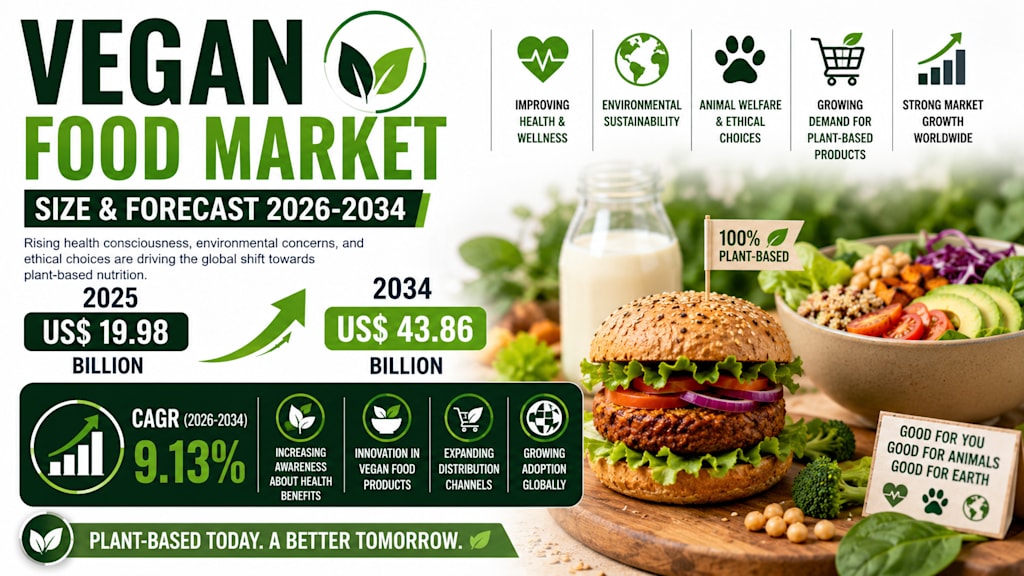
According to Renub Research, the global vegan food market is projected to increase from US$ 19.98 billion in 2025 to US$ 43.86 billion by 2034, expanding at a compound annual growth rate (CAGR) of 9.13% between 2026 and 2034. The forecast reflects the growing acceptance of plant-based eating habits and the industry's ability to attract a broader consumer base.
Why Vegan Food Is Becoming Mainstream
The perception of vegan food has changed dramatically over the past decade. Previously, vegan diets were often associated exclusively with ethical concerns surrounding animal welfare. While these values remain important, today's consumers are embracing plant-based foods for a much wider range of reasons.
Many individuals are exploring vegan products as part of a healthier lifestyle. Others are motivated by environmental sustainability or curiosity about innovative food alternatives. The result is a diverse consumer base that extends well beyond traditional vegan communities.
The rise of flexitarian diets has further accelerated market growth. Flexitarians are consumers who intentionally reduce their meat consumption without completely eliminating animal products. This growing demographic has become a major contributor to demand for plant-based alternatives, creating opportunities for food manufacturers and retailers worldwide.
As vegan products become more accessible and affordable, consumers are finding it easier than ever to incorporate plant-based options into their daily routines.
Health Awareness Continues to Drive Consumer Demand
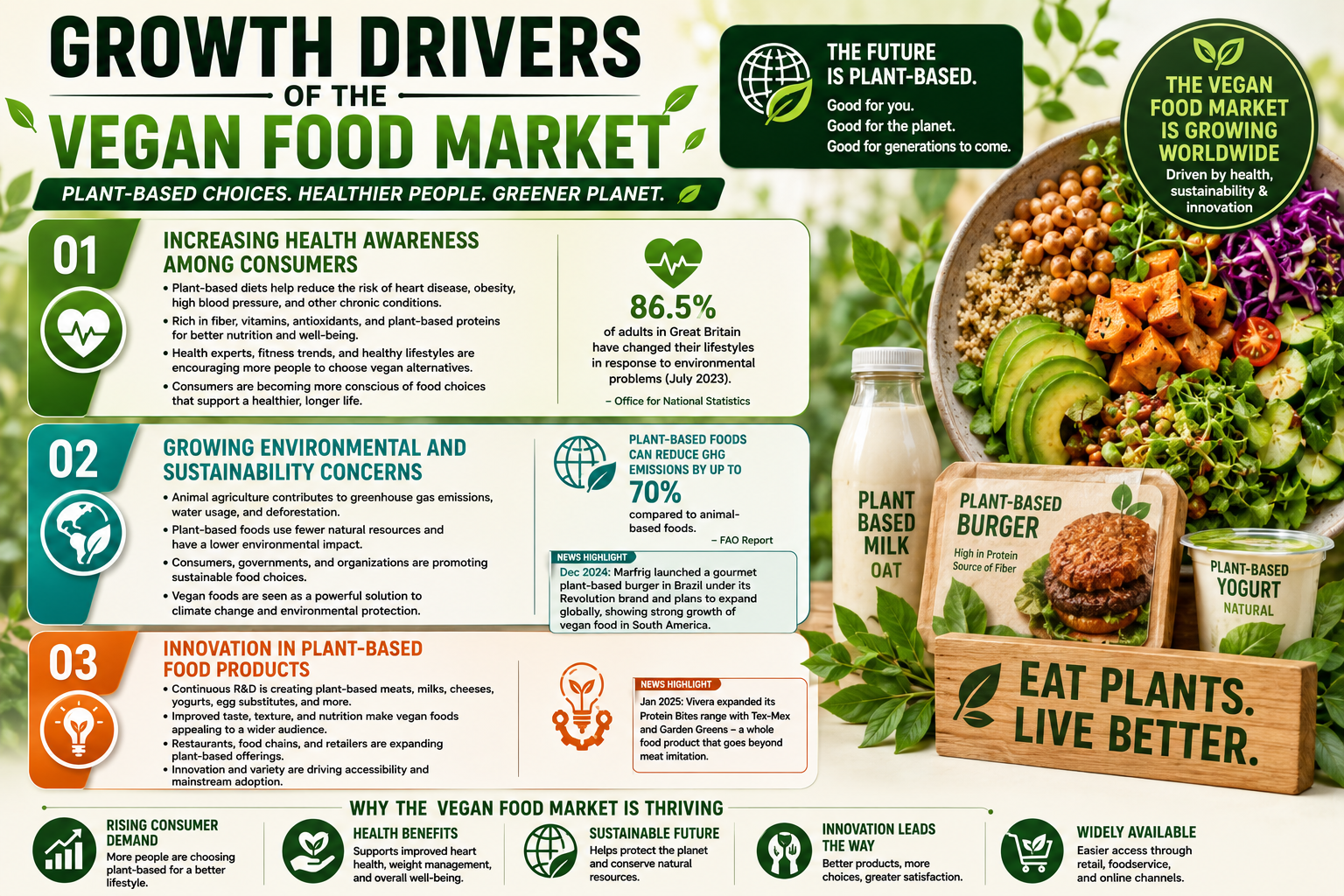
Health considerations remain one of the strongest drivers behind the expansion of the vegan food market.
Consumers today are more informed about the relationship between diet and long-term wellness. Growing concerns about obesity, cardiovascular disease, diabetes, and other chronic conditions have encouraged many people to seek healthier dietary choices.
Plant-based foods are often rich in fiber, vitamins, minerals, antioxidants, and plant-derived proteins. At the same time, they typically contain lower levels of saturated fats compared to many traditional animal-based products. These nutritional benefits have contributed to the perception of vegan food as a healthier alternative.
The global wellness movement has further strengthened this trend. Fitness enthusiasts, healthcare professionals, nutrition experts, and wellness influencers regularly promote plant-based eating as part of a balanced lifestyle. As preventive healthcare becomes increasingly important, consumers are paying closer attention to the foods they consume and the long-term impact of those choices.
This growing awareness is expected to continue supporting demand for vegan products throughout the forecast period.
Sustainability Is Influencing Food Choices
Environmental sustainability has emerged as another powerful factor shaping consumer purchasing decisions.
Climate change, resource depletion, and environmental degradation have become central concerns for governments, businesses, and individuals alike. As a result, many consumers are evaluating the environmental footprint of the products they purchase, including food.
Traditional livestock farming requires significant amounts of land, water, and energy while contributing substantially to greenhouse gas emissions. In comparison, plant-based food production generally consumes fewer natural resources and produces lower environmental impacts.
Consumers increasingly view vegan food as a practical way to contribute to environmental conservation efforts. This shift is particularly evident among younger generations, who often prioritize sustainability when making purchasing decisions.
Governments and environmental organizations around the world are also encouraging more sustainable food systems. Such initiatives are helping raise awareness about the benefits of plant-based diets and supporting the continued growth of the vegan food market.
Innovation Is Transforming the Vegan Food Industry
Innovation has played a critical role in the success of the vegan food sector.
In the past, one of the primary barriers to adoption was the perception that plant-based foods could not match the taste or texture of traditional animal products. However, advances in food science and manufacturing technologies have significantly changed that reality.
Today, food companies are investing heavily in research and development to create products that closely replicate conventional foods. Ingredients such as soy, peas, oats, almonds, wheat protein, mushrooms, and coconut are being used to develop a wide variety of alternatives that appeal to mainstream consumers.
The market now offers plant-based burgers, vegan sausages, dairy-free milk, vegan cheese, yogurt alternatives, egg substitutes, frozen meals, snacks, desserts, and numerous other products. Improved product quality has expanded consumer acceptance and contributed to higher repeat purchases.
Innovation is also enabling manufacturers to improve nutritional profiles, reduce production costs, and create products tailored to specific dietary needs, making vegan foods increasingly competitive within the broader food industry.
Vegan Dairy Alternatives Continue to Expand
One of the most successful segments within the vegan food industry is dairy alternatives.
Consumers seeking lactose-free, dairy-free, or environmentally friendly options are increasingly turning to plant-based milk and related products. Almond milk, soy milk, oat milk, coconut milk, and cashew-based beverages have become common fixtures in supermarkets around the world.
Among these products, oat milk has experienced particularly strong growth due to its creamy texture and versatility. It has become a popular choice for coffee beverages, cooking, and baking applications.
The market for vegan cheese, yogurt, butter, and ice cream has also expanded considerably. Manufacturers continue to refine formulations and improve flavor profiles, helping these products gain wider acceptance among both vegan and non-vegan consumers.
As awareness of dairy alternatives continues to increase, this segment is expected to remain a key contributor to overall market growth.
Plant-Based Meat Is Attracting Mainstream Consumers
The plant-based meat category has become one of the most visible segments of the vegan food industry.
Modern vegan meat products are designed to mimic the appearance, taste, texture, and cooking performance of traditional meat. Using ingredients such as soy protein, pea protein, mushrooms, and wheat protein, manufacturers have successfully developed alternatives that satisfy consumer expectations.
Plant-based burgers, nuggets, sausages, and minced meat products are now available through major retailers and restaurant chains worldwide. These products appeal not only to vegans but also to consumers looking to reduce meat consumption for health or environmental reasons.
Continued innovation has led to significant improvements in product quality, helping overcome skepticism among first-time buyers. As food technology continues to advance, the plant-based meat segment is expected to remain one of the fastest-growing categories within the vegan food market.
Regional Markets Present Significant Opportunities
The growth of the vegan food market is occurring across multiple regions, although each market is shaped by unique consumer preferences and economic conditions.
United States
The United States remains one of the world's largest and most innovative vegan food markets. Strong consumer awareness, significant investment in food technology, and widespread product availability have helped drive growth. Consumers increasingly view plant-based products as part of a healthier and more sustainable lifestyle.
United Kingdom
The United Kingdom has emerged as a global leader in vegan food adoption. Public campaigns, growing awareness of sustainability issues, and initiatives such as Veganuary have helped normalize plant-based eating. Retailers continue to expand their vegan product offerings to meet growing consumer demand.
India
India represents a particularly promising market due to its long-standing cultural familiarity with vegetarian diets. Rising urbanization, increasing awareness of lactose intolerance, and growing exposure to international food trends are encouraging consumers to explore vegan alternatives. Local manufacturers and startups are introducing innovative products designed specifically for Indian tastes and preferences.
Saudi Arabia
Saudi Arabia is gradually becoming an important emerging market for vegan food. Younger consumers are showing increased interest in wellness, healthy lifestyles, and global food trends. Restaurants, cafés, and retailers are responding by expanding vegan menu options and introducing plant-based products to a broader audience.
Challenges Facing the Vegan Food Industry
Despite its positive outlook, the vegan food market faces several challenges.
One of the most significant barriers is product affordability. Many plant-based alternatives remain more expensive than traditional food products due to specialized ingredients, advanced manufacturing processes, and relatively smaller production volumes.
Consumer awareness also varies significantly across regions. In some markets, misconceptions regarding nutritional value, protein content, and product quality continue to influence purchasing behavior.
To address these challenges, industry participants are focusing on education, marketing, supply chain improvements, and technological innovation. As production scales increase and efficiencies improve, many experts expect prices to become more competitive over time.
Market Forecast: Strong Growth Expected Through 2034
The outlook for the vegan food market remains highly encouraging. According to Renub Research, global market value is forecast to increase from US$ 19.98 billion in 2025 to US$ 43.86 billion by 2034, representing a CAGR of 9.13% from 2026 to 2034. This growth will be supported by rising health consciousness, increasing environmental awareness, continuous product innovation, and expanding consumer acceptance of plant-based diets.
As vegan products become more affordable and accessible, their appeal is expected to extend well beyond dedicated vegan consumers. The industry's ability to attract flexitarians and health-conscious shoppers will likely play a major role in sustaining long-term growth.
The Future of Vegan Food Looks Bright
The evolution of the vegan food market reflects broader changes occurring throughout the global food industry. Consumers are becoming more informed, more selective, and more conscious of the impact their dietary choices have on personal health and the environment.
Food manufacturers, retailers, and investors are recognizing the long-term potential of plant-based products and are increasing their commitment to innovation and expansion. This support is creating a strong foundation for future growth.
As plant-based foods continue improving in quality, affordability, and availability, they are expected to become a routine part of everyday diets across many regions of the world.
Final Thoughts
The vegan food market is no longer a niche segment driven solely by lifestyle preferences. It has evolved into a rapidly expanding global industry supported by powerful trends in health, sustainability, technology, and consumer behavior.
With Renub Research forecasting growth from US$ 19.98 billion in 2025 to US$ 43.86 billion by 2034 at a CAGR of 9.13%, the market is positioned for substantial expansion in the years ahead. As innovation continues and awareness grows, vegan food is expected to play an increasingly important role in shaping the future of global nutrition and food consumption.
For consumers, businesses, and policymakers alike, the rise of vegan food represents more than a trend—it reflects a fundamental shift toward a healthier, more sustainable, and more conscious approach to eating.
About the Creator
Enjoyed the story? Support the Creator.
Subscribe for free to receive all their stories in your feed.
Comments
There are no comments for this story
Be the first to respond and start the conversation.