
United States Surgical Dressings Market Set to Reach USD 2 Billion by 2033 Amid Rising Surgical Procedures and Advanced Wound Care Innovations
Growing Demand for Infection Control, Chronic Wound Management, and Home Healthcare Accelerates Expansion of the U.S. Surgical Dressings Industry

Introduction
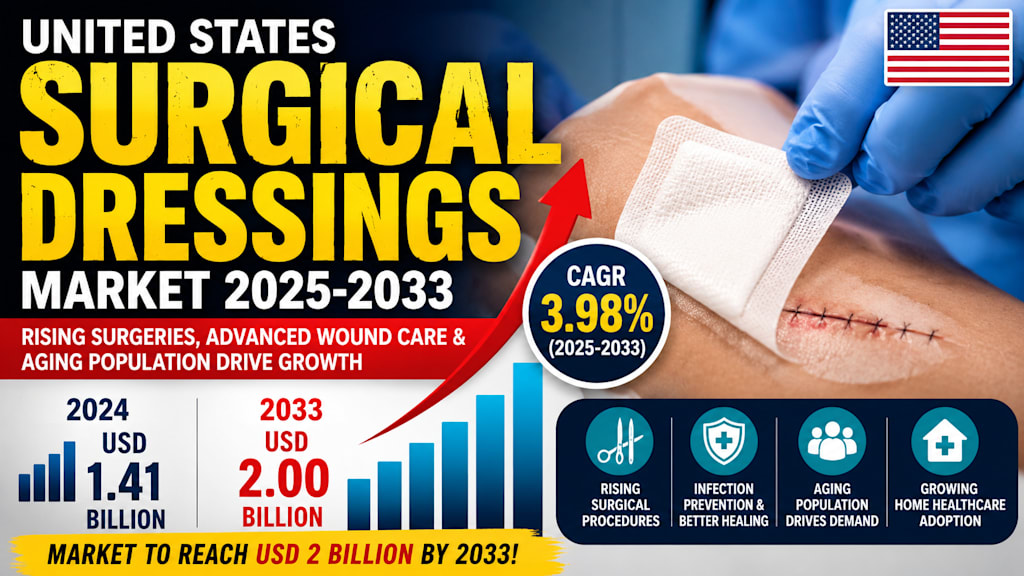
The United States surgical dressings market is witnessing significant growth as healthcare providers increasingly focus on advanced wound management, infection prevention, and faster patient recovery. According to Renub Research, the market is projected to rise from USD 1.41 billion in 2024 to nearly USD 2 billion by 2033, expanding at a CAGR of 3.98% during the forecast period from 2025 to 2033.
Surgical dressings play a crucial role in modern healthcare systems. These sterile medical products protect wounds, absorb exudates, minimize infection risks, and promote optimal healing after surgeries or injuries. With the growing prevalence of chronic diseases, increasing surgical procedures, and technological innovation in wound care, the demand for advanced surgical dressings continues to accelerate across the United States.
The market is also benefiting from expanding home healthcare services, rising healthcare expenditure, and growing awareness regarding post-operative infection management.
Rising Surgical Procedures Fuel Market Expansion
One of the strongest growth drivers in the United States surgical dressings market is the rising number of surgical procedures performed annually. Hospitals and ambulatory surgery centers are witnessing increased patient inflow for orthopedic surgeries, cardiovascular operations, obesity treatments, and transplant procedures.
According to healthcare industry estimates, more than 15 million surgeries are conducted annually across the United States. Every surgical intervention requires efficient wound care management, increasing the need for reliable and high-performance surgical dressings.
An aging population further contributes to market growth. Elderly individuals are more vulnerable to chronic diseases and often require surgeries related to cardiovascular conditions, diabetes complications, joint replacements, and cancer treatments. As a result, demand for surgical wound care products is expanding steadily.
The increasing prevalence of obesity and diabetes is another major contributor. These conditions often lead to chronic wounds such as diabetic foot ulcers and pressure sores, creating long-term demand for specialized surgical dressings designed to promote healing and reduce infection risks.
Advanced Wound Care Technologies Transforming the Industry
Technological innovation is reshaping the surgical dressings landscape in the United States. Manufacturers are developing advanced products that improve healing efficiency while minimizing complications associated with infections.
Modern wound care solutions now include antimicrobial dressings, moisture-retentive dressings, hydrocolloid products, alginate dressings, foam dressings, and transparent film technologies. These advanced solutions help maintain ideal wound environments and support faster tissue regeneration.
Smart wound dressings equipped with monitoring capabilities are also gaining attention in healthcare facilities. These products allow clinicians to monitor wound conditions more effectively and intervene earlier when complications arise.
In January 2024, 3M Health Care received a USD 34.2 million contract from the U.S. Army Medical Research Acquisition Activity to improve treatment procedures for critical wounds in challenging environments. The initiative focuses heavily on infection prevention and advanced wound healing technologies, highlighting the growing importance of innovation in the sector.
Such investments are expected to enhance research and development activities, further boosting the adoption of sophisticated wound care products throughout the country.
Aging Population and Rising Healthcare Spending Strengthen Market Potential
The expanding elderly population in the United States continues to create substantial opportunities for the surgical dressings market. People aged 65 and older are highly susceptible to chronic illnesses, surgical interventions, and delayed wound healing.
Demographic studies suggest that the U.S. population aged 65 and above may rise from 58 million in 2022 to nearly 82 million by 2050. This demographic shift is expected to significantly increase healthcare utilization, including surgeries and chronic wound management services.
Simultaneously, healthcare expenditure in the United States continues to rise steadily. Hospitals, specialty clinics, and home healthcare providers are increasingly investing in advanced wound care products to improve patient outcomes and reduce hospital readmission rates.
Healthcare providers are also emphasizing infection prevention strategies due to the high costs associated with surgical site infections. Advanced dressings capable of reducing infection risks are becoming essential components of modern post-operative care protocols.
Primary Surgical Dressings Dominate the Market
Among product categories, primary surgical dressings hold a dominant position in the United States market. These dressings come into direct contact with wounds and play a critical role in protecting tissue while initiating the healing process.
Primary dressings are widely used across hospitals, ambulatory surgery centers, and specialty clinics because they help maintain moisture balance and reduce contamination risks.
Growing awareness regarding effective wound care practices has encouraged healthcare professionals to adopt technologically advanced primary dressings that enhance patient comfort and accelerate healing.
In January 2023, Convatec introduced ConvaFoam™, a sophisticated foam dressing product line in the United States designed to meet the evolving needs of healthcare professionals and patients.
The launch of such innovative products demonstrates how manufacturers are actively responding to rising market demand for more efficient wound care solutions.
Diabetes-Based Surgical Dressings Witness Rising Demand
The increasing prevalence of diabetes in the United States has generated significant demand for specialized surgical dressings tailored to diabetic wound management.
Diabetic foot ulcers remain one of the most serious complications associated with uncontrolled diabetes. These wounds often heal slowly and are highly vulnerable to infections, making advanced wound care essential.
Healthcare providers are increasingly utilizing specialized surgical dressings with antimicrobial and moisture-balancing properties to improve healing outcomes in diabetic patients.
The economic burden associated with diabetes-related complications has also encouraged healthcare systems to prioritize preventive wound care solutions. Early intervention using advanced dressings can help reduce hospitalization rates and lower long-term treatment costs.
As diabetes cases continue to rise nationwide, the diabetes-based surgical dressings segment is expected to remain a major contributor to overall market growth.
Cardiovascular Surgeries Increase Need for Surgical Dressings
Cardiovascular diseases continue to represent one of the leading causes of mortality in the United States. Rising cases of heart disease, hypertension, and vascular disorders are increasing the number of surgical procedures such as bypass surgeries, angioplasties, and valve replacements.
Every cardiovascular procedure requires efficient wound management during recovery. Surgical dressings are essential for minimizing infection risks and supporting post-operative healing.
Healthcare providers are increasingly choosing advanced dressing products that offer improved absorption, antimicrobial protection, and enhanced patient comfort.
In September 2024, Solventum introduced the V.A.C.® Peel and Place Dressing, an all-in-one wound dressing solution that can reportedly be applied within two minutes and worn for up to seven days.
Such innovations are expected to improve surgical efficiency and patient outcomes in cardiovascular care settings.
Hospitals Remain the Largest End-Use Segment
Hospitals account for the largest share of the United States surgical dressings market due to the high volume of surgical procedures conducted within these facilities.
Hospital-based wound care management focuses heavily on infection prevention, patient safety, and compliance with healthcare quality standards. Advanced surgical dressings help hospitals reduce complications while improving recovery timelines.
The increasing number of emergency surgeries, trauma cases, and chronic disease treatments further supports demand from hospital settings.
Additionally, hospitals are adopting cost-effective wound care strategies aimed at reducing hospital stays and minimizing readmission risks. Advanced dressings capable of promoting faster healing are becoming critical tools in achieving these objectives.
Home Healthcare Emerges as a Fast-Growing Segment
The home healthcare sector is emerging as one of the fastest-growing segments within the United States surgical dressings market.
Patients increasingly prefer receiving post-operative care and chronic wound treatment at home due to convenience, affordability, and comfort. This trend has accelerated demand for easy-to-use surgical dressings designed specifically for self-care and remote patient management.
Technological improvements in dressing materials have enabled patients and caregivers to manage wounds safely outside hospital environments.
In April 2024, Remedium Healthcare Products announced the launch of NuVeria Labs’ Sacral Silicone Dressing on Amazon, bringing advanced wound care solutions directly to consumers.
The availability of sophisticated wound care products through retail and e-commerce platforms is expected to further support growth in home healthcare applications.
Challenges Limiting Market Growth
Despite promising growth prospects, the United States surgical dressings market faces several challenges.
One of the primary barriers is the high cost associated with advanced wound care products. Sophisticated surgical dressings often involve specialized materials and advanced manufacturing technologies, making them more expensive than traditional alternatives.
Smaller healthcare facilities and budget-constrained clinics may struggle to adopt premium wound care solutions on a large scale. This can create disparities in access to advanced treatment options.
Another major challenge involves stringent regulatory requirements. Surgical dressing manufacturers must comply with strict safety and efficacy standards before launching products in the market.
The lengthy and expensive approval process can delay product commercialization and increase operational costs for manufacturers. Smaller companies may face additional difficulties competing with established global players due to these regulatory complexities.
Competitive Landscape
The United States surgical dressings market remains highly competitive, with several global and regional companies focusing on product innovation, acquisitions, and strategic partnerships.
Leading companies operating in the market include:
Smith & Nephew plc
Essity AB
DeRoyal Industries, Inc.
3M
Integra LifeSciences Holdings Corporation
Cardinal Health Inc
MiMedx Group Inc
Medtronic plc
These companies continue investing heavily in research and development activities to introduce technologically advanced wound care products capable of improving healing outcomes and reducing healthcare costs.
10 Recent Developments in the United States Surgical Dressings Market
3M secured a USD 34.2 million U.S. Army contract in January 2024 to improve advanced wound care and infection prevention solutions.
Convatec launched ConvaFoam™ advanced foam dressings in the United States during January 2023.
Solventum introduced the V.A.C.® Peel and Place Dressing in September 2024 for faster wound dressing application.
Remedium Healthcare Products launched NuVeria Labs’ Sacral Silicone Dressing on Amazon in April 2024.
Smith & Nephew expanded its advanced wound management portfolio targeting surgical recovery applications.
Cardinal Health strengthened distribution capabilities for wound care products across healthcare facilities.
Integra LifeSciences increased investments in regenerative wound care technologies.
Medtronic expanded post-operative care support solutions integrated with surgical recovery products.
MiMedx Group accelerated research into biologics and advanced tissue healing technologies.
Essity AB continued focusing on sustainable and patient-friendly wound care product innovations.
Final Thoughts
The United States surgical dressings market is entering a strong growth phase driven by rising surgical procedures, chronic disease prevalence, technological advancements, and expanding home healthcare services.
Advanced wound care products are becoming increasingly important as healthcare providers prioritize infection prevention, patient comfort, and faster recovery outcomes. The aging population and increasing healthcare expenditure further strengthen long-term market opportunities.
While high product costs and regulatory challenges remain concerns, continuous innovation and strategic investments from leading companies are expected to support sustained industry expansion through 2033.
As healthcare systems continue shifting toward value-based care and improved patient outcomes, the demand for advanced surgical dressings in the United States is likely to remain robust for years to come.
About the Creator
Enjoyed the story? Support the Creator.
Subscribe for free to receive all their stories in your feed.
Comments
There are no comments for this story
Be the first to respond and start the conversation.