
United States Subsea Pumps Market: How Offshore Energy Technology Is Transforming Deepwater Production
The United States subsea pumps market is growing steadily as offshore oil and gas companies adopt advanced underwater pumping technologies to improve deepwater production efficiency.

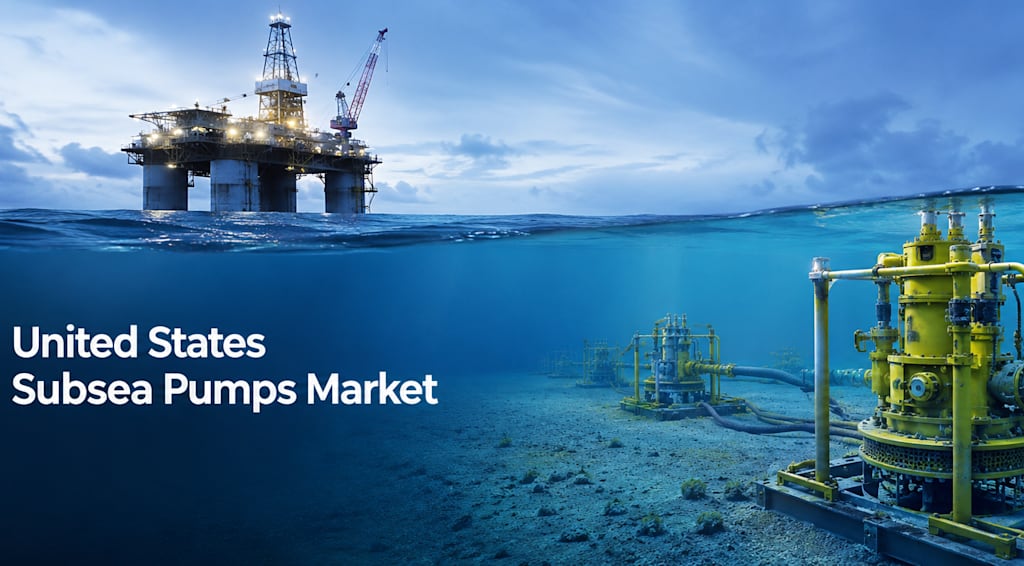
The United States offshore energy industry is embarking on a phase of technological modernization with a growing focus on deepwater oil and gas exploration. As accessible onshore reserves dwindle, energy producers are looking toward challenging offshore environments that demand specialized equipment capable of functioning in high-pressure, subsea conditions. Key technologies facilitating this transition include subsea pumps.
Subsea pumps are underwater pumping systems located on the ocean floor. These are designed to augment the flow of oil, gas, water, and multiphase fluids from offshore reservoirs to processing facilities. Subsea pumps play a crucial role in enhancing offshore production efficiency, extending field life, and increasing recovery rates from deepwater fields.
The United States subsea pumps market was valued at USD 266.0 million in 2025 and is projected to grow to USD 438.0 million by 2034, demonstrating a CAGR of 5.53% from 2026 to 2034 (IMARC Group). This market expansion is largely driven by an increasing demand for offshore oil and gas exploration. Global energy needs continue to rise, prompting oil companies to invest in deepwater and ultra-deepwater projects to access untapped hydrocarbon resources. Subsea pumps are vital in sustaining production flow and optimizing extraction efficiency in the challenging subsea environments where natural reservoir pressure may not be sufficient.
Another key market influence is the increasing adoption of subsea boosting technology. Subsea boosting systems utilize pumps to increase hydrocarbon pressure at the wellhead, facilitating long-distance transport to offshore platforms or onshore processing centers. This is particularly beneficial in mature oil fields experiencing a natural decline in reservoir pressure.
A significant market trend is the growing use of sophisticated multiphase pumping systems. Modern subsea pumps are engineered to handle complex combinations of oil, gas, water, and solids, thereby improving operational efficiency and minimizing the need for extensive surface processing infrastructure. This advancement allows operators to reduce production costs and maximize output from offshore reserves.
Technological innovation is also spurring market growth. Companies are investing in smarter, more energy-efficient subsea systems that feature advanced sensors, digital monitoring platforms, and predictive maintenance capabilities. These innovations enhance operational reliability, reduce downtime, and enable real-time monitoring of underwater production assets, aligning with the growing trend toward data-driven offshore operations.
The modernization of existing offshore infrastructure in the U.S. Is another important market driver. Aging offshore fields, particularly in the Gulf of Mexico, require updated production systems to maintain efficiency and extend operational lifespans. Subsea pumping technologies help operators improve recovery rates from mature fields without the expense of installing entirely new offshore platforms.
Environmental and operational efficiency targets are also shaping the market. Advanced subsea processing systems can minimize the environmental impact of offshore operations by reducing the need for surface facilities and increasing energy efficiency. Furthermore, these technologies help mitigate the operational risks associated with transporting hydrocarbons over long distances.
From a segmentation perspective, the market includes various pump types, such as centrifugal, helico-axial, hybrid, twin screw, co-axial, and ESP (Electrical Submersible Pumps). Helico-axial pumps currently hold a significant market share due to their efficiency in handling multiphase flow conditions prevalent in deepwater operations.
Application-wise, the market comprises subsea boosting, separation, injection, and gas compression. Subsea boosting is currently the dominant segment due to its critical role in maintaining adequate pressure and flow for offshore oil extraction.
Geographically, the Gulf Coast and Southern United States continue to be key growth regions due to the extensive offshore oil and gas activities in the Gulf of Mexico. Ongoing investments in offshore energy infrastructure and exploration projects are expected to sustain long-term demand for advanced subsea technologies in these areas.
Another notable trend is the increasing integration of subsea processing systems with autonomous and remotely operated technologies. Offshore operators are increasingly leveraging ROVs, underwater robotics, and AI-powered monitoring systems to improve maintenance efficiency and reduce human intervention in potentially hazardous underwater environments, transforming the future of offshore energy production.
The United States subsea pumps market's significance is intertwined with broader trends in energy security, offshore modernization, and industrial automation. As global energy demands evolve, subsea technologies are becoming indispensable for accessing deeper, more complex offshore reserves and improving operational efficiency. The market is poised for continued growth driven by sustained offshore exploration, technological innovation, and expanding investment in deepwater energy infrastructure. As offshore production systems become more intelligent and automated, subsea pumps will remain a cornerstone technology for underwater energy extraction.
About the Creator
michael matthew
I’m a market researcher passionate about understanding people, markets, and motivations. My work blends data analysis, consumer psychology, and strategic insight to help brands and businesses make informed, human-centered decisions.
Enjoyed the story? Support the Creator.
Subscribe for free to receive all their stories in your feed.
Comments
There are no comments for this story
Be the first to respond and start the conversation.