
United States Seafood Market Set for Steady Growth Through 2034 as Health, Convenience, and Sustainability Shape Demand
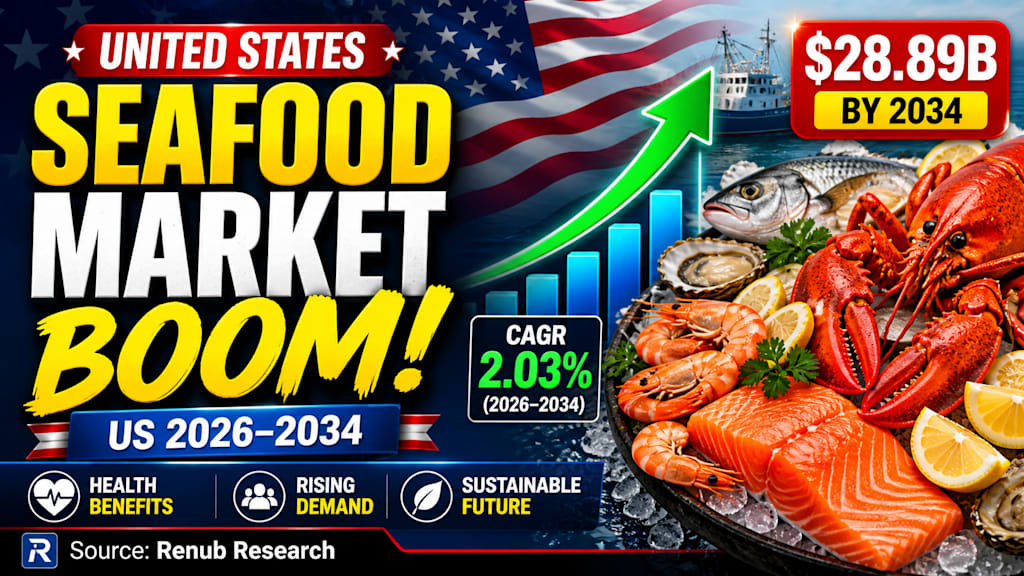
From salmon and shrimp to frozen and online seafood sales, the U.S. seafood industry is evolving fast, with market value projected to rise from US$ 24.11 billion in 2025 to US$ 28.89 billion by 2034 at a 2.03% CAGR.

United States Seafood Market: A Steady Growth Story in a Changing Food Landscape
The United States seafood market is entering a phase of measured but meaningful expansion. While it may not be growing at the pace of some other packaged food categories, the seafood industry is benefiting from a powerful mix of long-term consumer habits, evolving eating preferences, and supply-side innovation. According to Renub Research, the U.S. seafood market is expected to climb from US$ 24.11 billion in 2025 to US$ 28.89 billion by 2034, reflecting a 2.03% CAGR during the forecast period from 2026 to 2034.
What makes this growth important is not just the number itself, but the broader story behind it. Seafood is increasingly being viewed as a healthy, versatile, and premium protein source. At the same time, consumers are asking harder questions about freshness, sustainability, origin, and convenience. That is changing how seafood is produced, distributed, and sold in the United States.
Seafood Moves Beyond the Coast
For many years, seafood demand in the U.S. was strongest in coastal regions where fresh catches were easier to access. That pattern still matters, but it is no longer the full story. Seafood consumption is rising in inland cities and suburban markets too, supported by modern cold-chain logistics, retail expansion, and online delivery options. Consumers who once relied mainly on restaurant meals can now buy fresh, frozen, and specialty seafood from supermarkets, specialty stores, and direct-to-consumer brands.
The category is also benefiting from changing food culture. Sushi, seafood festivals, and restaurant menus featuring local and seasonal catches have helped seafood become more visible and more desirable. In a market where people want variety without sacrificing health, seafood fits neatly into the modern dinner table.
Health Is Still the Strongest Growth Engine
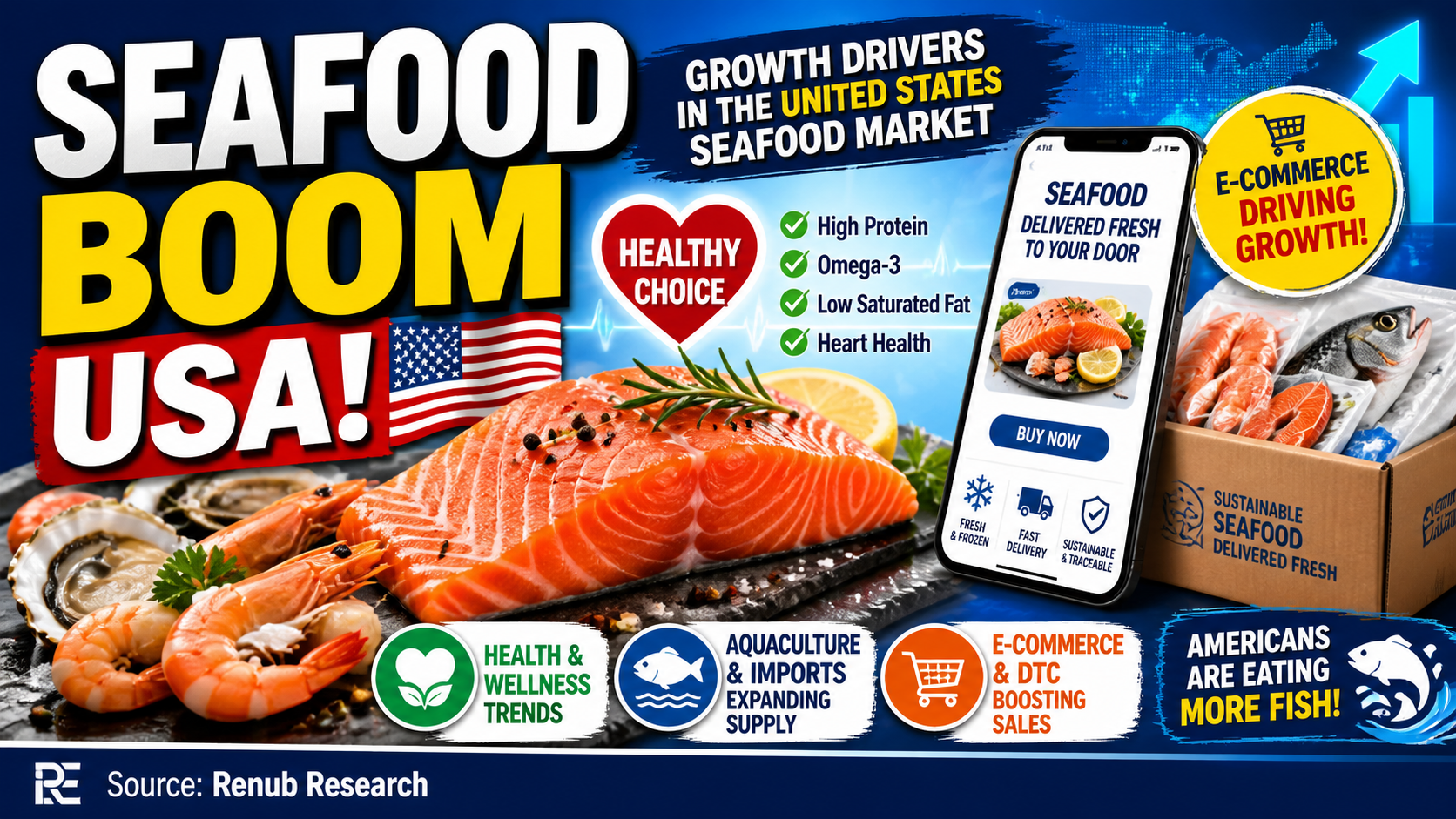
One of the clearest reasons for seafood’s strength is health awareness. Consumers increasingly prefer foods that are high in protein, rich in omega-3 fatty acids, and lower in saturated fat. That has positioned seafood as a smart alternative to red meat for people focused on heart health, weight management, and overall wellness. Public health messaging and physician recommendations have also helped seafood gain wider acceptance in daily diets.
This trend is not just theoretical. The seafood report notes that U.S. per-capita salmon consumption hit a record in 2022, reflecting the growing popularity of salmon as a premium health food. Ready-to-cook salmon offerings in stores such as Costco and Whole Foods, along with meal-kit recipes from platforms like Blue Apron and HelloFresh, have made seafood easier to cook at home. That convenience matters because the modern consumer wants healthy food that also fits into a busy schedule.
Aquaculture and Imports Keep the Market Supplied
The U.S. seafood market depends on a combination of domestic production and imports. Aquaculture is gaining ground, especially in salmon, catfish, and shellfish, while imports from Southeast Asia, Latin America, Norway, Canada, and Chile help fill the gap between demand and domestic supply. This mix is important because it provides steady year-round availability and helps stabilize prices for popular seafood items.
This is also where quality and regulation become central. The Seafood Import Monitoring Program plays a significant role in helping prevent illegal, unreported, and unregulated seafood from entering U.S. commerce. In a category where traceability is becoming a selling point, such oversight supports both consumer trust and long-term sustainability.
Aquaculture itself is becoming more sophisticated. Better farming methods are improving product quality, encouraging more consistent supply, and helping producers respond to sustainability concerns. That is especially important in a market where consumers want seafood that is not only fresh, but responsibly sourced.
E-Commerce Is Rewriting Seafood Shopping
One of the most interesting shifts in the U.S. seafood market is the rise of online sales. Grocery e-commerce has changed the way people shop for fresh food, and seafood is increasingly part of that shift. Consumers can now order fresh, frozen, and specialty seafood with doorstep delivery, supported by better cold-chain logistics and stronger fulfillment systems.
Direct-to-consumer seafood brands are especially well positioned in this environment. Subscription seafood boxes and traceability-focused labels appeal to buyers who value freshness, sustainability, and convenience. The report also notes that the Seafood Nutrition Partnership launched a program in 2024 to promote direct-to-consumer seafood brands, reinforcing the importance of digital channels in the category’s growth.
This is a major change for the industry. Seafood is no longer limited to fish counters and restaurant kitchens. It is becoming a digital grocery category, and that opens the door to broader geographic reach and stronger consumer engagement.
The Market Still Faces Real Challenges
Despite the positive outlook, the seafood industry is not without pressure points. Sustainability remains one of the biggest concerns. Overfishing, bycatch, and habitat degradation continue to affect marine ecosystems and influence purchasing behavior. Consumers are more aware than ever of where their food comes from, and brands that cannot prove responsible sourcing may struggle to win trust.
There is also a cost to sustainability. Compliance, traceability, and certifications can raise operating expenses and tighten supply in the short term. Yet this investment is increasingly necessary because consumer expectations are shifting in favor of ethical sourcing and environmental responsibility.
Another persistent challenge is price volatility. Seafood supply chains are sensitive to weather, climate disruptions, transportation bottlenecks, fuel costs, labor shortages, and geopolitical stress. That can lead to irregular pricing at retail, which may affect demand and make planning more difficult for suppliers. Maintaining resilient logistics and diversified sourcing will remain essential to market stability.
Fish Remains a Core Category
Among seafood segments, fish continues to be a major pillar of the U.S. market. Salmon, tuna, and cod are especially popular, with salmon leading due to its strong health reputation and cooking flexibility. Imports from Norway, Canada, and Chile supplement domestic supply and make these products widely available throughout the year.
Consumers are also showing more interest in locally caught and sustainably harvested fish. That matters because the fish category is now competing not only on taste and nutrition, but also on origin and responsibility. Retailers and foodservice operators that can tell that story clearly are likely to have an advantage.
Shrimp Continues to Dominate Consumer Demand
Shrimp is one of the most important seafood products in the U.S. market. It is widely consumed, highly versatile, and deeply embedded in American eating habits. Most shrimp consumed in the U.S. is imported, with India, Ecuador, and Indonesia among the major suppliers.
Demand is supported by convenience. Peeled, deveined, and ready-to-cook shrimp products are especially popular with busy households and restaurants. Shrimp also performs well on menus in quick-service and casual dining channels, which helps strengthen the category’s visibility and turnover. Sustainability concerns and shrimp-farm disease management remain challenges, but ongoing innovation in aquaculture is helping support supply.
Fresh/Chilled and Frozen Seafood Serve Different Needs
The fresh and chilled seafood segment remains strong among consumers who prioritize quality, taste, and freshness. Supermarkets and seafood counters are expanding offerings to include both domestic and imported products, and cold-storage improvements are helping extend shelf life and broaden access across the country. Fresh seafood remains especially attractive in urban areas and among health-conscious consumers who see it as a premium choice.
Frozen seafood, on the other hand, is winning on practicality. It offers affordability, longer storage, and year-round availability. Advances in freezing technology have improved product quality, making frozen seafood more appealing than it once was. For families and busy consumers, the frozen segment provides a reliable solution that balances convenience and nutrition.
Online and Convenience Channels Are Expanding Access
Distribution is becoming just as important as product type. Online seafood retail is one of the fastest-growing channels because it gives consumers access to fresh, frozen, and specialty products without requiring a visit to a store. This channel has gained traction with premium shoppers, subscription users, and buyers looking for traceability or specialty sourcing.
Convenience stores are also starting to play a larger role. While their seafood selection is more limited than supermarkets, the category is growing through packaged seafood snacks, ready-to-eat products, and frozen items. Urban lifestyles and the demand for protein-rich grab-and-go food are helping convenience outlets carve out a niche in the seafood space.
State Markets Show How Diverse the U.S. Can Be
The seafood market is not uniform across the country. California remains one of the most influential seafood markets because of its coastal fishing economy, diverse population, and strong consumer interest in sustainable food. New York is driven by a dense urban population, cultural diversity, and a large foodservice sector. New Jersey benefits from a strong coastal base and close access to the New York metropolitan market.
Together, these state-level markets show how seafood demand is shaped by geography, lifestyle, and local food culture. Some states prioritize freshness and premium sourcing, while others are more focused on convenience and value. That diversity is one reason the industry can keep expanding even when growth is steady rather than explosive.
Competitive Landscape and Leading Companies
The market includes a broad range of players such as Admiralty Island Fisheries, Beaver Street Fisheries, High Liner Foods, Inland Seafood, Mowi ASA, NH Foods Ltd, Sysco Corporation, Thai Union Group, The Kraft Heinz Company, and Trident Seafood Corporation. The competitive environment reflects the mix of seafood sourcing, processing, distribution, and branded food products that shape this industry.
What matters most in this landscape is not just scale, but adaptability. Companies that invest in traceability, sustainability, e-commerce, product innovation, and reliable cold-chain systems are likely to be better positioned as consumer expectations continue to evolve.
Final Thoughts
The U.S. seafood market is not just growing; it is changing. Health-conscious eating, demand for convenient protein, stronger retail distribution, and digital commerce are all helping reshape the category. At the same time, the industry must navigate sustainability pressures, price volatility, and supply-chain complexity.
Still, the direction is clear. With the market projected to reach US$ 28.89 billion by 2034, seafood remains an important and resilient part of the American food economy. Its future will likely be defined by better sourcing, smarter logistics, and products that meet the modern consumer’s demand for freshness, nutrition, and convenience.
About the Creator
Enjoyed the story? Support the Creator.
Subscribe for free to receive all their stories in your feed.
Comments
There are no comments for this story
Be the first to respond and start the conversation.