
United States Plant-Based Meat Market Forecast 2025: Why America’s Alternative Protein Industry Is Entering a New Growth Era
The growing demand for healthier, sustainable, and ethical food choices is transforming the future of meat consumption across the United States.

The United States plant-based meat market is experiencing a remarkable transformation as consumer preferences continue to shift toward healthier and more sustainable eating habits. What was once considered a niche category targeted mainly at vegetarians and vegans has now entered mainstream American culture. From grocery stores and restaurants to fast-food chains and meal delivery platforms, plant-based meat products are becoming increasingly common across the country.
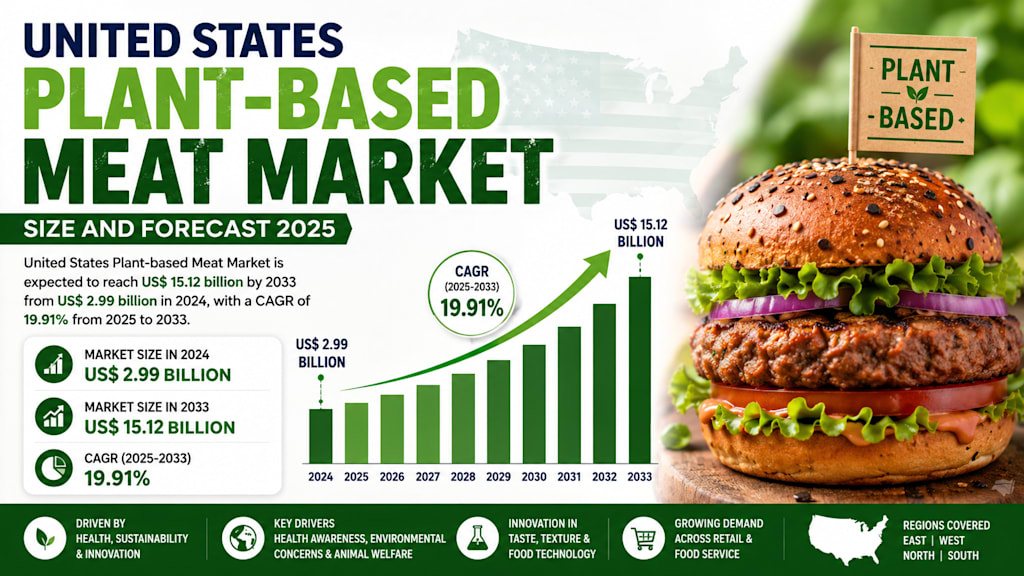
According to Renub Research, the United States Plant-Based Meat Market was valued at US$ 2.99 billion in 2024 and is expected to reach US$ 15.12 billion by 2033, growing at a strong CAGR of 19.91% from 2025 to 2033.
The rapid growth of this industry reflects broader societal changes involving health awareness, environmental sustainability, animal welfare concerns, and food innovation. Consumers are no longer simply looking for meat substitutes; they are searching for products that align with modern values while still delivering satisfying taste and texture.
As food technology advances and major brands continue investing in product development, the plant-based meat industry is positioning itself as one of the most influential sectors in the future of food.
United States Plant-Based Meat Market Overview
The plant-based meat market in the United States has expanded significantly over the last several years due to rising consumer awareness regarding the environmental and health impacts of traditional meat production. Consumers are increasingly embracing alternatives that reduce dependence on animal agriculture while supporting sustainable lifestyles.
Plant-based meat products are designed to replicate the flavor, texture, and appearance of conventional meat using ingredients such as soy, pea protein, wheat, mycoprotein, and tofu. Companies like Beyond Meat and Impossible Foods have led the movement by introducing products that closely resemble traditional burgers, sausages, nuggets, and meatballs.
One of the most notable aspects of the market’s growth is the rise of flexitarian consumers. These are individuals who are not fully vegetarian or vegan but actively reduce their meat consumption for health or environmental reasons. Flexitarians now represent a major consumer base for plant-based food companies.
The market has also benefited from expanded availability. Plant-based products are now widely sold in supermarkets, restaurants, cafés, school cafeterias, and online grocery platforms. Increased visibility has helped normalize alternative proteins in everyday American diets.
Despite its rapid growth, the industry still faces challenges such as high production costs, competition from traditional meat products, and ongoing debates about the nutritional value of processed plant-based foods. However, strong investor confidence and continued innovation suggest that the market has substantial long-term potential.
Market Size and Forecast
The future outlook for the United States plant-based meat industry remains highly optimistic.
Market Size in 2024, US$ 2.99 Billion
Forecast Market Size in 2033, US$ 15.12 Billion
Growth Rate (2025–2033), 19.91% CAGR
Base Year, 2024
Forecast Period, 2025–2033
The impressive projected growth reflects increasing consumer demand for sustainable proteins and improved plant-based food technology. As awareness continues to rise and prices become more competitive, adoption is expected to accelerate across multiple consumer groups.

Why Consumers Are Choosing Plant-Based Meat
1. Rising Health Awareness
Health consciousness is one of the strongest factors driving the growth of the plant-based meat market in the United States.
Many consumers are becoming more aware of the risks associated with excessive consumption of red and processed meats. Concerns related to cholesterol, heart disease, obesity, and long-term wellness are encouraging people to explore healthier alternatives.
Plant-based meat products are often marketed as lower-cholesterol and environmentally friendly options. Consumers interested in wellness trends are increasingly experimenting with plant-based diets as part of healthier lifestyles.
Younger generations, particularly Millennials and Generation Z, are especially focused on nutrition and preventive healthcare. These demographics are significantly influencing purchasing trends across the food industry.
2. Environmental Sustainability
Environmental concerns have become a major driver of demand for plant-based alternatives.
Traditional livestock farming contributes heavily to greenhouse gas emissions, water consumption, and land degradation. As climate change discussions continue to gain attention globally, many Americans are seeking food choices that reduce environmental impact.
Plant-based meat production generally uses fewer natural resources than conventional animal farming. Lower water usage, reduced emissions, and decreased land requirements make alternative proteins attractive to environmentally conscious consumers.
Sustainability has become more than just a trend. For many people, it now plays a central role in purchasing decisions.
3. Ethical and Animal Welfare Concerns
Animal welfare concerns are also encouraging consumers to explore plant-based options.
Many consumers are uncomfortable with industrial farming practices and animal treatment within large-scale meat production systems. Plant-based products offer an alternative that aligns with ethical eating values.
This shift is particularly noticeable among younger consumers who prioritize transparency and socially responsible brands.
Innovation Is Transforming the Industry
Improved Taste and Texture
One of the biggest reasons for the market’s recent success is the dramatic improvement in taste and texture.
Earlier generations of plant-based products often struggled to satisfy mainstream consumers due to bland flavors or unrealistic textures. However, advances in food science have significantly improved product quality.
Today’s plant-based burgers and sausages can closely mimic the appearance, cooking experience, and mouthfeel of traditional meat products. Companies are investing heavily in flavor engineering, ingredient innovation, and protein technology to create more realistic alternatives.
As quality continues improving, plant-based products are becoming increasingly appealing to meat eaters as well as vegetarians and vegans.
Expanding Product Variety
The market has evolved far beyond simple veggie burgers.
Companies now offer a wide range of products including burgers, sausages, patties, nuggets, tenders, cutlets, grounds, meatballs, and seafood alternatives.
This product diversity allows consumers to incorporate plant-based alternatives into a broader range of meals and cooking styles.
Convenience has also improved through ready-to-cook and frozen product options, making plant-based foods more accessible to busy consumers.
Strategic Developments in the Industry
The competitive landscape continues to evolve through partnerships, acquisitions, and expansion strategies.
In November 2023, Beyond Meat announced a strategic alliance with Nordic Food to expand product availability in Romania. The partnership aims to distribute Beyond Meat products including burgers, sausages, mince, and meatball substitutes across both retail and foodservice channels.
Similarly, Alpha Foods strengthened its market growth strategy in August 2023 by joining a larger group of brands. This move is expected to provide additional operational support and growth resources.
These strategic partnerships reflect growing confidence in the long-term potential of the plant-based food industry.
Challenges Facing the Market
Competition from Traditional Meat
Despite rapid growth, traditional animal meat continues to dominate the food industry.
Many consumers still prefer conventional meat due to taste familiarity, cultural habits, and lower prices. Plant-based products often remain more expensive than traditional meat options, limiting broader adoption among price-sensitive shoppers.
To compete effectively, companies must continue improving affordability while maintaining quality.
Competition from Emerging Protein Alternatives
The plant-based sector is also facing competition from newer protein technologies.
Lab-grown meat, also called cultivated meat, is attracting attention as a possible future competitor. Cultivated meat is produced using animal cells rather than traditional farming methods, offering the possibility of “real meat” without livestock farming.
Insect-based proteins are also emerging as environmentally efficient protein alternatives.
As these industries develop, plant-based companies will need continuous innovation to maintain market leadership.
Taste Expectations Remain High
Although plant-based products have improved significantly, some consumers still feel they do not fully replicate the flavor and texture of real meat.
Creating realistic whole-cut products such as steaks or chicken breasts remains especially challenging. Consumers who regularly eat meat often compare plant-based alternatives directly against traditional products.
Ongoing research and development will remain essential for overcoming these barriers.
Regional Analysis of the United States Plant-Based Meat Market
East United States Market
The Eastern United States represents one of the largest and fastest-growing regional markets.
Cities such as New York, Boston, and Washington, D.C. are driving demand due to strong health awareness and environmental consciousness. The region also benefits from diverse consumer demographics and extensive retail networks.
Restaurants and grocery chains throughout the East Coast continue expanding plant-based offerings, helping fuel market growth.
West United States Market
The Western United States remains the leading innovation hub for plant-based foods.
Cities including Los Angeles, San Francisco, and Portland have become major centers for alternative protein development. Consumers in these regions are highly receptive to sustainability-focused products and healthy eating trends.
The West Coast is also home to major plant-based companies such as Beyond Meat and Impossible Foods.
Strong startup culture, venture capital investment, and progressive food trends continue supporting rapid industry growth in the region.
North United States Market
The Northern United States is seeing increasing interest in plant-based diets as consumers become more health-conscious and environmentally aware.
States such as Illinois, Michigan, and Minnesota are experiencing rising demand for alternative proteins. Urban areas including Chicago and Minneapolis have expanded access to plant-based products across supermarkets and restaurants.
The region is expected to continue growing steadily over the coming years.
South United States Market
The Southern United States is emerging as a promising growth market.
Although Southern cuisine has traditionally focused heavily on meat-based dishes, changing consumer attitudes and urbanization are encouraging greater adoption of plant-based alternatives.
Cities such as Austin, Atlanta, and Miami are becoming important centers for plant-based dining and innovation.
As awareness increases and products become more affordable, the South is expected to contribute significantly to future market expansion.
Key Market Segments
By Product
Burgers, Sausages, Patties, Nuggets Tenders & Cutlets, Grounds, Others
By Product Type
Textured Vegetable Protein, Tofu & Tofu Ingredients, Mycoprotein, Seitan, Other Soy Products, Tempeh, Others
By Source
Soy, Wheat, Pea, Others
By Storage Technique
Frozen, Refrigerated, Shelf-Stable
Major Companies in the Market
Several companies are leading innovation and competition within the United States plant-based meat industry.
Beyond Meat
Beyond Meat remains one of the most recognized brands in the alternative protein sector. The company gained widespread popularity through plant-based burgers and sausages designed to closely mimic real meat.
Maple Leaf Foods
Maple Leaf Foods has expanded aggressively into sustainable protein products and continues investing in plant-based food innovation.
Gardein Protein International
Owned by Pinnacle Foods, Gardein has built strong market recognition through its frozen meat alternatives and broad product variety.
Morningstar Farms
Morningstar Farms, part of Kellogg Company, continues maintaining a strong retail presence across supermarkets throughout the United States.
Tyson Foods Inc.
Tyson Foods has entered the plant-based sector as traditional meat companies adapt to evolving consumer demand and market trends.
Future Outlook
The future of the United States plant-based meat market appears extremely promising.
Growing awareness regarding sustainability, health, and ethical food choices is expected to continue driving demand throughout the next decade. Food technology improvements will likely produce even better products that appeal to mainstream consumers.
As companies scale production and improve efficiency, prices may gradually become more competitive with traditional meat products.
At the same time, continued investment from major food corporations and venture capital firms suggests strong confidence in the industry’s long-term potential.
The market’s projected growth from US$ 2.99 billion in 2024 to US$ 15.12 billion by 2033 demonstrates the massive opportunity ahead for companies operating within the alternative protein space.
Final Thoughts
The United States plant-based meat industry is undergoing a major transformation that reflects broader changes in consumer values and food culture.
No longer limited to niche audiences, plant-based meat has become a mainstream movement driven by health awareness, sustainability concerns, ethical considerations, and rapid technological innovation.
While challenges such as pricing, competition, and taste expectations remain, the industry continues evolving at an impressive pace. Companies that successfully balance flavor, affordability, nutrition, and sustainability are likely to dominate the future of protein consumption.
As American consumers continue redefining what they eat and why they eat it, plant-based meat may become not just an alternative option — but a permanent part of the modern food industry.
About the Creator
Enjoyed the story? Support the Creator.
Subscribe for free to receive all their stories in your feed.
Comments
There are no comments for this story
Be the first to respond and start the conversation.