
United States Mushroom Market: Why Plant-Based Demand Is Turning Mushrooms Into a High-Growth Food Category in 2026
The United States mushroom market is growing rapidly as plant-based diets, health-conscious consumers, and sustainable food trends push mushrooms into mainstream food and functional nutrition categories.

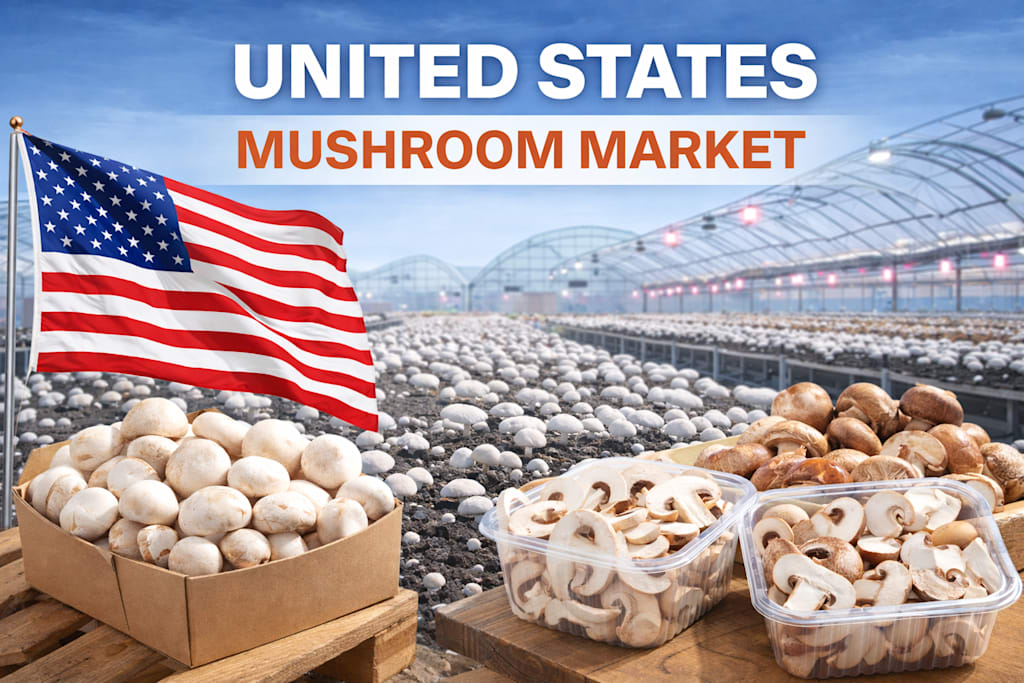
Mushrooms, in their quiet but transformative way, have journeyed from a bit of a side item to becoming some of the most essential elements of today's American food landscape. This humble produce category has become central to a major nutritional shift fueled by plant-forward eating, the wellness trend of functional foods, and, increasingly, eco-conscious production practices. In 2026, the U.S. Mushroom market is firing on all cylinders due to a trifecta of rising health consciousness, increasing culinary innovation, and the surging appetite for natural meat alternatives.
You can find mushrooms anywhere-on grocery store shelves and at top-tier restaurants-touted both as a health-booster and a hearty protein replacement.
IMARC Group reports that the United States Mushroom Market, valued at USD 11.6 billion in 2025, is forecast to soar to USD 24.2 billion by 2034, with a CAGR of 8.30% between 2026-2034.
What is making mushrooms take the spotlight in 2026?
A key player is the monumental rise in the adoption of plant-based diets. With more and more Americans cutting back on meat consumption, mushrooms are the rare produce item that delivers both the savory, satisfying texture that many people miss in a meat substitute, along with the savory, umami punch we crave in dishes like pasta sauces, stir-fries, and even ready-made meals.
They also naturally imbue dishes with an "umami" flavor that food manufacturers can exploit to minimize the reliance on artificial additives when replacing or supplementing meat.
Even more crucially, with a growing consumer awareness of healthy food, mushrooms are more than just a food item. They pack a ton of nutritional value in a low-calorie package, including key vitamins, minerals, antioxidants, and special bioactive compounds that put them firmly in the functional food category. The food trends, paired with a booming demand from restaurants, are actually turbocharging the growth of the industry!
The foodservice sector is a phenomenal driver of demand for U.S. Mushrooms. Fast-casual chains, pizza restaurants, burger spots, and healthier eateries have been adding mushrooms more and more into their staple dishes, and the influx of global cuisine trends (think of those fantastic Asian and Mediterranean flavor profiles!) has driven them straight into our home kitchens in forms like shiitake, oyster, and portobello.
As if that wasn't enough, indoor farming and advanced cultivation techniques are dramatically boosting supply and quality.
One aspect of mushroom growth that gets overlooked?
The revolution in controlled environment agriculture (CEA) and indoor growing allows us to farm mushrooms all year, maintaining an impeccable level of quality, regardless of weather, season, or geographic location. These cutting-edge systems also maximize the number of mushrooms we can produce per acre while slashing waste. Simply put, it makes growing mushrooms far more practical, and eco-friendly, than many other crops.
Sustainability, also happens to be another of the mushroom’s winning points.
Mushrooms have a pretty good eco story – they require less space than most produce and are often grown on nutrient-rich waste streams from other industries. On top of that, their environmental footprint is a tiny compared to that of any animal product. That translates into a strong environmental message for food producers, retailers, and consumers trying to be more eco-conscious.
And it doesn't end with the dinner plate! Mushrooms are venturing far beyond the food market in 2026. As people explore functional foods more, we're seeing innovative applications for species like lion’s mane, reishi, and cordyceps in dietary supplements, nutraceuticals, healthy beverages, and other wellness products-all fueled by an increasing interest in enhancing immunity, boosting brain function and reducing stress.
The market can roughly be broken down in a few ways: by the specific type of mushroom-you have the classic button mushrooms, along with shiitake and oyster, among others; how it's prepared (fresh, canned, or dried); where you can buy it (from major supermarkets to online retailers); and its intended purpose (directly at home, in restaurants, or processed into other foods).
But even with all these sub-categories, freshly bought mushrooms for our homes continue to dominate the market.
So what exactly is making this space so fascinating?
Mushrooms really tap into several major trends at the same time. First, plant-based diets are absolutely exploding.
Second, everyone wants their food to have a health benefit – aka functional foods.
Third, restaurants are going wild with new flavors, and global influences are popping up everywhere. Fourth, as consumers care more and more about the environment, sustainably grown foods become super desirable. Lastly, health consciousness is at an all-time high.
This blend of demand is really unique-how many agricultural products are suddenly hot for both your dinner table and your supplement shelf? We'll be seeing a lot of exciting innovation in how mushrooms are grown and processed in the coming years. As more people re-examine where their protein comes from and the nutritional benefits of their diet, don’t be surprised if mushrooms shift even more from that bit of a nice garnish on your plate to a truly fundamental food in how we all eat.
About the Creator
michael matthew
I’m a market researcher passionate about understanding people, markets, and motivations. My work blends data analysis, consumer psychology, and strategic insight to help brands and businesses make informed, human-centered decisions.
Enjoyed the story? Support the Creator.
Subscribe for free to receive all their stories in your feed.
Comments
There are no comments for this story
Be the first to respond and start the conversation.