
United States Menswear Market: Growth Driven by Athleisure, Sustainability, and Digital Fashion Trends
The United States menswear market is evolving through changing fashion trends, rising demand for comfort-focused apparel, and the growing influence of digital and sustainable fashion.

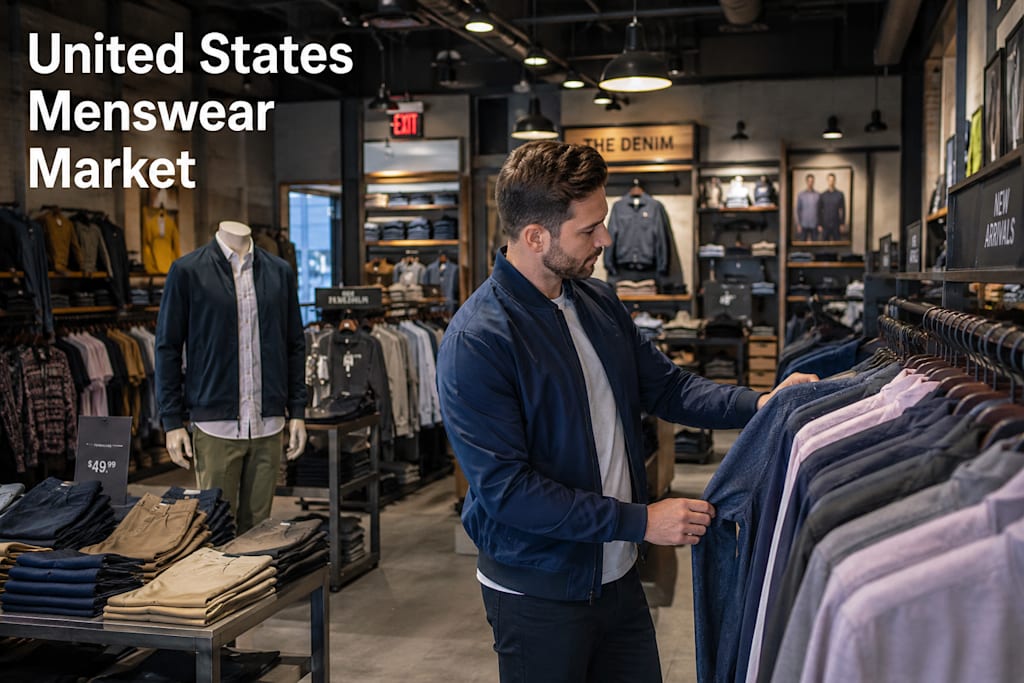
As lifestyles, fashion trends, and consumer demand shift, the American menswear industry is undergoing rapid growth. What was once solely a matter of formal wear has developed into a dynamic market fueled by comfort, personal expression, sustainability, and digital fashion culture, with menswear increasingly reflecting both style and utility; it is among the most active segments of the clothing industry.
According to IMARC Group, the American menswear market will expand from USD 154.5 billion in 2025 to USD 192.4 billion in 2034, expanding at a CAGR of 2.40% from 2026-2034.
The increased interest in comfort-centric clothing and athleisure has been a primary growth factor for the market. Modern consumers desire adaptable clothing that may be worn for work, while traveling, during physical activity, or simply in casual settings; demand for sweatpants, hoodies, sneakers, and performance wear has increased because of the acceleration in hybrid work cultures and lifestyle changes.
The influence of social media and digital platforms is another important trend affecting the market. Platforms like Instagram, TikTok, and YouTube are greatly influencing fashion tastes and buying habits, with online celebrities and creators popularizing new looks, labels, and fashion sensibilities, making digital media a significant catalyst for menswear demand.
In addition, the sustainability movement is playing a significant role in the United States menswear market, with customers becoming more aware of the origins of their clothing and showing a heightened interest in eco-friendly materials, ethical manufacturing practices, and environmentally conscious labels. This is inspiring brands to offer sustainable lines using recycled materials, organic cotton, and low-impact manufacturing processes.
Customization and personalization are changing the market landscape, with a number of brands currently providing personalized fits, styling choices, and made-to-order items. Technologies for online shopping and AI-powered recommendations are helping consumers discover suitable attire that reflects their tastes more precisely, which in turn is enhancing brand loyalty and consumer engagement.
Another major trend in the American menswear market has been the growth of streetwear and casual fashion. Influenced by streetwear style, sportwear, and high-end partnerships, street culture has become widespread among younger generations. Graphic t-shirts, oversized jackets, sneakers, and laid-back styles now represent many contemporary trends, reflecting a broader fashion tendency toward informal and personalized attire.
The market can be segmented by product types, which include trousers, denims, shirts and t-shirts, ethnic wear, and more. Shirts and t-shirts make up a significant portion of the market as they can be worn in many ways and are daily wear for all ages and lifestyles.
Demand for seasonal clothing also impacts the market. Lighter materials such as cotton and linen are used in the summer while warmth, layering, and toughness are emphasis in winter clothes. The trend toward all-season clothes has gained prominence because customers are seeking a broader array of more adaptable clothing items.
Distribution channels are also rapidly transforming with the expansion of online sales. E-commerce platforms, standalone brand stores, multi-brand outlets, and department stores are all important contributors to the sales volume, with digital retail increasing due to customer convenience, a wider product offering, and personalized purchasing experiences.
The Northeast and the West Coast, which have substantial urban populations, higher disposable incomes, and exposure to global fashion trends, are the primary fashion hubs in terms of geographical regions. Conversely, the South and the Midwest influence consumer demand for cost-effective and seasonally appropriate garments.
What truly distinguishes the American menswear market is how it reflects overarching cultural and lifestyle dynamics. Fashion now goes beyond aesthetics; it speaks to identity, comfort, sustainability, and digital influence. To respond to these changes, menswear companies are actively merging style and function with new ideas.
The market is expected to continue growing as it experiences greater digitalization, changing fashion trends, and increasing customer demand for personalized and sustainable clothing. With American menswear continuing to diversify, it will undoubtedly remain a major factor in the global fashion business.
About the Creator
michael matthew
I’m a market researcher passionate about understanding people, markets, and motivations. My work blends data analysis, consumer psychology, and strategic insight to help brands and businesses make informed, human-centered decisions.
Enjoyed the story? Support the Creator.
Subscribe for free to receive all their stories in your feed.
Comments
There are no comments for this story
Be the first to respond and start the conversation.