
United States Melon Market Set for Steady Growth as Consumers Embrace Healthy Eating and Fresh Produce
Rising demand for nutritious fruits, advancements in agricultural technology, and growing popularity of convenient fresh-cut products are driving the future of the U.S. melon industry.

Fresh fruits have become an essential part of modern healthy lifestyles, and few fruits are as closely associated with nutrition, hydration, and refreshing flavor as melons. Whether it's a juicy watermelon enjoyed during summer, a sweet cantaloupe served at breakfast, or a honeydew added to a fruit salad, melons have secured a permanent place in American households and foodservice menus.
As consumers increasingly prioritize wellness, hydration, and natural food choices, demand for fresh fruits continues to rise. Melons, known for their high water content, vitamins, antioxidants, and low-calorie profile, are benefiting significantly from these changing consumption patterns.
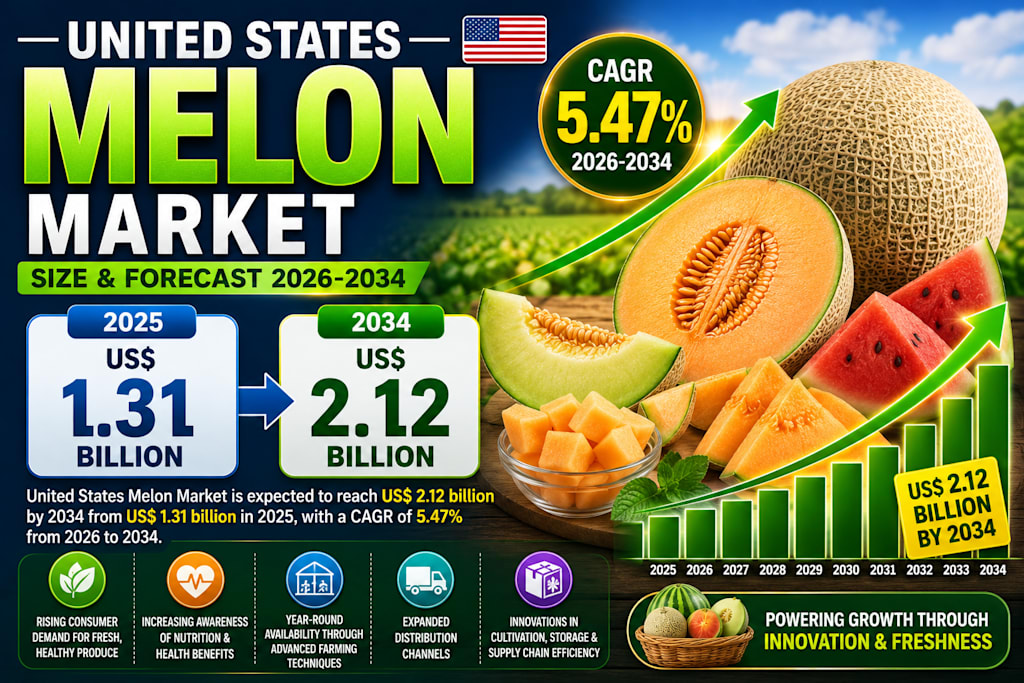
According to Renub Research, the United States Melon Market is expected to grow from US$1.31 billion in 2025 to US$2.12 billion by 2034, registering a compound annual growth rate (CAGR) of 5.47% between 2026 and 2034. This growth is being supported by increasing health awareness, technological advancements in farming, expanding distribution networks, and rising demand for convenient fresh fruit products.
Melons Remain a Staple in the American Produce Market
The United States melon industry represents an important segment of the country's broader fresh produce sector. The market primarily consists of three major categories: watermelon, cantaloupe, and honeydew, each serving different consumer preferences and culinary uses.
Melons are widely consumed across households, restaurants, hotels, schools, healthcare facilities, and foodservice establishments. Their versatility allows them to be used in fruit salads, smoothies, desserts, beverages, breakfast dishes, and healthy snacks.
One reason for their continued popularity is their nutritional profile. Melons are naturally rich in vitamins A and C, antioxidants, fiber, and water content, making them ideal for consumers seeking healthier food options without sacrificing taste.
Their affordability, widespread availability, and refreshing flavor have helped maintain strong consumer demand across all age groups.
Health-Conscious Consumers Are Fueling Market Expansion
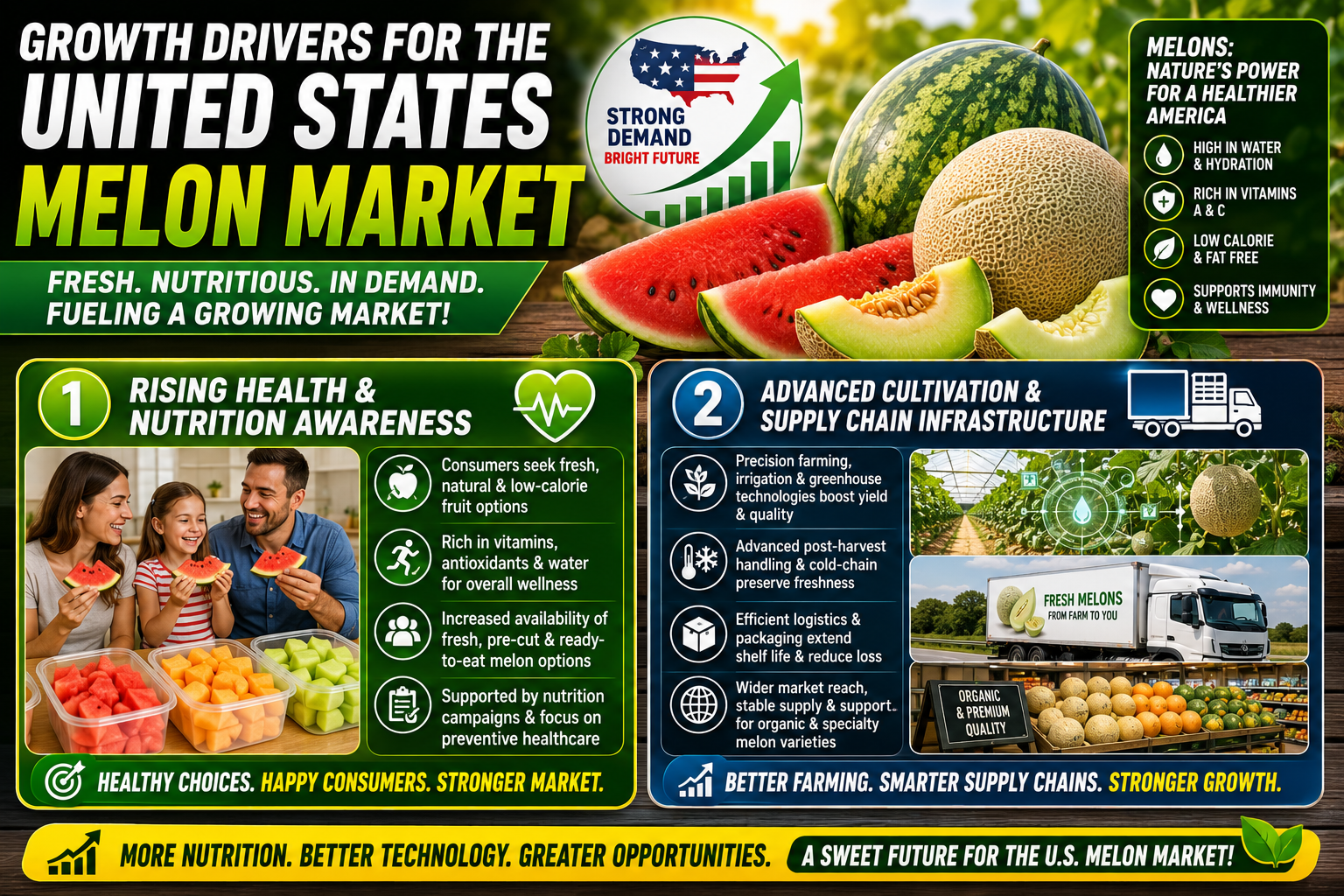
One of the strongest growth drivers in the U.S. melon market is the increasing focus on health and nutrition.
Modern consumers are paying greater attention to the foods they consume and actively seeking fresh, natural alternatives to processed snacks and sugary products. Melons fit perfectly into this trend because they provide hydration, essential nutrients, and natural sweetness while remaining relatively low in calories.
Nutrition experts frequently recommend fruit consumption as part of a balanced diet, and public health campaigns continue to encourage Americans to increase their intake of fresh produce.
As awareness of preventive healthcare and wellness grows, consumers are increasingly choosing fruits that contribute to overall health, immune support, and weight management. Melons have emerged as one of the preferred choices within this category.
The growing popularity of plant-based diets and clean-label foods is also contributing to increased melon consumption across the country.
Hydration Benefits Are Becoming More Important
Hydration has become a major focus within the health and wellness movement.
Consumers are increasingly aware of the importance of maintaining proper hydration for energy, physical performance, and overall health. Melons, particularly watermelon, are naturally composed of more than 90 percent water, making them one of the most hydrating fruits available.
This characteristic has become especially appealing among athletes, fitness enthusiasts, and health-conscious consumers seeking natural alternatives to sugary sports drinks and artificial beverages.
The connection between hydration and wellness has strengthened melon demand not only during summer months but throughout the year.
As consumers continue prioritizing functional foods that offer both nutrition and hydration, melons are expected to benefit significantly from these evolving preferences.
Advanced Farming Techniques Are Improving Production
Technological innovation is playing an increasingly important role in the growth of the U.S. melon industry.
Modern agricultural practices have enabled growers to improve productivity, fruit quality, and sustainability. Technologies such as precision farming, drip irrigation systems, soil monitoring, and integrated pest management help farmers optimize growing conditions while reducing resource consumption.
Precision agriculture allows producers to make data-driven decisions regarding irrigation, fertilization, and crop protection. This results in healthier crops, improved yields, and more efficient use of resources.
Additionally, greenhouse cultivation and climate-controlled growing environments are helping extend production seasons and reduce the impact of environmental challenges.
These advancements are enabling growers to meet rising demand while maintaining high standards of quality and consistency.
Supply Chain Improvements Support Year-Round Availability
The modern melon industry relies heavily on sophisticated supply chain infrastructure.
Historically, melon availability was largely dependent on seasonal production cycles. Today, advancements in storage, transportation, and logistics have dramatically improved year-round access to fresh melons across the United States.
Cold-chain logistics, refrigerated transportation, and advanced packaging technologies help preserve freshness during shipping and storage. These innovations reduce post-harvest losses and ensure that consumers receive high-quality products regardless of location.
Improved supply chain efficiency also allows growers and distributors to access broader domestic and international markets, supporting industry growth.
The ability to maintain freshness while extending shelf life has become a significant competitive advantage within the fresh produce industry.
Convenience Products Are Reshaping Consumer Preferences
Consumer lifestyles continue to evolve, and convenience has become a critical purchasing factor.
Busy schedules and changing eating habits have increased demand for ready-to-eat fruit products. In response, retailers and foodservice providers have expanded their offerings of pre-cut melons, fruit cups, sliced watermelon containers, and packaged snack portions.
These products eliminate preparation time and provide consumers with quick, healthy snack options that fit modern lifestyles.
Fresh-cut melon products have become particularly popular in supermarkets, convenience stores, airports, schools, and workplace cafeterias.
The convenience trend is expected to remain a significant growth driver as consumers increasingly seek nutritious foods that require minimal preparation.
Specialty and Organic Melons Gain Popularity
Beyond traditional melon varieties, consumers are showing growing interest in specialty and premium products.
Organic melons are becoming increasingly popular among shoppers who prioritize sustainable farming practices and chemical-free produce. These products often command premium pricing while appealing to environmentally conscious consumers.
Exotic and heirloom melon varieties are also gaining attention for their unique flavors, colors, textures, and visual appeal.
Restaurants, gourmet retailers, and specialty food markets are introducing consumers to a broader range of melon options, helping diversify the market and create new revenue opportunities for growers.
As demand for premium produce continues to rise, specialty melon segments are expected to experience steady growth.
California Remains the Heart of U.S. Melon Production
Several states play important roles in the American melon industry, but California continues to dominate production.
The state's favorable climate, fertile soil, advanced irrigation systems, and extensive agricultural infrastructure make it one of the most productive melon-growing regions in the world.
California supplies significant quantities of watermelon, cantaloupe, and honeydew to domestic and international markets.
Its large-scale commercial farming operations benefit from advanced technologies and well-established distribution networks, helping maintain a consistent supply throughout the year.
Other important melon-producing states include Texas, Florida, Georgia, and Arizona, each contributing significantly to national production volumes.
Foodservice Demand Supports Market Growth
The foodservice sector represents another important source of demand for melons.
Restaurants, hotels, catering companies, schools, hospitals, and institutional food providers regularly incorporate melons into their menus due to their versatility and consumer appeal.
Fresh fruit bowls, smoothies, salads, desserts, and breakfast offerings frequently feature melon varieties.
The growing emphasis on healthier menu options within foodservice establishments has further increased demand for fresh fruits, including melons.
As consumers continue seeking nutritious dining choices, foodservice operators are expected to maintain strong purchasing activity.
Weather Risks Remain a Significant Challenge
Despite strong growth prospects, the U.S. melon market faces several challenges.
One of the most significant concerns is weather-related risk. Melons are highly sensitive to environmental conditions, including temperature fluctuations, excessive rainfall, drought, and severe weather events.
Climate change has increased the frequency and unpredictability of extreme weather conditions, creating uncertainty for growers.
Poor weather can reduce yields, damage fruit quality, delay harvest schedules, and increase production costs. These disruptions often lead to supply shortages and price volatility.
Although modern agricultural technologies help mitigate some risks, weather remains a major factor influencing industry performance.
Labor Shortages Continue to Impact Growers
Labor availability represents another significant challenge for the melon industry.
Melon production requires considerable manual labor for planting, monitoring, harvesting, sorting, and packaging. However, agricultural employers increasingly face difficulties securing sufficient seasonal workers.
Workforce shortages, changing labor regulations, and rising wage costs have increased financial pressures on growers.
Many producers are investing in automation and mechanization to improve efficiency, but these solutions often require substantial capital investment.
For smaller farms, labor challenges can significantly impact profitability and long-term competitiveness.
Rising Production Costs Affect Profitability
In addition to labor issues, growers face increasing costs for fertilizers, fuel, water, pesticides, packaging materials, and transportation.
Inflationary pressures across agricultural supply chains have raised operating expenses throughout the industry.
These higher costs can reduce profit margins and create pricing challenges for producers attempting to remain competitive while maintaining product quality.
Managing operational efficiency and adopting cost-saving technologies will remain critical priorities for melon growers in the years ahead.
Sustainability Is Becoming a Competitive Advantage
Environmental sustainability is gaining importance throughout the agricultural sector.
Consumers increasingly support brands and producers that demonstrate responsible farming practices, efficient water usage, and reduced environmental impact.
Many melon growers are implementing sustainable cultivation techniques such as precision irrigation, integrated pest management, soil conservation, and environmentally friendly packaging.
These initiatives not only improve environmental performance but also enhance brand reputation and consumer trust.
As sustainability becomes a more influential purchasing factor, environmentally responsible practices are expected to play a larger role in market competitiveness.
Final Thoughts
The United States melon market is entering a period of steady and sustainable growth driven by changing consumer preferences, technological innovation, and increasing awareness of health and nutrition.
As more Americans prioritize fresh produce, hydration, and wellness-focused diets, melons are positioned to benefit from strong long-term demand. Advances in farming technology, cold-chain logistics, and convenience-oriented product offerings are further strengthening the industry's outlook.
With the market projected to grow from US$1.31 billion in 2025 to US$2.12 billion by 2034, melon producers, retailers, and foodservice providers have significant opportunities to capitalize on evolving consumer trends.
While challenges such as weather uncertainty, labor shortages, and rising production costs remain, continued innovation and strategic investment are expected to support the industry's resilience and growth for years to come.
The future of the U.S. melon market looks refreshingly bright—driven by consumers who increasingly value nutrition, convenience, and fresh, flavorful food choices.
About the Creator
Enjoyed the story? Support the Creator.
Subscribe for free to receive all their stories in your feed.
Comments
There are no comments for this story
Be the first to respond and start the conversation.