
United States Medical Tapes and Bandages Market to Reach US$ 8.33 Billion by 2033 Amid Rising Demand for Advanced Wound Care
Growing chronic wounds, cosmetic surgeries, and aging population continue driving innovation in the U.S. wound care industry

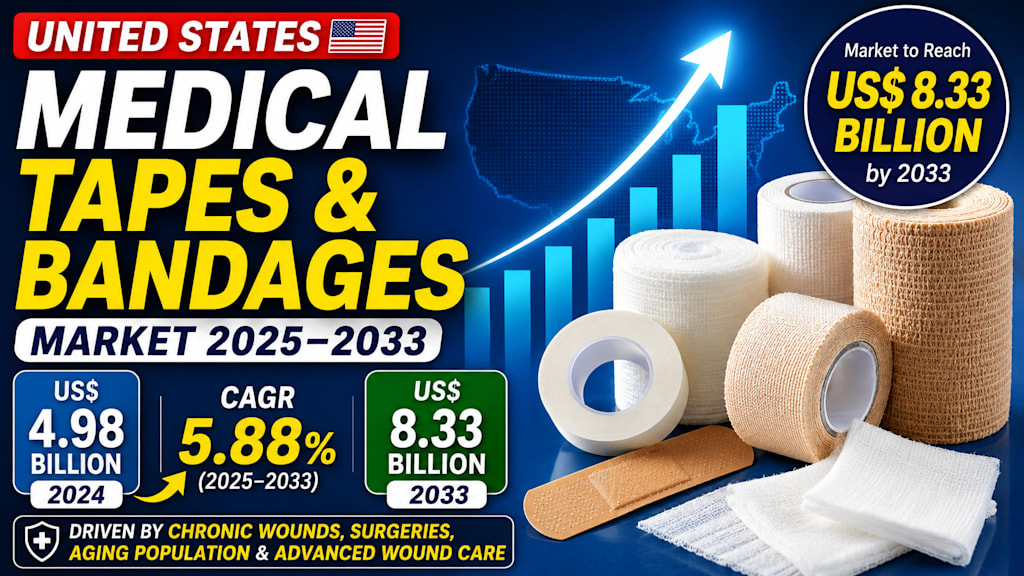
The healthcare industry in the United States is witnessing a significant transformation in wound management and patient care. One segment gaining remarkable momentum is the medical tapes and bandages market, fueled by rising surgical procedures, increasing chronic wound cases, and technological advancements in wound care products.
According to Renub Research, the United States Medical Tapes and Bandages Market is projected to grow from US$ 4.98 billion in 2024 to US$ 8.33 billion by 2033, expanding at a CAGR of 5.88% during the forecast period from 2025 to 2033.
Medical tapes and bandages may appear simple healthcare products, but they are essential in hospitals, clinics, emergency care, sports medicine, and home healthcare environments. From securing surgical dressings to supporting wound healing after injuries, these products play a vital role in modern medical treatment.
Rising Chronic Wounds Fueling Market Expansion
One of the strongest factors contributing to the market’s rapid growth is the increasing prevalence of chronic wounds across the United States.
Conditions such as diabetic foot ulcers, pressure ulcers, venous leg ulcers, and surgical wounds are becoming increasingly common, particularly among elderly patients and individuals suffering from diabetes and obesity.
Statistics reveal the seriousness of the situation. Millions of Americans struggle with chronic wounds annually, creating substantial pressure on healthcare providers. Elderly populations are especially vulnerable due to fragile skin, reduced mobility, and slower healing capacity.
Healthcare experts estimate that chronic wounds affect over 8 million Americans aged 65 and older. Diabetic foot ulcers alone impact nearly 1.6 to 2 million Americans every year, highlighting the urgent need for advanced wound care solutions.
Medical tapes and bandages are essential in these cases because they help maintain proper wound moisture, protect against infection, and improve healing outcomes. As chronic diseases continue increasing nationwide, demand for advanced wound management products is expected to rise steadily.
Surgical Procedures Continue Driving Product Demand
The growing number of surgical operations across the United States is another major driver supporting the medical tapes and bandages market.
Orthopedic procedures such as hip replacements and knee replacements require extensive post-operative wound management. Surgical tapes, adhesive dressings, waterproof bandages, and scar-management products are widely used during recovery.
The United States performs hundreds of thousands of orthopedic surgeries every year, including more than 500,000 hip replacements and nearly 800,000 knee replacement procedures annually.
Beyond orthopedic surgeries, cosmetic and reconstructive surgeries are also contributing significantly to market growth.
The cosmetic surgery sector has expanded rapidly over the past few years as patients increasingly seek aesthetic procedures. Silicone medical tapes and scar-reduction bandages are becoming highly popular after cosmetic surgeries because they support healing while reducing visible scarring.
With over 26 million cosmetic and minimally invasive procedures performed annually in the United States, healthcare manufacturers are introducing specialized wound care products tailored specifically for aesthetic recovery and skin-sensitive applications.
Advanced Wound Care Technologies Reshaping the Industry
Innovation is transforming the traditional wound care industry into a more advanced, patient-focused market.
Manufacturers are developing next-generation products featuring:
Hypoallergenic adhesives
Waterproof protection
Antimicrobial technology
Breathable materials
Skin-friendly silicone designs
Smart monitoring systems
These advancements are improving patient comfort while reducing infection risks and accelerating healing times.
Modern bandages are no longer just protective coverings. Some advanced dressings now include smart technologies capable of monitoring wound conditions and identifying signs of inflammation or infection in real time.
Such innovations are especially valuable for patients requiring long-term wound management, including elderly individuals and diabetic patients.
Hospitals and clinics are increasingly adopting premium wound care products because better healing outcomes can reduce hospital stays and lower long-term treatment costs.
Home Healthcare Sector Creating New Opportunities
The rapid expansion of home healthcare services is opening new growth opportunities for medical tapes and bandages manufacturers.
Patients today increasingly prefer receiving treatment from home whenever possible. This trend accelerated after the COVID-19 pandemic as healthcare systems shifted toward remote and personalized care solutions.
Easy-to-apply bandages, self-adhesive tapes, waterproof dressings, and portable wound care kits are becoming more popular among home users.
Elderly patients recovering from surgeries or chronic illnesses often rely on caregivers or family members for wound care management. Therefore, demand is growing for user-friendly products that combine convenience, safety, and effectiveness.
Healthcare companies are responding by creating products specifically designed for home-based wound care applications.
Aging Population Continues Supporting Market Growth
America’s aging population remains one of the most influential long-term growth drivers for the wound care industry.
Older adults are more likely to experience chronic illnesses, mobility limitations, skin tears, and pressure ulcers. Additionally, they undergo more surgical procedures than younger populations.
As people age, skin becomes thinner and more vulnerable to injury, making wound care management increasingly important.
The growing elderly population is expected to increase demand for:
Surgical dressings
Pressure ulcer care products
Adhesive wound tapes
Advanced bandages
Scar-management solutions
Healthcare providers are focusing heavily on products that minimize skin irritation while maximizing healing efficiency for elderly patients.
Sports Injuries and Accidents Also Boosting Demand
Sports injuries and traumatic wounds remain significant contributors to the U.S. medical tapes and bandages market.
Athletes, fitness enthusiasts, and accident victims frequently require tapes and bandages for support, stabilization, and injury recovery.
Kinesiology tapes, elastic bandages, waterproof sports tapes, and compression products are increasingly used in sports medicine clinics and rehabilitation centers.
Additionally, rising vehicle accident cases across the country continue contributing to emergency wound care demand.
As awareness regarding injury management grows, sports-related medical products are expected to remain an important segment within the overall market.
Market Challenges Still Exist
Despite strong growth potential, the market faces several challenges that could slow expansion.
Skin Irritation and Allergic Reactions
Traditional medical adhesives can cause skin irritation and allergic reactions, particularly among elderly patients and individuals with sensitive skin.
Frequent bandage removal may damage delicate skin and create discomfort during recovery. Although hypoallergenic alternatives are available, they are often more expensive and not always accessible across all healthcare facilities.
Manufacturers continue investing in silicone-based and skin-friendly adhesive technologies to address these concerns.
Pricing Pressure and Reimbursement Limitations
Healthcare providers across the United States face budget constraints, making cost management a major concern.
Advanced wound care products often carry higher prices, limiting widespread adoption in hospitals and clinics operating under strict reimbursement systems.
Inconsistent insurance reimbursement policies can also discourage healthcare providers from using premium wound care solutions despite their long-term clinical benefits.
Balancing affordability with innovation remains one of the industry’s biggest challenges moving forward.
Smart Bandages Represent the Future of Wound Care
One of the most exciting developments in the market is the emergence of smart wound care technologies.
Researchers and medical technology companies are actively developing intelligent bandages capable of detecting infections, monitoring healing progress, and delivering medication automatically.
These futuristic wound care solutions could dramatically improve patient outcomes while reducing healthcare costs associated with chronic wound complications.
The integration of sensors, monitoring systems, and real-time data collection may revolutionize how wounds are managed in hospitals and home care settings over the next decade.
10 Recent Developments by Leading Companies
1. Mölnlycke Health Care AB
In October 2024, Mölnlycke partnered with Transdiagen to improve tissue regeneration research and chronic wound healing technologies using advanced gene-signature analysis.
2. Solventum (3M)
In September 2024, Solventum launched the V.A.C. Peel and Place Dressing designed to simplify wound dressing applications and reduce patient discomfort during removal.
3. California Institute of Technology (Caltech)
Researchers announced the development of smart bandages capable of monitoring wounds and automatically responding to infections or inflammation.
4. Johnson & Johnson
The company continues expanding its wound care portfolio through improved surgical bandages and advanced healing solutions for post-operative care.
5. Baxter International Inc.
Baxter is increasing investment in advanced wound care systems focused on improving recovery efficiency in hospitals and outpatient settings.
6. Smith & Nephew plc
Smith & Nephew continues strengthening its chronic wound treatment technologies with innovative dressings designed for diabetic ulcers and pressure injuries.
7. Cardinal Health Inc.
Cardinal Health is enhancing distribution capabilities for wound care products across hospitals and ambulatory care centers nationwide.
8. DuPont de Nemours, Inc.
DuPont is focusing on advanced material technologies for breathable and skin-friendly medical adhesive products.
9. McKesson Medical-Surgical Inc.
McKesson continues expanding access to medical tapes and bandages through its large healthcare distribution network across the United States.
10. Advanced Silicone Tape Manufacturers
Several manufacturers are introducing silicone-based adhesive tapes aimed at reducing skin trauma and improving cosmetic surgery recovery outcomes.
Competitive Landscape
The United States medical tapes and bandages market remains highly competitive, with major players focusing heavily on:
Product innovation
Research and development
Strategic partnerships
Smart wound care technologies
Distribution network expansion
Leading companies operating in the market include:
Smith & Nephew plc
Johnson & Johnson
Baxter International Inc.
3M
DuPont de Nemours, Inc.
Cardinal Health Inc.
Mölnlycke Health Care AB
McKesson Medical-Surgical Inc.
These companies are expected to continue investing aggressively in advanced wound care technologies to maintain competitive advantages in the evolving healthcare landscape.
Final Thoughts
The United States Medical Tapes and Bandages Market is entering a period of strong and sustainable growth driven by rising chronic wounds, increasing surgeries, technological innovation, and the growing elderly population.
As healthcare systems increasingly prioritize faster healing, patient comfort, and infection prevention, advanced wound care products will become even more essential across hospitals, clinics, and home healthcare environments.
The emergence of smart bandages and next-generation adhesive technologies is also reshaping the future of wound care, creating exciting opportunities for manufacturers and healthcare providers alike.
With the market expected to surpass US$ 8.33 billion by 2033, the industry is positioned to remain a crucial pillar of the broader healthcare and medical devices sector in the years ahead.
About the Creator
Enjoyed the story? Support the Creator.
Subscribe for free to receive all their stories in your feed.
Comments
There are no comments for this story
Be the first to respond and start the conversation.