
United States Ice Cream Market Grows as Premium Flavors, Health-Conscious Innovation, and Year-Round Indulgence Drive Consumer Demand
Rising interest in artisanal desserts, plant-based alternatives, and premium frozen treats is fueling steady growth across the U.S. ice cream industry.

Ice cream has long held a special place in American culture. From neighborhood ice cream parlors and family celebrations to quick convenience-store purchases on hot summer afternoons, ice cream remains one of the most beloved desserts in the United States. Yet today's ice cream market is evolving far beyond traditional vanilla and chocolate offerings.
Consumers are increasingly seeking premium experiences, unique flavor combinations, healthier formulations, and plant-based alternatives. Manufacturers are responding with innovative products that combine indulgence with modern dietary preferences, helping the industry attract a broader and more diverse consumer base.
The rise of artisanal brands, low-sugar options, high-protein formulations, and dairy-free alternatives has transformed the category into one of the most dynamic segments of the American food industry. Supported by strong retail distribution, expanding e-commerce channels, and continuous product innovation, the market is expected to maintain steady growth throughout the coming decade.
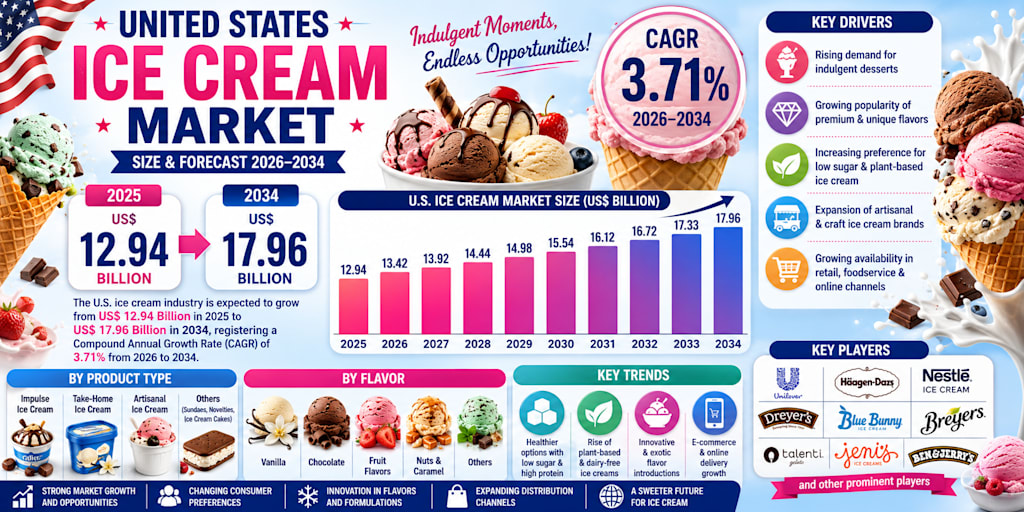
According to Renub Research, the United States Ice Cream Market is projected to grow from US$12.94 billion in 2025 to US$17.96 billion by 2034, registering a compound annual growth rate (CAGR) of 3.71% between 2026 and 2034. Rising consumer demand for premium products, indulgent desserts, innovative flavors, and healthier alternatives continues to support market expansion.
Ice Cream Remains a Staple of American Food Culture
Ice cream is one of the most widely consumed frozen desserts in the United States.
Traditionally made using milk, cream, sugar, and flavoring ingredients, ice cream has evolved into a diverse category that includes soft-serve products, gelato, frozen custard, frozen yogurt, and dairy-free alternatives.
Consumers enjoy ice cream as a dessert, snack, comfort food, and celebratory treat. Its versatility has helped it maintain popularity across all age groups and demographic segments.
The United States remains one of the world's largest ice cream-consuming nations, driven by strong demand for both take-home products and impulse purchases such as cones, cups, and novelty bars.
While consumption typically peaks during warmer months, ice cream remains a year-round favorite thanks to its association with indulgence, relaxation, and family gatherings.
Premiumization Is Reshaping Consumer Preferences
One of the strongest growth drivers in the U.S. ice cream market is premiumization.
Consumers increasingly seek high-quality products made with premium ingredients, authentic recipes, and unique flavor profiles.
Super-premium ice cream products featuring rich dairy ingredients, gourmet chocolate, specialty nuts, cookie inclusions, caramel swirls, and handcrafted recipes are gaining popularity among consumers willing to pay higher prices for superior experiences.
Artisanal and small-batch producers have also benefited from this trend by emphasizing craftsmanship, authenticity, and flavor innovation.
Ice cream remains closely associated with comfort and emotional satisfaction, making premium indulgence attractive even during periods of economic uncertainty.
As consumers continue prioritizing quality over quantity, premium ice cream categories are expected to remain strong growth contributors.
Americans Continue to Love Ice Cream
Consumer enthusiasm for ice cream remains exceptionally strong across the United States.
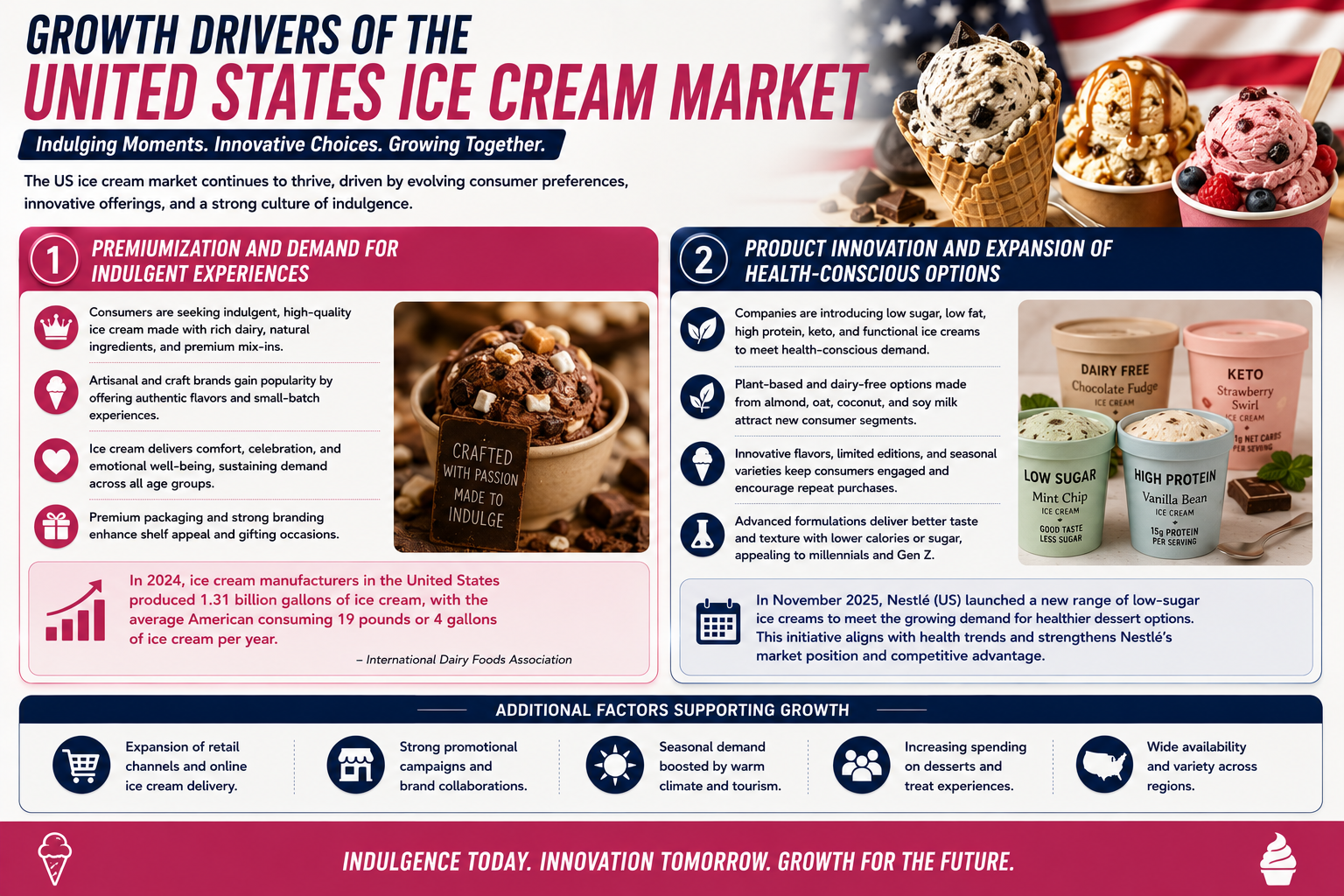
According to the International Dairy Foods Association, U.S. manufacturers produced approximately 1.31 billion gallons of ice cream in 2024, while the average American consumed approximately 19 pounds, or about four gallons, of ice cream annually.
These figures demonstrate the enduring popularity of frozen desserts despite changing dietary trends and growing competition from alternative snack categories.
The emotional connection consumers have with ice cream continues supporting long-term demand and encouraging innovation throughout the industry.
Product Innovation Is Expanding Market Opportunities
Innovation has become one of the defining characteristics of the modern ice cream market.
Manufacturers are introducing new flavors, formulations, packaging formats, and ingredient combinations designed to appeal to evolving consumer preferences.
Limited-edition offerings, seasonal flavors, globally inspired recipes, and creative ingredient pairings help maintain excitement within the category.
Consumers increasingly seek novelty and are willing to experiment with flavors that go beyond traditional chocolate, vanilla, and strawberry.
This constant flow of new products helps brands remain relevant while encouraging repeat purchases and consumer engagement.
As competition intensifies, innovation will remain a critical factor influencing market success.
Health-Conscious Consumers Are Driving Change
Health and wellness trends are increasingly shaping the future of the ice cream industry.
Many consumers seek products that align with healthier lifestyles while still delivering satisfying taste and texture.
This has led to growing demand for low-sugar, reduced-fat, high-protein, keto-friendly, and functional frozen desserts.
Manufacturers are investing heavily in research and development to create products that satisfy nutritional goals without compromising sensory appeal.
Improved ingredient technologies and alternative sweeteners have enabled companies to reduce calories and sugar content while maintaining desirable taste profiles.
The ability to balance indulgence with wellness is becoming a key competitive advantage within the market.
Plant-Based Ice Cream Continues to Gain Popularity
One of the fastest-growing segments within the industry is plant-based ice cream.
Consumers increasingly adopt vegan, vegetarian, flexitarian, and dairy-free lifestyles, creating strong demand for alternative frozen desserts.
Manufacturers now produce ice creams using ingredients such as almond milk, oat milk, soy milk, and coconut milk.
These products appeal not only to vegans but also to individuals with lactose intolerance and consumers seeking environmentally conscious food choices.
Plant-based innovation has expanded the market by attracting entirely new customer segments.
As consumer interest in alternative proteins continues growing, dairy-free ice cream is expected to remain an important growth category.
Major Brands Are Expanding Health-Focused Portfolios
Leading manufacturers are actively responding to shifting consumer preferences.
In November 2025, Nestlé USA introduced a new range of low-sugar ice cream products designed to address growing demand for healthier dessert alternatives.
The launch reflected broader industry efforts to align product portfolios with evolving wellness trends while maintaining consumer satisfaction.
Such initiatives highlight how major brands are adapting to changing market dynamics and strengthening their competitive positions through innovation.
Retail Infrastructure Supports Market Growth
The United States benefits from one of the world's most advanced food retail systems, which plays a critical role in supporting ice cream sales.
Ice cream products are widely available through supermarkets, hypermarkets, convenience stores, specialty retailers, foodservice outlets, and dedicated ice cream parlors.
Modern refrigeration technology and attractive merchandising displays help maximize product visibility and encourage impulse purchases.
Consumers enjoy convenient access to a wide variety of products across multiple price points and categories.
The strength of the retail ecosystem continues providing a stable foundation for market expansion.
E-Commerce Is Transforming Distribution
Online grocery shopping and direct-to-consumer delivery services are becoming increasingly important within the ice cream industry.
Consumers can now order frozen desserts through e-commerce platforms, grocery delivery services, and quick-commerce applications that offer rapid fulfillment.
This expanded accessibility helps brands reach new customers while enhancing convenience for existing consumers.
In October 2025, General Mills strengthened its distribution strategy through a partnership with a leading online grocery platform designed to improve accessibility and increase market reach in urban areas.
As digital shopping habits continue evolving, online channels are expected to contribute increasingly to industry growth.
Cones and Cups Continue Dominating Single-Serve Consumption
The cones and cups segment remains one of the most popular categories within the U.S. ice cream market.
Consumers appreciate these products because they offer convenience, portion control, portability, and immediate enjoyment.
Cones provide an enhanced sensory experience through waffle textures, chocolate coatings, and innovative flavor combinations.
Cups appeal to consumers seeking easy-to-eat formats suitable for on-the-go consumption.
Manufacturers are also introducing recyclable packaging and smaller portion sizes to align with sustainability goals and health-conscious purchasing behaviors.
Strong demand for single-serve products continues supporting growth across retail and foodservice channels.
Dairy-Based Ice Cream Maintains Market Leadership
Despite the rapid growth of plant-based alternatives, dairy ice cream remains the dominant category within the U.S. market.
Traditional dairy products continue to appeal to consumers because of their rich texture, creamy consistency, and familiar taste.
Classic flavors such as vanilla, chocolate, and strawberry remain bestsellers across multiple demographic groups.
The United States benefits from a strong dairy production infrastructure, ensuring reliable ingredient supply and manufacturing capabilities.
Manufacturers are further strengthening this segment through innovations such as low-fat, low-sugar, and protein-enhanced formulations.
As a result, dairy-based products continue maintaining a leading market position.
Impulse Purchases Remain a Major Revenue Driver
Impulse ice cream products represent one of the most profitable segments of the market.
This category includes bars, cones, sandwiches, sticks, and novelty products typically purchased for immediate consumption.
Convenience stores, gas stations, vending machines, amusement parks, and entertainment venues serve as key distribution channels.
Limited-edition flavors, eye-catching packaging, and premium product formats often encourage spontaneous purchases.
Consumers frequently associate impulse ice cream purchases with enjoyment, relaxation, and reward-based consumption.
The emotional nature of these buying decisions helps support strong year-round sales.
Chocolate Remains America's Favorite Indulgence
Chocolate ice cream continues to rank among the most popular flavors in the United States.
Its broad appeal spans children, adults, and seniors, making it a staple within both mass-market and premium categories.
Manufacturers continually innovate within the chocolate segment through variations such as dark chocolate, fudge swirl, brownie-infused, chocolate chip, and organic formulations.
Chocolate also pairs exceptionally well with complementary ingredients such as caramel, cookies, nuts, and marshmallow inclusions.
Its versatility helps ensure sustained demand across retail, foodservice, and impulse channels.
Convenience Stores Play a Critical Distribution Role
Convenience stores remain one of the most important channels for impulse ice cream sales.
Their strategic locations, extended operating hours, and high customer traffic make them ideal environments for frozen dessert purchases.
Manufacturers frequently collaborate with convenience store chains to launch exclusive products, seasonal promotions, and limited-edition flavors.
Advancements in freezer technology have improved product visibility and reduced spoilage, helping retailers maximize profitability.
As convenience-oriented purchasing behavior continues growing, this channel is expected to remain highly influential.
California Leads Market Innovation
California represents one of the most dynamic ice cream markets in the United States.
The state's large population, diverse demographics, and health-conscious consumer base create strong demand for premium, organic, artisanal, and plant-based products.
Consumers frequently seek innovative flavors and environmentally sustainable options.
The state's favorable climate also supports year-round consumption, particularly in coastal regions where outdoor lifestyles contribute to steady demand.
California's strong culture of culinary experimentation continues influencing national ice cream trends.
New York Embraces Premium and Specialty Products
New York's urban lifestyle and diverse population support robust demand for premium frozen desserts.
Consumers increasingly seek artisanal flavors, international inspirations, and health-conscious alternatives.
Higher disposable incomes in many metropolitan areas contribute to strong demand for super-premium products.
The market also benefits from thriving foodservice, dessert, and hospitality sectors that support year-round consumption.
Washington and Arizona Offer Unique Growth Opportunities
Washington consumers often prioritize sustainability, clean-label ingredients, and locally sourced products.
Demand for organic and plant-based ice cream remains particularly strong throughout the state.
Arizona, by contrast, benefits from a consistently warm climate that naturally supports frozen dessert consumption.
Population growth, urbanization, and rising disposable incomes continue strengthening market opportunities throughout the region.
Health Concerns Present Ongoing Challenges
Despite strong growth prospects, the industry faces increasing scrutiny regarding sugar, calorie, and fat content.
Rising awareness of obesity, diabetes, and cardiovascular health concerns has encouraged consumers to evaluate dessert choices more carefully.
Manufacturers must balance nutritional improvements with consumer expectations regarding taste, texture, and indulgence.
Developing healthier products that successfully replicate traditional ice cream experiences often requires substantial investment in research and development.
Meeting these expectations remains a critical challenge across the industry.
Rising Operational Costs Pressure Profitability
The ice cream industry is highly dependent on cold-chain infrastructure.
Manufacturing, transportation, storage, and retail distribution all require reliable refrigeration systems.
Rising energy prices, transportation expenses, and equipment maintenance costs can significantly affect profitability.
Climate-related disruptions and supply chain inefficiencies further increase operational risks.
Smaller producers are particularly vulnerable because they often lack the scale advantages enjoyed by larger competitors.
Managing these costs remains a key strategic priority throughout the industry.
Final Thoughts
The United States ice cream market continues evolving as consumers seek premium experiences, innovative flavors, healthier alternatives, and greater convenience.
Driven by strong cultural relevance, continuous product innovation, expanding e-commerce channels, and growing demand for plant-based and health-conscious products, the industry remains one of the most resilient segments of the food and beverage market.
With the market projected to grow from US$12.94 billion in 2025 to US$17.96 billion by 2034, significant opportunities exist for manufacturers, retailers, foodservice providers, and investors.
Although challenges related to health concerns, sugar reduction, and operational costs remain, ongoing innovation and strong consumer loyalty continue providing a solid foundation for future growth.
As Americans continue embracing both indulgence and wellness in their food choices, the ice cream industry is well positioned to remain a beloved and profitable part of the nation's culinary landscape.
About the Creator
Enjoyed the story? Support the Creator.
Subscribe for free to receive all their stories in your feed.
Comments
There are no comments for this story
Be the first to respond and start the conversation.