
United States Honey Market Outlook 2026–2034: How Natural Sweeteners Are Reshaping Consumer Preferences
Growing demand for organic foods, clean-label products, and healthier sugar alternatives is driving steady expansion across the United States honey industry.

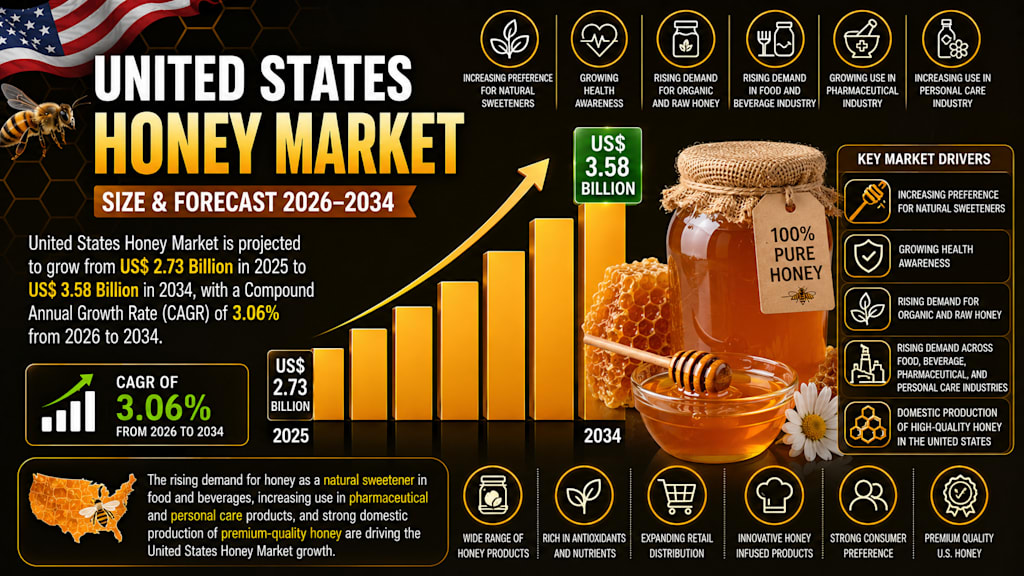
Consumer attitudes toward food and nutrition have changed dramatically over the past decade. Increasing awareness of the health risks associated with excessive sugar consumption has encouraged millions of Americans to seek healthier and more natural alternatives. As a result, honey has emerged as one of the most popular natural sweeteners in the country, finding applications across food, beverage, pharmaceutical, and personal care industries.
Long valued for its natural sweetness and medicinal properties, honey is no longer viewed simply as a pantry staple. Today, it is increasingly recognized as a functional ingredient that aligns with consumer demand for clean-label, minimally processed, and nutrient-rich products.
From organic honey and specialty varieties to premium raw honey products, consumers are showing growing interest in products that offer both flavor and perceived health benefits. This trend is helping fuel steady market growth throughout the United States.
According to Renub Research, the United States Honey Market is projected to grow from US$ 2.73 billion in 2025 to US$ 3.58 billion by 2034, registering a compound annual growth rate (CAGR) of 3.06% between 2026 and 2034. Rising health awareness, increasing demand for natural sweeteners, growing applications across multiple industries, and strong consumer preference for organic products continue to support market expansion.
As consumers increasingly prioritize wellness, sustainability, and ingredient transparency, honey is expected to remain one of the most attractive natural sweeteners in the American marketplace.
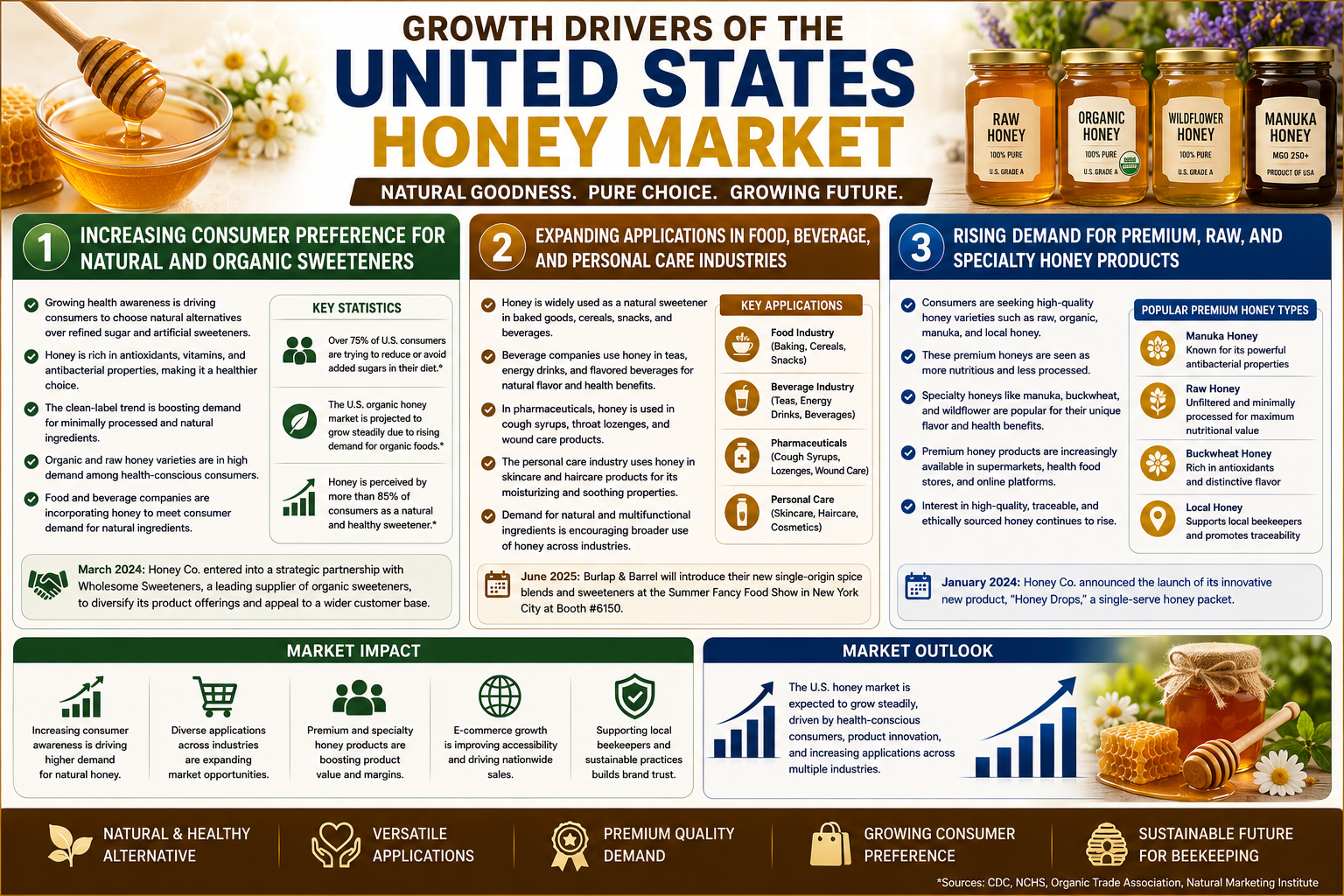
Understanding Honey's Growing Popularity
Honey is a natural sweetener produced by bees from flower nectar. Through a remarkable biological process, bees collect nectar, convert it into simple sugars, and store it within honeycombs where it matures into the honey consumed worldwide.
Unlike refined sugar, honey contains naturally occurring antioxidants, minerals, vitamins, enzymes, and antibacterial compounds. These characteristics have helped position honey as a healthier alternative to artificial sweeteners and heavily processed sugar products.
American consumers increasingly appreciate honey not only for its flavor but also for its versatility. It is widely used in cooking, baking, beverages, dietary supplements, skincare products, cough remedies, and wellness formulations.
The growing clean-label movement has further strengthened honey's appeal. Consumers are paying closer attention to ingredient lists and often prefer products made with recognizable, natural ingredients.
As awareness regarding nutritional health continues growing, honey's role within modern food and wellness culture is expected to expand significantly.
Rising Demand for Natural and Organic Sweeteners
One of the most significant drivers of growth in the United States honey market is the increasing consumer shift toward natural and organic sweeteners.
Health-conscious consumers are reducing their intake of refined sugar and artificial sweeteners due to concerns regarding obesity, diabetes, cardiovascular disease, and other chronic health conditions. Honey offers an appealing alternative because it is perceived as more natural and less processed.
The clean-label trend has become particularly influential. Consumers increasingly seek products free from artificial ingredients, preservatives, and synthetic additives. Honey fits naturally within this preference because it is minimally processed and easily understood by consumers.
Organic and raw honey varieties are experiencing especially strong demand among shoppers focused on wellness and sustainability. These products are often viewed as premium offerings due to their limited processing and perceived nutritional advantages.
Food manufacturers are responding by incorporating honey into a growing range of products, including cereals, snacks, beverages, sauces, and baked goods.
In March 2024, Honey Co. entered a strategic partnership with Wholesome Sweeteners to expand its portfolio of organic sweetener products and better serve evolving consumer preferences.
As the demand for healthier food choices continues growing, honey is expected to benefit significantly from long-term changes in consumer behavior.
Expanding Applications Across Multiple Industries
Honey's versatility has become a major factor supporting market growth.
The food and beverage industry remains the largest consumer of honey products. Manufacturers use honey as a natural sweetener in breakfast cereals, granola bars, baked goods, dairy products, sauces, and beverages.
Tea producers, sports drink manufacturers, and functional beverage companies increasingly incorporate honey because of its natural flavor profile and perceived health benefits.
Beyond food and beverages, honey plays an important role in pharmaceutical applications. Its antibacterial and soothing properties make it a common ingredient in cough syrups, throat lozenges, wound-care products, and wellness supplements.
The personal care and cosmetics industry also continues expanding its use of honey. Facial masks, moisturizers, shampoos, soaps, and skincare formulations frequently include honey because of its hydrating and soothing characteristics.
As consumer demand for natural ingredients rises across industries, honey's broad range of applications is expected to continue supporting market growth.
Premium and Specialty Honey Products Are Gaining Momentum
A notable trend within the United States honey market is the growing popularity of premium and specialty honey products.
Consumers increasingly seek unique varieties that offer distinctive flavors, origins, and nutritional benefits. Products such as raw honey, organic honey, Manuka honey, buckwheat honey, and locally sourced honey are attracting considerable attention.
Many shoppers are willing to pay premium prices for specialty honey because they perceive these products as higher quality and more beneficial for health and wellness.
The rise of artisanal food culture has further contributed to demand. Consumers often view specialty honey as both a gourmet ingredient and a functional health product.
Health food retailers, specialty stores, farmers' markets, and online platforms have expanded access to premium honey varieties, making them more widely available than ever before.
In January 2024, Honey Co. launched "Honey Drops," an innovative single-serve honey product designed to offer convenience while meeting consumer demand for natural sweetening solutions.
As consumers continue seeking premium food experiences, specialty honey products are expected to remain one of the fastest-growing segments within the market.
Food and Beverage Industry Remains a Key Growth Engine
The food and beverage sector continues to represent the largest application segment for honey in the United States.
Manufacturers increasingly utilize honey as a natural sweetening ingredient to replace or reduce refined sugar content in products.
Consumers appreciate honey because it enhances flavor while aligning with broader trends toward healthier eating habits. It also contributes desirable texture, color, and moisture-retention characteristics in many food applications.
Functional foods and wellness-focused beverages have become particularly important growth categories. Products marketed for energy support, immunity enhancement, and digestive wellness often feature honey as a key ingredient.
The popularity of health-conscious eating patterns is encouraging food producers to innovate and develop products featuring natural sweeteners.
As demand for nutritious and clean-label products continues expanding, honey's role within the food and beverage industry is expected to strengthen further.
Organic Honey Market Continues Expanding
The organic honey segment has emerged as one of the most attractive areas within the broader honey market.
Organic honey is produced without synthetic pesticides, artificial chemicals, or prohibited agricultural practices. This production approach appeals strongly to consumers who prioritize environmental sustainability and personal health.
Growing awareness of organic farming practices and increasing concerns regarding food quality are encouraging more consumers to purchase organic products.
Retail availability has also improved significantly. Organic honey is now widely distributed through supermarkets, specialty stores, natural food retailers, and e-commerce platforms.
Consumers frequently associate organic honey with higher quality standards, greater environmental responsibility, and superior nutritional value.
As organic food consumption continues growing across the United States, demand for organic honey products is expected to remain strong throughout the forecast period.
Packaging Innovation Is Supporting Market Growth
Packaging plays an increasingly important role in product differentiation and consumer convenience.
Honey bottles, particularly squeeze bottles, have become extremely popular because they offer easy dispensing, reduce waste, and improve usability.
Manufacturers are also investing in environmentally friendly packaging solutions that align with sustainability goals. Recyclable materials and eco-conscious packaging designs are becoming increasingly common.
Attractive packaging enhances product visibility and strengthens brand recognition in retail environments.
The growth of e-commerce has further increased the importance of durable and convenient packaging formats that support online distribution.
As consumer expectations regarding convenience and sustainability continue evolving, packaging innovation will remain an important factor shaping the future of the honey market.
Challenges Facing the United States Honey Market
Despite positive growth prospects, the honey industry faces several challenges that could affect future expansion.
One of the most significant concerns is the decline in bee populations.
Bees play a critical role in honey production and agricultural pollination. However, climate change, habitat loss, pesticide exposure, diseases, and colony collapse disorder continue threatening bee health across many regions.
Declining bee populations can reduce honey production volumes and create supply challenges that influence pricing and market stability.
Beekeepers are increasingly investing in sustainable practices and conservation efforts to protect bee populations and maintain long-term production capacity.
Addressing environmental threats will remain essential for ensuring the future sustainability of the honey industry.
Competition from Imports and Product Adulteration
Another major challenge facing domestic producers involves competition from low-cost imported honey.
Imported products often enter the market at lower prices, making it difficult for some domestic producers to compete solely on cost.
Concerns regarding honey adulteration also remain an important issue. In some cases, honey products may be diluted with syrups or other sweetening agents, potentially affecting product quality and consumer trust.
American consumers are becoming increasingly interested in product authenticity, traceability, and country of origin.
As a result, domestic producers are focusing on transparency, quality assurance, and brand differentiation to maintain competitive advantages.
Ensuring product integrity and consumer confidence will remain important priorities for industry stakeholders moving forward.
Regional Market Insights
California remains one of the most important honey-producing states in the country. Its extensive agricultural activity, favorable climate, and large-scale beekeeping operations contribute significantly to domestic honey production. Growing demand for organic and raw honey products further supports market growth throughout the state.
New York continues experiencing strong demand for local, organic, and artisanal honey products. Farmers' markets, specialty retailers, and urban beekeeping initiatives are helping strengthen the state's honey ecosystem while supporting local producers.
Washington benefits from favorable agricultural conditions and diverse floral resources that support production of high-quality specialty honey varieties. Consumer interest in natural foods and sustainable agriculture continues fueling market expansion.
Georgia's warm climate and diverse vegetation create ideal conditions for beekeeping. Rising awareness regarding honey's nutritional value and growing demand for natural food products continue driving growth across the state's honey industry.
Competitive Landscape
The United States honey market remains highly competitive, with companies focusing on product quality, sustainability, packaging innovation, and premium product development.
Major industry participants include Barkman Honey, Dutch Gold Honey, Adee Honey Farms, GloryBee, Crockett Honey Company, Miller's Honey Company, Comvita Limited, and The Big Island Bee Company.
These companies continue investing in product diversification, sustainable sourcing practices, and premium offerings designed to meet evolving consumer preferences.
Strategic partnerships, new product launches, and expansion into specialty honey categories are expected to remain important competitive strategies throughout the forecast period.
Final Thoughts
The United States honey market is benefiting from powerful consumer trends centered on health, wellness, sustainability, and natural nutrition. As Americans increasingly seek alternatives to refined sugar and artificial sweeteners, honey has emerged as one of the most trusted and versatile natural ingredients available.
Growing demand across food, beverage, pharmaceutical, and personal care industries continues creating new opportunities for producers and manufacturers alike. Meanwhile, rising interest in organic, raw, and specialty honey products is helping elevate the industry's value proposition.
With the market projected to grow from US$ 2.73 billion in 2025 to US$ 3.58 billion by 2034, honey is expected to remain a staple ingredient in the evolving landscape of natural and functional foods. As innovation, sustainability, and consumer awareness continue shaping purchasing behavior, the future of the United States honey market looks increasingly sweet.
About the Creator
Enjoyed the story? Support the Creator.
Subscribe for free to receive all their stories in your feed.
Comments
There are no comments for this story
Be the first to respond and start the conversation.