
United States Honey Market Forecast to Reach US$ 3.58 Billion by 2034 as Consumers Shift Toward Natural Sweeteners
Growing health awareness, rising demand for organic foods, and expanding use across food, wellness, and personal care industries are transforming the future of the U.S. honey market.

Introduction
The American food industry is undergoing a major transformation as consumers increasingly move away from artificial ingredients and processed sugar. At the center of this shift is honey — one of the world’s oldest natural sweeteners, now experiencing renewed demand across food, beverage, wellness, and personal care industries.
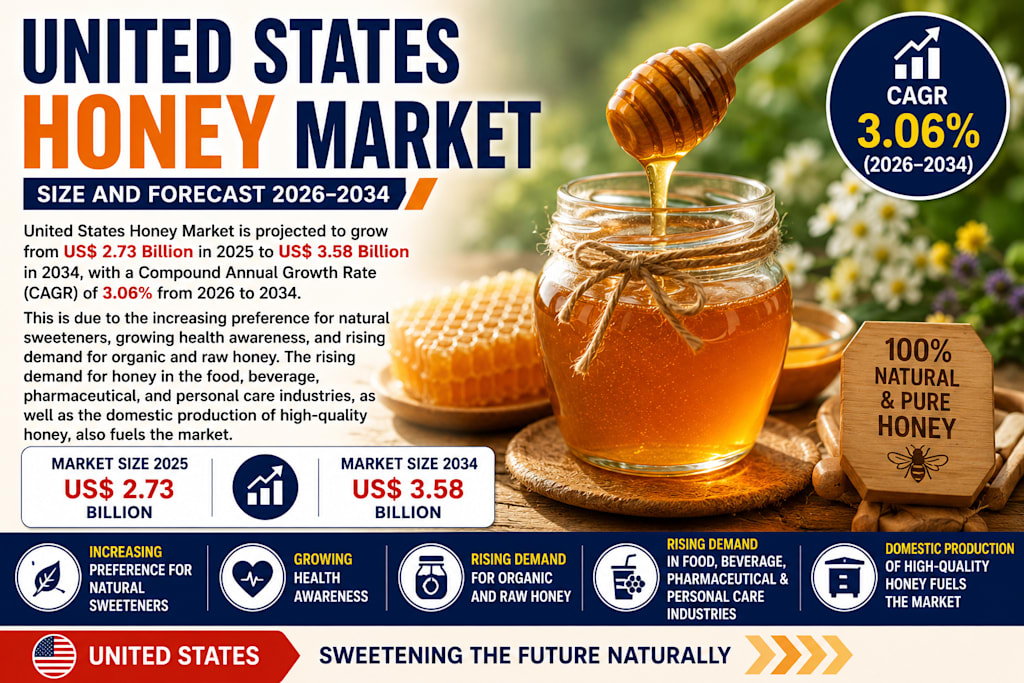
According to the provided Renub Research insights, the United States Honey Market is expected to grow from US$ 2.73 Billion in 2025 to US$ 3.58 Billion by 2034, expanding at a compound annual growth rate (CAGR) of 3.06% from 2026 to 2034. The market is being supported by rising preference for natural sweeteners, increasing awareness about health and nutrition, and growing demand for raw and organic honey products.
Consumers are no longer viewing honey as just a kitchen staple. It is now considered a functional ingredient associated with wellness, immunity, clean-label nutrition, and sustainable food consumption. As industries continue adopting natural ingredients and consumers prioritize healthier lifestyles, honey is becoming one of the most important natural products in the evolving American food landscape.
Honey’s Growing Role in Modern Consumer Culture
Honey has been consumed for thousands of years, but its relevance in modern health-conscious lifestyles is stronger than ever. Produced naturally by bees using flower nectar, honey contains antioxidants, vitamins, minerals, and antibacterial properties that make it attractive to consumers looking for alternatives to refined sugar.
In the United States, honey consumption is rising because consumers increasingly associate natural products with healthier living. Clean-label eating habits are also influencing purchasing decisions. Shoppers now carefully examine ingredient lists and prefer foods with recognizable, minimally processed components.
Honey fits perfectly into this movement. Unlike artificial sweeteners and heavily processed sugar substitutes, honey offers a natural image along with nutritional and medicinal associations. It is widely used in teas, breakfast foods, baked products, sauces, snacks, supplements, and wellness products.
The market’s appeal also extends beyond nutrition. Honey is now widely used in skincare, pharmaceuticals, and personal care products due to its moisturizing and antibacterial characteristics.
As consumer awareness around wellness continues to grow, honey’s role in everyday lifestyles is expected to expand further.
Natural Sweeteners Are Replacing Refined Sugar
One of the biggest growth drivers for the U.S. honey market is the increasing rejection of refined sugar and artificial sweeteners. Rising concerns around obesity, diabetes, and lifestyle-related health problems are pushing consumers toward healthier alternatives.
Honey is increasingly viewed as a more natural option because it contains beneficial compounds and undergoes less processing compared to refined sugar products. Consumers interested in holistic wellness and preventive healthcare are especially attracted to raw and organic honey varieties.
The clean-label movement has accelerated this trend. Food brands are reformulating products to include natural ingredients, and honey is becoming a preferred sweetening solution for companies aiming to satisfy health-conscious buyers.
The report highlights an important industry development from March 2024, when Honey Co. partnered with Wholesome Sweeteners to diversify product offerings and strengthen its position in the organic sweetener segment.
This growing alignment between consumer preferences and food manufacturing strategies is expected to continue driving demand across the honey industry.
Expanding Applications Across Multiple Industries
Honey’s versatility is one of the strongest reasons behind its expanding market presence. It is no longer limited to household consumption alone. Instead, honey is now integrated into a wide variety of commercial industries.
In the food and beverage sector, honey is widely used in cereals, snacks, baked goods, sauces, energy bars, and flavored drinks. Beverage companies use honey in teas, wellness beverages, and energy drinks because it provides natural sweetness while supporting a healthier brand image.
The pharmaceutical industry also relies heavily on honey due to its antibacterial and soothing properties. Honey is commonly included in cough syrups, throat lozenges, wound-care products, and wellness supplements.
Meanwhile, the personal care and cosmetics industry continues expanding its use of honey in face masks, shampoos, creams, soaps, and skincare treatments. Consumers increasingly prefer beauty products made with natural ingredients, and honey’s moisturizing properties make it highly attractive in this category.
The report also notes that Burlap & Barrel introduced new single-origin spice blends and sweeteners during the Summer Fancy Food Show in New York in June 2025, reflecting the rising popularity of premium and specialty sweetener products.
As industries continue prioritizing natural ingredients, honey’s commercial value is expected to grow significantly.
Premium and Specialty Honey Products Are Booming
Another major trend shaping the market is the rising popularity of premium, raw, and specialty honey varieties. Consumers increasingly seek unique honey products that offer both quality and perceived health benefits.
Organic honey, raw honey, local honey, buckwheat honey, and manuka honey are gaining attention among wellness-focused consumers. These products are often viewed as more nutritious and less processed than standard honey varieties.
The premium honey segment is also benefiting from growing consumer interest in artisanal and locally sourced foods. Shoppers increasingly want to know where products come from, how they are produced, and whether they support sustainable agriculture.
Retailers have responded by expanding shelf space for premium honey products in supermarkets, health stores, and online platforms. E-commerce growth has further improved accessibility for specialty honey brands.
In January 2024, Honey Co. launched “Honey Drops,” a single-serve honey packet product aimed at improving convenience and portability for consumers.
This shift toward premiumization is helping manufacturers differentiate products while improving profit margins in a competitive marketplace.
Environmental Challenges Threaten Long-Term Supply
Despite positive growth trends, the honey market faces serious environmental concerns that could affect long-term production capacity.
One of the biggest challenges is the declining bee population. Bees are essential for honey production and agricultural pollination, but environmental stress factors continue impacting bee health across the United States.
Climate change, pesticide exposure, habitat loss, and colony collapse disorder have all contributed to declining bee populations. Changing weather patterns can also reduce nectar availability, making honey production more difficult for beekeepers.
As production challenges increase, maintaining healthy bee colonies requires higher investment in sustainable beekeeping practices and environmental conservation efforts.
These concerns extend beyond the honey industry itself because bees also play a crucial role in agricultural ecosystems. Protecting pollinator populations has therefore become both an environmental and economic priority.
Imported Honey and Adulteration Remain Key Concerns
The market also faces challenges from low-cost imported honey products. Imported honey often enters the market at lower prices, making competition difficult for domestic producers.
Another major issue involves honey adulteration, where products may be mixed with syrups or added sugars to reduce costs. Such practices damage consumer trust and create unfair competition for authentic honey producers.
As consumers become more educated about product quality and sourcing, transparency is becoming increasingly important. Domestic producers are responding by emphasizing authenticity, traceability, local sourcing, and premium quality to differentiate themselves from lower-cost alternatives.
Brand reputation and product certification are expected to become even more important in future market competition.
Food and Beverage Industry Continues Driving Demand
The food and beverage industry remains one of the largest application segments for honey in the United States.
Manufacturers increasingly use honey as a natural ingredient in breakfast cereals, snack products, baked goods, sauces, and beverages. Honey enhances not only sweetness but also flavor, texture, and nutritional appeal.
The rising popularity of functional foods and wellness beverages is also boosting honey consumption. Consumers increasingly prefer products that offer both taste and perceived health benefits.
Food brands are actively marketing honey-based products as clean-label and naturally sweetened alternatives, helping strengthen demand across mainstream retail markets.
As healthy eating trends continue influencing purchasing behavior, the role of honey within the food industry is expected to remain highly significant.
Organic Honey Is Gaining Strong Momentum
Organic honey is emerging as one of the fastest-growing categories in the market due to rising health and environmental awareness.
Consumers often associate organic products with purity, sustainability, and higher quality. Organic honey production avoids synthetic chemicals and artificial additives, making it especially attractive to wellness-focused consumers.
The willingness of consumers to pay premium prices for organic products has also encouraged producers to expand organic honey production.
Availability through supermarkets, specialty retailers, and online platforms has made organic honey more accessible than ever before. As sustainable consumption trends continue growing, organic honey demand is expected to remain strong throughout the forecast period.
Regional Markets Showing Strong Growth
California continues to dominate as one of the leading honey-producing states in the United States. Its favorable climate, diverse agriculture, and large-scale beekeeping operations support both honey production and crop pollination.
New York is also seeing strong market growth due to rising consumer demand for local and artisanal honey products. Farmers’ markets, specialty retailers, and urban beekeeping projects are helping strengthen local production and awareness.
Washington has become known for producing high-quality specialty honey varieties due to its rich agricultural landscape and diverse flora.
Georgia’s warm climate and expanding beekeeping practices are also contributing to growing honey production and consumer demand.
Together, these regional markets demonstrate how local agriculture, consumer awareness, and sustainable food trends are shaping the future of the U.S. honey industry.
Competitive Landscape
The market includes several major companies competing through product quality, sustainability, branding, and innovation. Key players highlighted in the report include Comvita Limited, Barkman Honey, Dutch Gold Honey, Adee Honey Farms, Glory Bee Inc., Miller’s Honey Company, and The Big Island Bee Company.
Competition is increasingly centered around organic certification, premium offerings, sustainability practices, packaging innovation, and product authenticity. Companies capable of combining quality with consumer trust are expected to strengthen their market positions in the years ahead.
Final Thoughts
The United States honey market is entering a period of stable and meaningful growth driven by changing consumer lifestyles and increasing demand for natural ingredients.
The market’s projected rise from US$ 2.73 Billion in 2025 to US$ 3.58 Billion by 2034 reflects more than a simple increase in sweetener consumption. It represents a broader shift toward healthier eating habits, clean-label products, and sustainable wellness-focused living.
Honey’s role is expanding far beyond traditional food applications. It is now a critical ingredient across healthcare, cosmetics, nutrition, and functional wellness products.
At the same time, the industry must address environmental challenges, bee population decline, and product authenticity concerns to ensure long-term sustainability.
About the Creator
Enjoyed the story? Support the Creator.
Subscribe for free to receive all their stories in your feed.
Comments
There are no comments for this story
Be the first to respond and start the conversation.