
United States Green Packaging Market: Growth Driven by Sustainability and Eco-Friendly Innovation
The United States green packaging market is expanding steadily as businesses adopt recyclable, biodegradable, and reusable packaging solutions to meet sustainability goals and consumer demand.

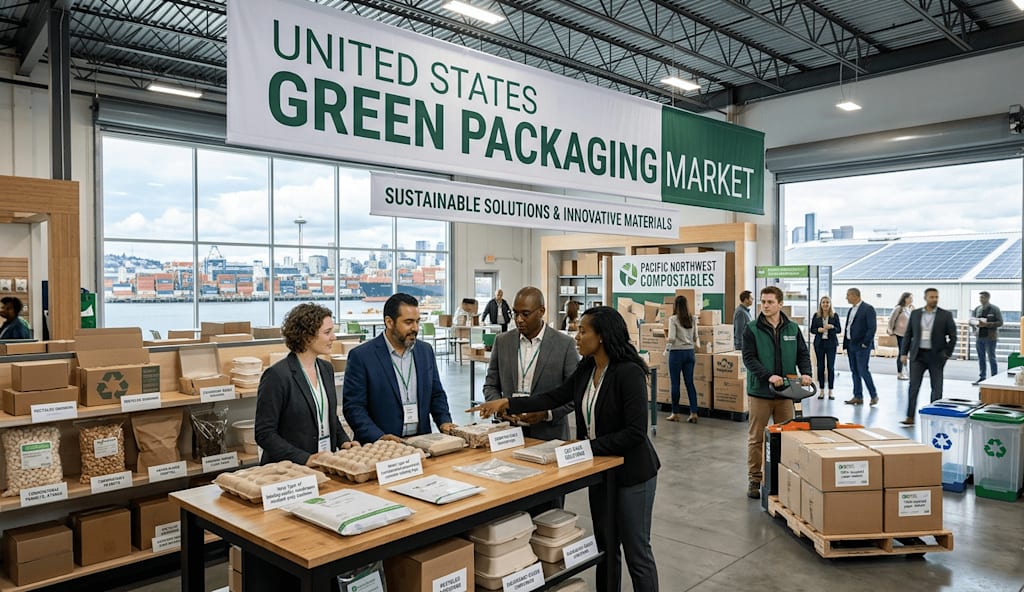
In the U.S., the packaging industry is experiencing a huge shift toward sustainability, recyclability, and eco-friendly materials. From food and drink companies to e-commerce businesses, all industries in the country are moving to greener packaging to cut down on waste and keep up with changing environmental rules.
According to IMARC Group, the green packaging market in the U.S. Was worth $76.79 billion in 2025 and is expected to grow to $108.34 billion by 2034, with a CAGR of 3.90% from 2026-2034.
A big reason for this growth is increased consumer awareness about environmental sustainability. More customers are consciously choosing brands that use recyclable, biodegradable or reusable packaging materials. Younger customers are especially willing to pay extra for green packaging, encouraging companies to speed up their sustainability efforts and invest in eco-friendly alternatives.
Stricter environmental regulations and single-use plastic bans in several U.S. States are also a major force. Laws like California's SB 54 are pushing manufacturers and retailers to adopt recyclable and compostable packaging. These laws will continue to create long-term demand for sustainable packaging materials across industries.
One major trend in the market is the increased use of packaging with recycled content. Currently, it accounts for 46.7% of the market share (2025), making it the top category. Brands are increasingly using recycled paperboard, cardboard, rPET plastic and aluminum to lower their environmental impact while ensuring packaging performance and durability.
The rapid growth of e-commerce is also a significant factor. Online retail has boosted demand for lightweight, protective, and sustainable packaging that reduces waste in shipping and is more recyclable. Top e-commerce companies are nudging suppliers towards right-sized, green packaging that limits excessive material usage and improves overall logistics sustainability.
Another prominent trend is the growing demand for degradable and compostable packaging. Degradable packaging is projected to be the fastest growing segment, with a growth rate of around 4.8% CAGR from 2026-2034. Compostable food service packaging, plant-based polymers, and biodegradable materials are becoming more popular as more municipalities establish composting infrastructure and enact stricter regulations on packaging waste.
Technology and innovation are also transforming the industry. Companies are investing in mono-material recyclable packaging, bio-based polymers, AI-driven packaging design, and digital watermarking to enhance recycling efficiency and waste sorting. These advancements are helping brands simplify their packaging designs and contribute to a circular economy.
In terms of segmentation, the market includes recycled content packaging, reusable packaging, and degradable packaging. Reusable packaging currently holds 31.5% of the market share (2025), due to increased interest in refill programs, industrial reuse systems, and robust transport packaging.
By end-use industry, the food sector dominates, with 34.8% of the market share (2025). This is due to growing demand for sustainable food containers, retail packaging, and compostable food service materials. The beverage, healthcare, personal care, and e-commerce industries are also expanding their use of environmentally friendly packaging.
The Western U.S. Leads the market, holding 28.6% of the share in 2025, primarily driven by California's regulations and high consumer demand for sustainable products. The South and Midwest are also significant growth regions, due to developing manufacturing capacity and packaging production.
Another key trend is the rise in investments in circular packaging systems and recycling infrastructure. Companies are focusing on closed-loop recycling models and investing in advanced material recovery systems to enhance packaging reuse and decrease landfill waste. Chemical recycling technologies are also gaining prominence as a means to boost recycled plastic availability and support the production of sustainable packaging.
What sets the U.S. Green packaging market apart is its strong connection to the broader trends of sustainability and a circular economy. Packaging is no longer just a functional component-it's becoming an essential part of a brand's identity, corporate responsibility, and connection with its customers.
The market is expected to continue to grow, benefiting from ongoing regulatory support, rising environmental awareness, and advancements in sustainable materials and packaging technologies. As companies increasingly prioritize waste reduction and eco-conscious business practices, green packaging will play a pivotal role in shaping the future of the U.S. Packaging industry.
About the Creator
michael matthew
I’m a market researcher passionate about understanding people, markets, and motivations. My work blends data analysis, consumer psychology, and strategic insight to help brands and businesses make informed, human-centered decisions.
Enjoyed the story? Support the Creator.
Subscribe for free to receive all their stories in your feed.
Comments
There are no comments for this story
Be the first to respond and start the conversation.