
United States Free-From Food Market Set for Strong Growth as Health-Conscious Consumers Reshape Grocery Shelves
Rising demand for allergen-free, gluten-free, and dairy-free products is transforming the future of American food retail

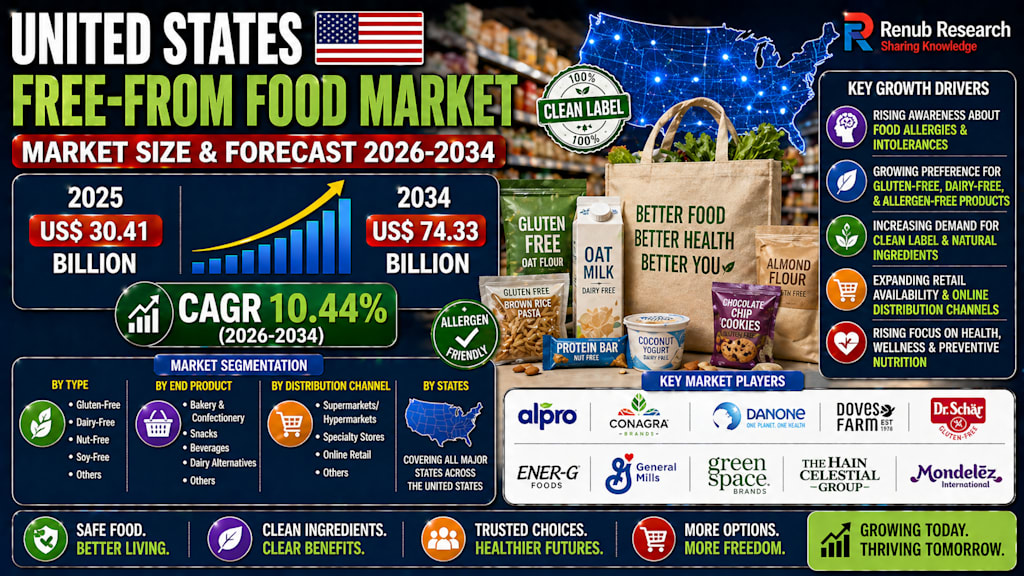
The way Americans shop for food is changing rapidly. Across supermarkets, online grocery platforms, convenience stores, and specialty retailers, consumers are paying closer attention to ingredients, allergens, digestive health, and clean-label claims. This shift has created one of the most dynamic categories in modern food retail: the free-from food market.
According to Renub Research, the United States Free-From Food Market is projected to rise from US$ 30.41 Billion in 2025 to US$ 74.33 Billion by 2034, expanding at a CAGR of 10.44% from 2026 to 2034. This remarkable growth reflects changing lifestyles, increasing health awareness, and a broader move toward personalized nutrition.
Free-from foods are products made without ingredients that commonly trigger allergies, intolerances, or dietary concerns. These may include gluten, dairy, lactose, soy, eggs, nuts, preservatives, or artificial additives. While these foods were once targeted mainly at consumers with medical conditions, they are now becoming mainstream choices for wellness-focused households.
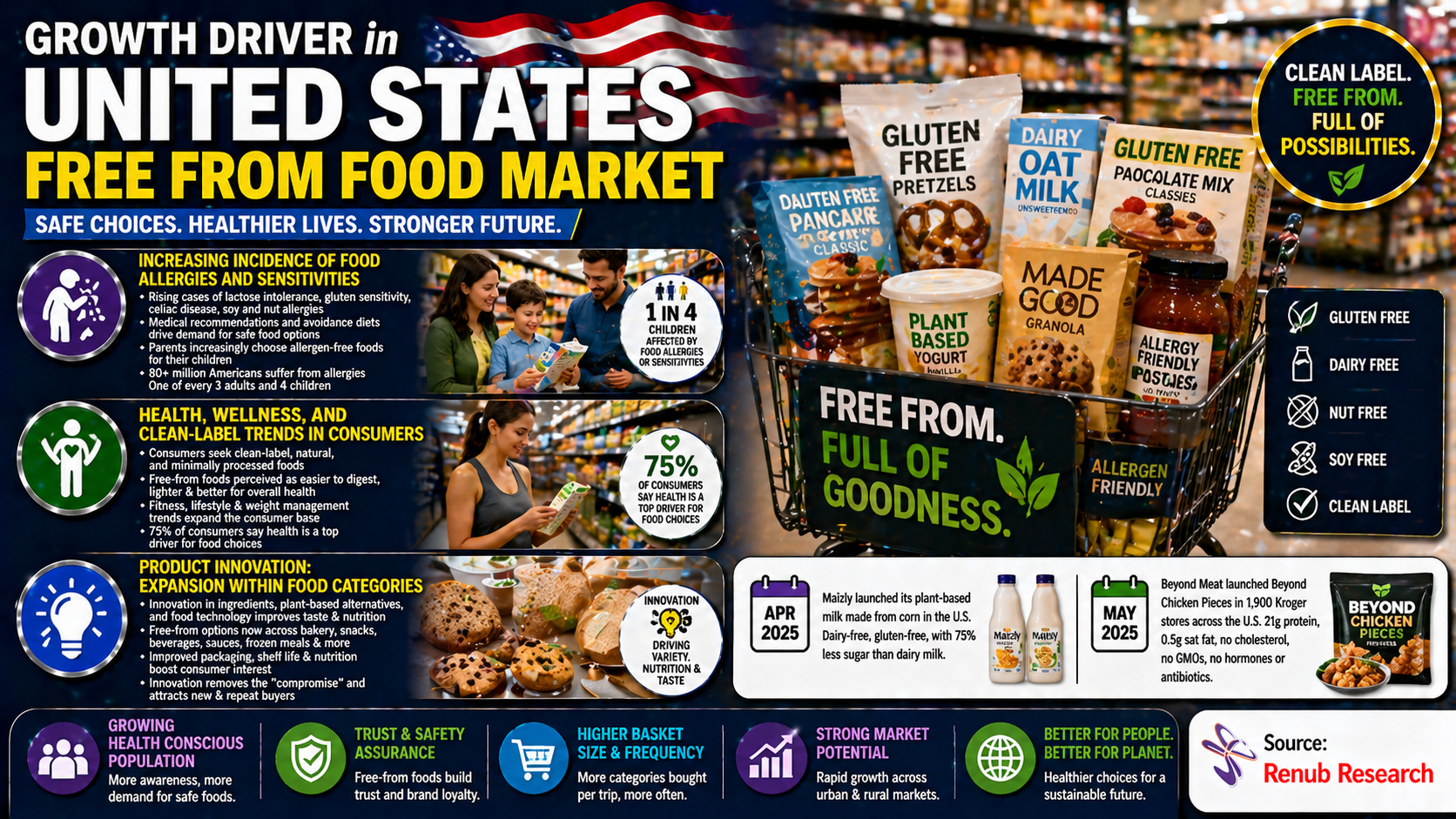
Why Free-From Foods Are Becoming Mainstream in America
For years, many shoppers purchased food based mainly on price and taste. Today, ingredient transparency has become equally important. Labels such as gluten-free, dairy-free, lactose-free, nut-free, and preservative-free increasingly influence purchase decisions.
Consumers now associate free-from products with cleaner eating habits, easier digestion, and better long-term wellness. Even people without diagnosed allergies are choosing these foods as part of healthier lifestyles.
This trend has accelerated due to:
- Growing awareness of food sensitivities
- Higher interest in digestive wellness
- Demand for minimally processed products
- Increased focus on fitness and weight management
- Popularity of plant-based diets
- Greater availability in mainstream retail stores
The result is a food category that is no longer niche—it is becoming essential.
Food Allergies and Intolerances Fueling Market Growth
One of the strongest drivers behind this market is the increasing number of Americans dealing with allergies and intolerances.
Consumers affected by lactose intolerance, celiac disease, gluten sensitivity, soy allergies, or nut allergies often rely on free-from products for daily nutrition. Families with children are especially cautious, often seeking safer packaged foods for school lunches, snacks, and travel.
As healthcare professionals continue recommending elimination diets and ingredient awareness, more households are turning to these products not only for treatment but for prevention and convenience.
This medical necessity creates a stable foundation for long-term market demand.
Clean Labels and Wellness Trends Expanding the Customer Base
The market is no longer dependent solely on allergy sufferers. A much larger consumer base is entering the category through wellness trends.
Modern shoppers increasingly believe that fewer ingredients often mean better food. Products without artificial additives, preservatives, or highly processed ingredients appeal strongly to consumers looking for natural options.
This is particularly visible among:
- Young professionals
- Fitness-focused consumers
- Parents buying for children
- Vegan and flexitarian households
- Urban consumers with premium grocery habits
The free-from label now signals quality, simplicity, and mindful eating.
Product Innovation Is Driving Faster Adoption
In earlier years, free-from foods were often criticized for poor taste, dry texture, or limited variety. That perception is changing quickly.
Manufacturers are investing heavily in food science, alternative proteins, new flours, and plant-based ingredients to improve taste and texture. The category now includes:
- Bread and bakery products
- Pasta and noodles
- Dairy alternatives
- Yogurt substitutes
- Snacks and bars
- Frozen meals
- Sauces and condiments
- Chocolates and confectionery
- Functional beverages
Major brands and startups alike are launching products that compete directly with traditional foods on flavor and convenience.
Dairy-Free Segment Leading the Charge
Among all free-from categories, dairy-free products remain one of the most successful.
The rise of lactose intolerance awareness, combined with plant-based eating habits, has pushed demand for alternatives such as:
- Almond milk
- Oat milk
- Soy milk
- Coconut milk
- Dairy-free yogurt
- Vegan cheese
- Dairy-free desserts
Coffee chains, restaurants, and foodservice brands have also helped normalize dairy alternatives by making them widely available.
For many younger consumers, choosing oat milk or almond milk is no longer unusual—it is standard behavior.
Gluten-Free Market Remains Strong
The gluten-free segment was one of the earliest success stories in the free-from category and continues to hold strong market relevance.
Originally driven by celiac disease diagnosis, the segment later expanded as consumers associated gluten-free diets with wellness and digestive benefits.
Today, shoppers can easily find:
- Gluten-free bread
- Pasta
- Pizza bases
- Crackers
- Breakfast cereals
- Ready meals
Although growth may be steadier than before, gluten-free remains one of the most mature and trusted segments in the market.
Snacks and Convenience Products Creating Daily Demand
One of the smartest growth areas in this market is snacking.
Consumers want quick, portable, safe foods that fit busy lifestyles. This has fueled demand for:
- Free-from chips
- Protein bars
- Crackers
- Fruit snacks
- School lunch items
- Travel snacks
Parents especially value allergen-free snack options for children. Busy workers and commuters also appreciate grab-and-go choices.
Convenience stores are beginning to stock more of these items, helping the category reach impulse buyers.
E-Commerce Changing the Industry
Online grocery has become a major growth channel for free-from foods.
Digital platforms allow shoppers to:
- Filter products by allergens
- Compare ingredients easily
- Read detailed labels
- Subscribe to repeat purchases
- Discover niche brands unavailable locally
For consumers with specific dietary needs, online shopping removes many frustrations of physical store browsing.
This channel is expected to remain a major growth engine through 2034.
Leading States Powering Growth
California
California remains one of the strongest markets due to its wellness culture, plant-based lifestyles, and openness to food innovation. The state is also home to many startups experimenting with new ingredient technologies.
New York
New York’s dense urban population, premium retail environment, and health-conscious consumers make it a major hub for free-from foods. Convenience and premium quality are key drivers here.
Washington
Washington State benefits from consumers focused on sustainability, transparency, and clean eating. Cities like Seattle are supporting rapid adoption.
New Jersey
Suburban family demand, strong retail infrastructure, and healthcare awareness are helping New Jersey grow steadily in the category.
Challenges Still Facing the Industry
Despite strong momentum, the market still faces obstacles.
Higher Prices
Free-from foods often cost more due to specialized ingredients, dedicated production lines, certifications, and quality controls. Price-sensitive consumers may hesitate during inflationary periods.
Taste and Texture Issues
Although improving rapidly, some products still struggle to match traditional versions in flavor, softness, or shelf life.
Consumer Confusion
Some shoppers remain unsure whether they need free-from products medically or whether they are simply lifestyle choices.
Brands that educate consumers clearly will have an advantage.
What Happens Next?
The next phase of growth will likely focus on three priorities:
- Better taste at lower prices
- More personalized nutrition options
- Wider retail and restaurant availability
As innovation continues, free-from foods may stop being a separate category altogether and simply become part of everyday eating.
Final Thoughts
The United States Free-From Food Market is no longer driven only by allergies or medical needs. It now represents a much broader movement toward cleaner ingredients, digestive wellness, convenience, and conscious living.
With the market expected to climb from US$ 30.41 Billion in 2025 to US$ 74.33 Billion by 2034, companies that combine nutrition, taste, affordability, and trust are likely to win the future.
About the Creator
Enjoyed the story? Support the Creator.
Subscribe for free to receive all their stories in your feed.
Comments
There are no comments for this story
Be the first to respond and start the conversation.