
United States Food Service Market: How Convenience, Digital Ordering, and Changing Lifestyles Are Driving Growth in 2026
The US food service market is growing rapidly as digital ordering, delivery platforms, and changing consumer lifestyles reshape how Americans dine and order food.

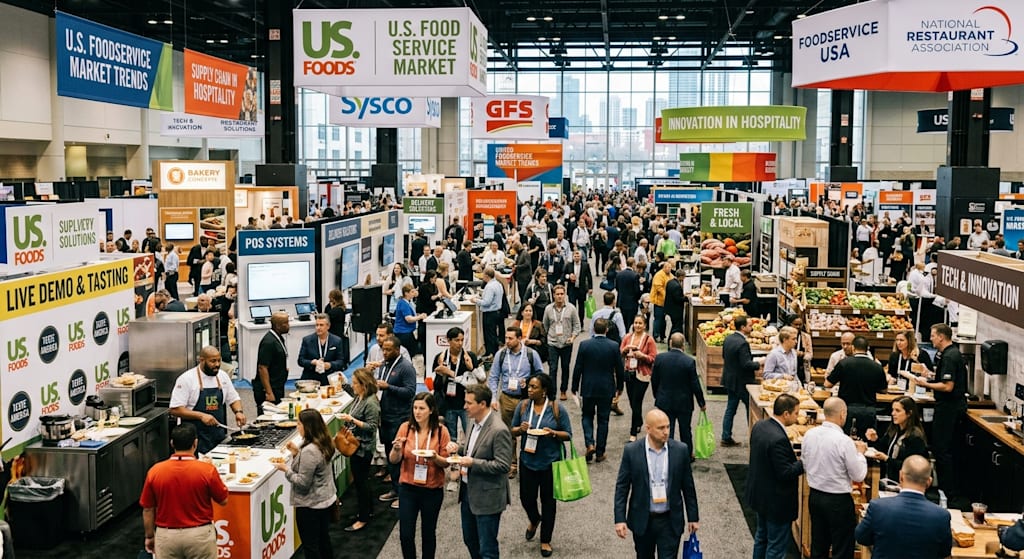
The food service sector in the U.S. Is one of the most dynamic and important parts of the economy. It covers everything from the most popular fast-food joints to luxury restaurants, cloud kitchens, event catering and school or workplace cafeterias. The food service industry plays a major role in how Americans consume food, socialize, and buy convenience-based meals.
As of 2026, consumer lifestyles, rapid digital transformation, and a preference for convenience-driven food service have begun to restructure the food service market. Ordering a meal or dining out is not an infrequent event but a day-to-day necessity for millions of American consumers.
The United States food service market is estimated to have reached USD 1,610.1 billion in 2025 and is projected to reach USD 2,703.6 billion by 2034, growing at a CAGR of 5.93% between 2026-2034, according to IMARC Group.
Key drivers of the U.S. Food service market in 2026 are:
Strong demand for convenience- A fast paced life and long working hours have considerably decreased the time devoted by households in cooking. The growing demand for quick meals is met by an increased supply of restaurants, delivery platforms and prepared food makers, across all segments of society.
Digital transformation-Mobile applications, online order and third party delivery platforms like DoorDash, Uber Eats, Grubhub have reshaped food procurement. Customers now expect swift and effortless ordering and real-time order tracking, driving many companies to invest in online infrastructure.
Growing demand for quick service restaurants (QSRs)-The prevalence of fast food and quick-service restaurants is driven by high affordability, speed and availability. Full service restaurants are also experiencing a revival with consumers looking for an experience rather than just food.
Increased penetration of ghost kitchens and delivery only brands-The concept of ghost kitchens and delivery only brands enables operators to scale and reduce operational costs in densely populated areas, and is thus growing popular especially in major U.S. Cities with high demand.
Robust institutional and non-commercial food service demand-A surge in the requirement of catering services for universities, offices, hospitals and elderly care homes has created large-scale demand for catering service providers, leading to long-term contracts and revenues for large catering companies.
Technology at the forefront of transforming food service operations
AI and automation are playing an increasingly significant role in every aspect of food service, from demand forecasting and inventory management to personalizing marketing campaigns. Automation in the food service industry includes fully automated kitchen systems, robotic serving solutions, and AI-powered drive-through experiences for improved efficiency and labor management.
Digital loyalty programs and data-driven marketing are also key in this changing landscape, where restaurants rely on consumer information to provide customized offers, boost loyalty, and increase the average transaction value. The entire industry has evolved into a highly data-centric business.
Consumer behavior continues to evolve
Consumers today demand faster, more diverse, and budget-friendly options. Additionally, there's a greater demand for healthier alternatives, including plant-based meals and transparent ingredients. In response, menus are expanding with customized and wellness-focused options.
The influence of social media trends on dining choices cannot be underestimated, particularly for younger generations; from viral dishes and influencer-driven culinary experiences to visually appealing dishes.
The market for food services in the United States can be divided into several segments, each catering to different consumer needs:
Quick-service restaurants (QSRs)
- Full-service restaurants
- Limited-service and fast-casual outlets
- Institutional and non-commercial food service
- Catering and event services
- Ghost kitchens and delivery-only brands
Of these, the QSR segment still dominates due to the consumer demand for value, while full-service restaurants are growing in the premium experience sector.
The Importance of this Market
The U.S. Food service market mirrors larger economic and social trends like urbanization, digitalization of consumer transactions, lifestyle changes, and increased consumer demands for convenience. As one of the largest job creators in the country, it supports millions of people in restaurants, logistics, food processing and delivery sectors.
Future outlook
The coming years will see the U.S. Food service market continue its rapid digitalization and automation, along with an expansion of delivery-first business models. Sustainability will gain importance through environmentally friendly packaging solutions, waste reduction techniques and use of locally sourced ingredients.
The food service business with its combined elements of convenience, technology and customer centric experience will likely flourish.
About the Creator
michael matthew
I’m a market researcher passionate about understanding people, markets, and motivations. My work blends data analysis, consumer psychology, and strategic insight to help brands and businesses make informed, human-centered decisions.
Enjoyed the story? Support the Creator.
Subscribe for free to receive all their stories in your feed.
Comments
There are no comments for this story
Be the first to respond and start the conversation.