
United States Dairy Market: Growth Driven by Innovation, Health Trends, and Evolving Consumer Demand
The United States dairy market is expanding steadily as rising demand for high-protein foods, value-added products, and organic dairy drives innovation and growth.

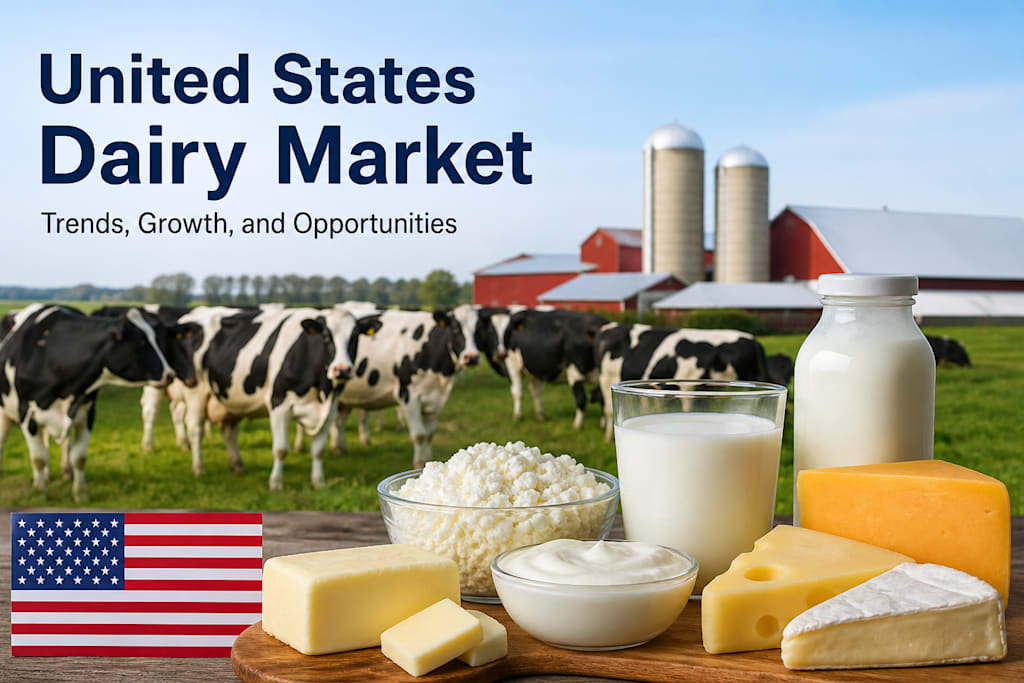
The dairy industry has long been integral to the U.S. Food and agriculture industry, with products ranging from milk and cheese to yogurt and butter continuing to be central to everyday diets. Beyond demand, however, the market is now changing with the help of innovation, health trends, and consumer preferences.
According to IMARC Group, the U.S. Dairy market was valued at USD 252.56 billion in 2025 and is projected to increase to USD 343.65 billion by 2034, growing at a CAGR of 3.00% during 2026-2034.
Demand for nutrient-rich and protein-focused foods has been identified as a major factor for growth. The rise of health conscious consumers who actively seek items that aid in healthy living-such as milk, yogurt, and protein fortified dairy products-is motivating manufacturers to innovate and provide functional food items that enhance overall health.
Value added dairy products are also having an effect on market growth. These include products such as flavored milk, probiotic yogurt, artisanal cheese, and fortified dairy beverages that are becoming popular among many consumers. Benefits associated with these products range from convenience and flavor to nutritional value, making them applicable to many age groups and lifestyles.
Expanding distribution channels have also been considered responsible for market growth. These range from supermarkets and convenience stores to online marketplaces, all of which provide increased accessibility for dairy products. Online market places especially offer a convenient opportunity for consumers to order a variety of specialized and premium dairy items without having to leave home.
A significant consumer trend occurring throughout the U.S. Dairy market is a rise in the purchase of organic and clean-label products. Consumers are taking notice of the provenance, manufacturing processes and ingredient labels of products and an increased purchasing power is attributed to the organic product line. Organic dairy is manufactured without synthetic pesticides or hormones and is popular among health and eco-aware consumers.
Technological improvements are further modifying the market. The dairy industry is adapting technology to improve the quality, freshness and safety of dairy products through enhanced processing, packaging, and cold chain systems. Additionally, the increase in automation and data driven solutions across dairy farming operations has improved the overall efficiency of supply chains.
Another factor is the growing prominence of non-dairy alternatives within the market. Despite the continuing prevalence of traditional dairy items, the rising popularity of non-dairy products such as soy, almond and oat milks are modifying the competitive arena. The increased competition has motivated dairy manufacturers to diversify their product offerings and invest in new, innovative approaches to retain the attention of consumers.
Market segmentation has been categorized into products such as liquid milk, cheese, yogurt, butter and various dairy items, with applications that range from bakery and confectionery, clinical nutrition and frozen foods to other sectors of the food industry. Distribution channel segmentation includes supermarkets and hypermarkets, convenience stores, specialty retailers and online platforms, which clearly highlights the breadth and depth of the dairy market across many facets of the industry.
Regionally, the U.S. Has a well-developed dairy infrastructure with robust production levels and significant consumption across the country. The country's supply chain infrastructure coupled with high consumer demand are some of the primary reasons behind market growth in the U.S.
What separates the U.S. Dairy market from others is its tendency to adhere to prevailing food market trends; much like the rest of the food industry, health, convenience and sustainability continue to be main priorities for consumers. Dairy products are quickly adapting to the consumer demands, proving themselves to be beneficial in terms of both nutritional and innovative value.
Looking into the future, demand for dairy is expected to be supported by sustained product innovation, widening distribution channels, and a rising level of consumer awareness. As consumption patterns transform and innovative technologies emerge, the U.S. Dairy market will continue to be a central part of the worldwide food sector.
About the Creator
michael matthew
I’m a market researcher passionate about understanding people, markets, and motivations. My work blends data analysis, consumer psychology, and strategic insight to help brands and businesses make informed, human-centered decisions.
Enjoyed the story? Support the Creator.
Subscribe for free to receive all their stories in your feed.
Comments
There are no comments for this story
Be the first to respond and start the conversation.