
United States Chocolate Market Continues to Evolve Beyond Traditional Candy
Premium flavors, dark chocolate demand, gifting culture, and online retail expansion are reshaping the future of the American chocolate industry.

Chocolate remains one of America’s favorite indulgences
Chocolate has long held a special place in American culture. It is more than just a sweet snack — it is part of celebrations, holidays, gifting traditions, comfort eating, and even everyday routines. From candy bars and desserts to premium gift boxes and artisanal treats, chocolate continues to be deeply connected to consumer habits across the United States.
But the market is no longer driven only by traditional milk chocolate products. Consumer preferences are evolving rapidly. Health-conscious buyers are increasingly exploring dark chocolate, organic ingredients, low-sugar options, and ethically sourced cocoa products. At the same time, premium and artisanal chocolates are gaining popularity among consumers willing to pay more for quality, flavor innovation, and sustainability.
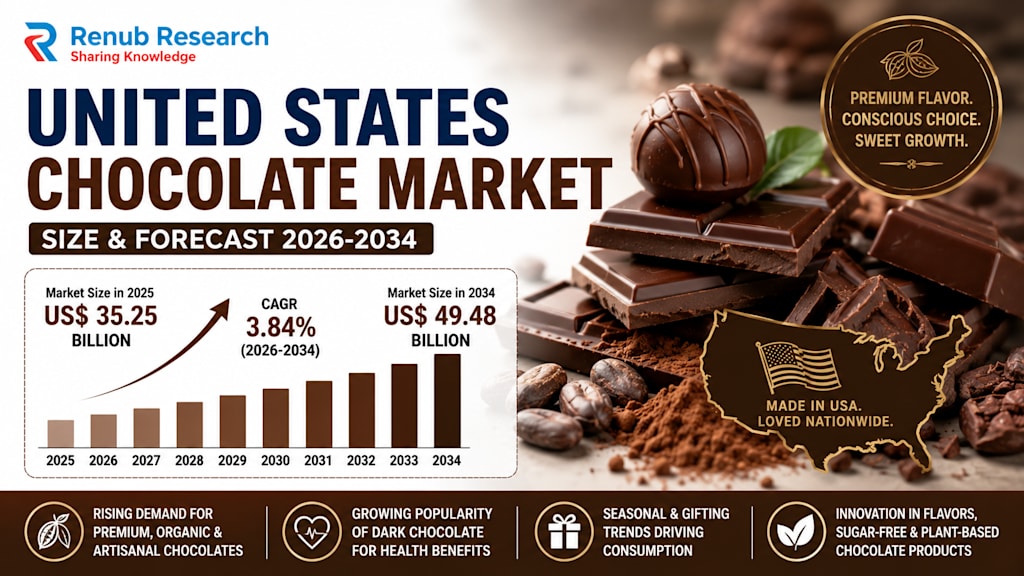
This combination of tradition and innovation is supporting continued market expansion. The United States Chocolate Market is projected to grow from US$ 35.25 Billion in 2025 to US$ 49.48 Billion by 2034, registering a compound annual growth rate (CAGR) of 3.84% from 2026 to 2034.
Chocolate consumption remains deeply rooted in American culture
Chocolate continues to enjoy widespread popularity across all age groups in the United States. Consumers purchase chocolate not only as a snack but also as an ingredient for baked products, desserts, beverages, and festive treats.
Milk chocolate remains highly popular, but dark chocolate and specialty products are increasingly capturing consumer attention. Chocolate consumption is also closely tied to emotional experiences. Consumers associate chocolate with celebrations, happiness, relaxation, gifting, and comfort, which keeps the category consistently relevant regardless of economic conditions.
The product’s versatility also contributes to its strong position in the market. Chocolate is consumed at home, during travel, at workplaces, and during festivals and social occasions. It remains one of the few confectionery categories that appeals broadly across demographics.
Seasonal demand continues to power industry sales
One of the strongest growth drivers in the United States chocolate market is seasonal consumption.
Chocolate sales surge during major celebrations such as Halloween, Christmas, Valentine’s Day, and Easter. These occasions create significant spikes in both personal consumption and gifting activity. Attractive packaging, themed products, and limited-edition flavors further encourage seasonal purchases.
Corporate gifting has also become increasingly important. Many businesses now use chocolates as gifts for employees, clients, and business associates during holiday seasons and special events.
The National Confectioners Association has highlighted the enormous importance of seasonal sales to the industry. According to the source, the winter holiday season alone accounted for more than 18 percent of seasonal confectionery sales in 2024, generating approximately US$ 7.5 billion in sales. The “big four” candy seasons — Valentine’s Day, Easter, Halloween, and winter holidays — collectively account for 62 percent of the confectionery industry’s annual sales.
This consistent seasonal demand provides stability and predictable revenue opportunities for chocolate manufacturers and retailers.
Premium chocolate is becoming increasingly popular
Consumer behavior in the United States is shifting toward premium and specialty chocolate products.
Many American consumers are now willing to pay higher prices for chocolates made with better ingredients, ethical sourcing practices, and unique flavor combinations. Premium chocolate is no longer limited to luxury boutiques; it is increasingly available through mainstream retail channels and online platforms.
Artisanal and handcrafted chocolates are especially gaining traction among consumers looking for more personalized and upscale experiences. Single-origin cocoa, small-batch production, exotic flavors, and visually appealing packaging are becoming important differentiators in the market.
Consumers are also paying closer attention to product transparency. Ethical sourcing, fair-trade certification, and sustainability claims are becoming stronger purchasing influences, particularly among younger buyers.
The demand for traceability is growing rapidly. Barry Callebaut reported a significant increase in clean-label demand across North America, driven by consumers seeking recognizable ingredients and transparent sourcing practices.
Dark chocolate is benefiting from the wellness trend
Dark chocolate has become one of the fastest-growing categories within the United States chocolate market.
Unlike traditional milk chocolate, dark chocolate typically contains a higher percentage of cocoa and less sugar. This has helped position it as a healthier indulgence among health-conscious consumers.
Dark chocolate is commonly associated with antioxidant properties, heart health benefits, and stress relief. These perceived health advantages are encouraging consumers to view dark chocolate as a more balanced alternative to conventional confectionery products.
Premium dark chocolate products featuring high cocoa percentages, organic ingredients, vegan formulations, and sustainable sourcing are becoming especially popular.
Manufacturers are also introducing new flavor combinations involving nuts, sea salt, fruit infusions, spices, and plant-based ingredients to attract evolving consumer tastes.
As wellness trends continue influencing food choices, dark chocolate is expected to remain one of the industry’s most dynamic segments.
Organic and plant-based chocolates are gaining momentum
The rise of healthier lifestyles is encouraging demand for organic, vegan, sugar-free, and plant-based chocolate products.
Consumers are increasingly reading ingredient labels and seeking products with fewer additives and more natural components. This trend is pushing chocolate manufacturers to innovate beyond traditional recipes.
Plant-based diets are also contributing to market diversification. Dairy-free chocolate products made with oat milk, almond milk, and other plant-based alternatives are becoming more visible across retail shelves.
Sugar-free and reduced-calorie chocolates are attracting consumers concerned about obesity, diabetes, and overall sugar intake.
Manufacturers that successfully combine indulgence with healthier positioning are likely to gain stronger consumer loyalty in the coming years.
Retail expansion is strengthening accessibility
The United States benefits from one of the world’s strongest retail infrastructures, which plays a major role in supporting chocolate sales.
Chocolate products are widely available across supermarkets, hypermarkets, convenience stores, specialty shops, vending machines, cafés, and online platforms. This extensive distribution network ensures constant visibility and easy access for consumers.
Convenience stores are particularly important for impulse purchases. Chocolate products displayed near checkout counters often encourage spontaneous buying behavior.
At the same time, online retail is transforming how consumers purchase chocolate. E-commerce platforms now offer premium imported products, artisanal collections, seasonal gift boxes, and subscription-based chocolate services that may not be easily available in physical stores.
Improved delivery systems and growing consumer confidence in online shopping are further supporting digital sales growth.
Online retail is creating new opportunities
The online chocolate retail market is growing rapidly in the United States.
Consumers increasingly value the convenience of ordering chocolates online, especially during holiday seasons and gifting occasions. Online platforms also provide access to niche products such as imported chocolates, organic products, and specialty gift collections.
Digital platforms are also enabling smaller artisanal brands to compete more effectively with established multinational companies.
Holiday-related online purchases have become especially important during occasions such as Valentine’s Day and Christmas when consumers prefer convenient gifting solutions.
As logistics and cold-chain delivery systems improve, online chocolate retail is expected to become an even larger part of the overall market.
Health concerns remain a challenge for the industry
Despite strong demand, the chocolate market faces growing pressure from health-conscious consumers.
Traditional chocolate products are often associated with high sugar, fat, and calorie content, which has raised concerns about obesity, diabetes, and cardiovascular health.
Many consumers are reducing their consumption of conventional confectionery products and shifting toward healthier snacks such as protein bars, nuts, and natural foods.
This shift is forcing manufacturers to adapt. Companies are investing in reduced-sugar recipes, organic ingredients, portion-controlled packaging, and functional chocolate products with added nutritional benefits.
However, balancing indulgence with health expectations remains a major challenge for the industry.
Cocoa price volatility continues to impact manufacturers
Another major challenge facing the market is the volatility of cocoa prices.
The United States depends heavily on imported cocoa beans, making the chocolate industry vulnerable to global supply chain disruptions, climate issues, political instability, and labor-related concerns in cocoa-producing regions.
Rising cocoa prices increase manufacturing costs, which can eventually affect retail pricing and consumer demand.
Transportation issues, currency fluctuations, and logistics disruptions also create uncertainty within the supply chain.
Manufacturers are increasingly focusing on sustainable sourcing partnerships and long-term supplier relationships to improve supply chain stability.
California remains one of the largest chocolate markets
California continues to represent one of the strongest chocolate markets in the country.
The state’s large population, high disposable income, and strong demand for premium and organic products support substantial chocolate consumption. Consumers in California are especially drawn toward artisanal, vegan, dark, and specialty chocolate varieties.
California is also home to many artisanal chocolate producers and luxury confectionery brands that focus on innovation and premium ingredients.
The state’s emphasis on wellness, sustainability, and clean-label products aligns closely with broader premium chocolate trends.
New York and Washington are seeing rising demand
New York’s chocolate market benefits from high urbanization, busy lifestyles, and strong gifting culture.
Consumers frequently purchase chocolate for convenience snacking, festivals, and social occasions. The city’s café culture and bakery industry also support chocolate consumption through desserts and beverages.
Washington state, meanwhile, is witnessing rising demand for organic and fair-trade chocolates. Consumers there demonstrate strong interest in sustainability and ethical sourcing, making premium dark chocolate especially popular.
These regional preferences highlight how consumer behavior differs across the United States while still supporting overall industry growth.
Major companies are competing through innovation
Leading companies in the United States chocolate market include Nestlé, Hershey, Mondelez International, Lindt & Sprüngli, Godiva, General Mills, and Cargill.
Competition is increasingly centered around innovation, sustainability, premiumization, and healthier formulations.
Companies are launching products featuring exotic flavors, clean-label ingredients, plant-based recipes, and luxury packaging to attract evolving consumer preferences.
For example, Lindt & Sprüngli USA introduced “Dubai Style” chocolate bars in 2025 featuring pistachio paste, kadayif, almonds, and hazelnuts, demonstrating how flavor innovation continues reshaping the market.
Final thoughts
The United States chocolate market continues to evolve far beyond traditional candy consumption.
Consumers still value chocolate for comfort, celebration, and indulgence, but their expectations are changing. Health awareness, ethical sourcing, premium experiences, sustainability, and ingredient transparency are becoming increasingly important purchasing factors.
Dark chocolate, organic products, artisanal brands, and online retail channels are reshaping how chocolate is produced, marketed, and consumed across the country.
Although challenges related to health concerns and cocoa supply volatility remain significant, the industry’s ability to innovate and adapt continues to support long-term growth.
Chocolate may remain a timeless favorite, but the future of the market will likely belong to brands that successfully combine indulgence with quality, wellness, and sustainability.
About the Creator
Enjoyed the story? Support the Creator.
Subscribe for free to receive all their stories in your feed.
Comments
There are no comments for this story
Be the first to respond and start the conversation.