
United States Anxiety Disorders and Depression Treatment Market Set to Reach US$ 9.59 Billion by 2033 Amid Rising Mental Health Awareness and Treatment Innovation
Growing prevalence of anxiety and depression, expanding telehealth adoption, breakthrough therapies, and supportive government initiatives are transforming mental healthcare across the United States.

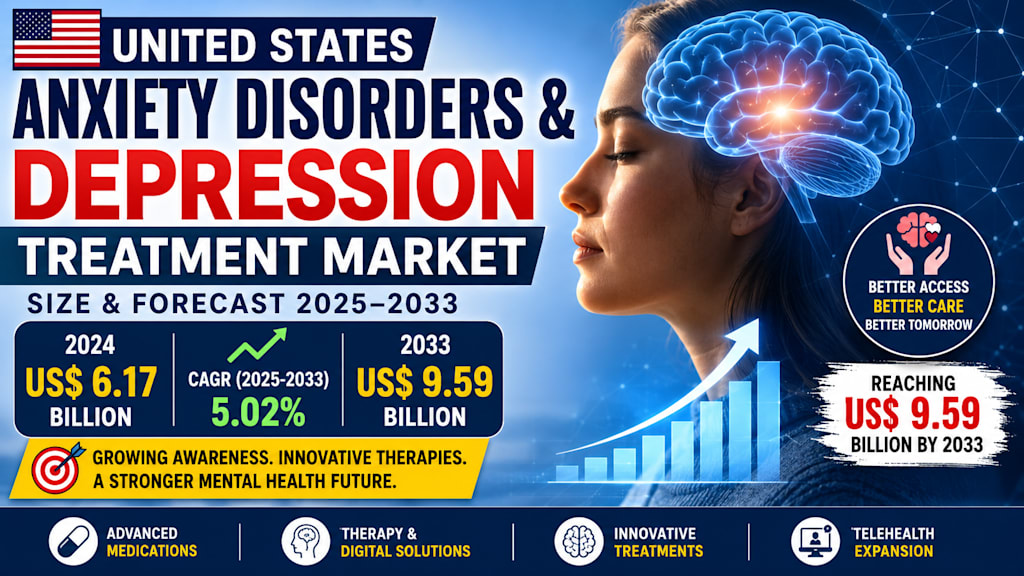
United States Anxiety Disorders and Depression Treatment Market Size and Forecast 2025–2033
The United States Anxiety Disorders and Depression Treatment Market is projected to grow from US$ 6.17 billion in 2024 to US$ 9.59 billion by 2033, expanding at a CAGR of 5.02% during 2025–2033. The market's growth reflects a significant shift in public attitudes toward mental health, increasing awareness campaigns, advancements in treatment options, and growing investments in behavioral healthcare infrastructure.
Mental health has emerged as one of the most pressing public health concerns in the United States. Anxiety disorders and depression affect millions of Americans annually, impacting quality of life, workplace productivity, educational outcomes, and overall healthcare expenditures. As stigma surrounding mental illness continues to decline, more individuals are actively seeking professional support, driving demand for medications, psychotherapy, digital mental health solutions, and innovative treatment approaches.
Government programs, insurance reforms, employer wellness initiatives, and technological advancements are collectively creating a more favorable environment for treatment adoption. As a result, the anxiety and depression treatment landscape is evolving rapidly, presenting substantial opportunities for healthcare providers, pharmaceutical companies, and digital health innovators.
Growing Burden of Anxiety and Depression in the United States
Mental health disorders have become increasingly prevalent across all age groups in the United States. Anxiety disorders remain among the most common psychiatric conditions, while major depressive disorder continues to affect millions of adults annually.
Several social and economic factors are contributing to this trend, including:
Increased workplace stress
Financial uncertainty
Social isolation
Academic pressure
Family-related challenges
Long-term psychological effects of the COVID-19 pandemic
The growing recognition of mental health symptoms has also improved diagnosis rates. Healthcare professionals are now conducting more routine screenings, helping identify individuals who previously went untreated.
As awareness improves, more Americans are seeking early intervention and long-term treatment, creating sustained demand for both pharmaceutical and non-pharmaceutical therapies.
Mental Health Awareness Is Transforming Treatment Demand
One of the strongest growth drivers in the market is the dramatic increase in mental health awareness throughout the United States.
Public health organizations, advocacy groups, educational institutions, and employers have played a crucial role in promoting mental wellness. National awareness campaigns have encouraged open discussions about depression, anxiety, and emotional well-being.
Organizations such as the National Alliance on Mental Illness have helped educate the public about symptoms, treatment options, and available support systems.
Celebrity advocacy, social media conversations, and workplace wellness programs have further normalized mental health discussions. As a result:
More individuals seek professional help earlier.
Treatment adherence has improved.
Screening rates have increased.
Demand for counseling and psychiatric services continues to rise.
This cultural shift is expected to remain a major factor supporting market growth through 2033.
Pharmaceutical Therapies Continue to Dominate the Market
Medication remains the cornerstone of treatment for anxiety disorders and depression across the United States.
Several classes of antidepressants continue to be widely prescribed, including:
Selective Serotonin Reuptake Inhibitors (SSRIs)
Serotonin-Norepinephrine Reuptake Inhibitors (SNRIs)
Atypical Antidepressants
Tricyclic Antidepressants
Benzodiazepines for certain anxiety conditions
SSRIs and SNRIs remain particularly popular because of their established safety profiles and effectiveness in treating a wide range of psychiatric conditions.
Pharmaceutical companies continue investing heavily in research and development to improve efficacy while minimizing side effects. New formulations and targeted therapies are helping clinicians better address diverse patient needs.
As treatment-resistant depression becomes a growing concern, demand for next-generation therapies is accelerating across healthcare systems nationwide.
Emerging Therapies Are Reshaping the Industry
The treatment landscape is witnessing a wave of innovation unlike any previous period.
Traditional antidepressants often require several weeks to achieve noticeable benefits, and many patients experience incomplete symptom relief. This challenge has created demand for faster-acting and more effective alternatives.
Some of the most promising innovations include:
Ketamine-Based Treatments
Ketamine-derived therapies have demonstrated rapid symptom reduction in patients with severe depression and treatment-resistant conditions. These therapies are increasingly being integrated into specialized psychiatric treatment centers.
Psychedelic-Assisted Therapy
Clinical trials involving compounds such as psilocybin are generating significant interest among researchers and healthcare providers. Early findings suggest these therapies may offer meaningful benefits for patients who have not responded to conventional treatments.
Personalized Medicine
Advancements in genetic testing and biomarker research are enabling healthcare providers to develop more individualized treatment plans. Precision medicine may significantly improve outcomes while reducing the trial-and-error approach commonly associated with psychiatric medications.
These innovations are expected to play a critical role in shaping future market expansion.
Telehealth and Digital Mental Health Solutions Gain Momentum
The rapid growth of telehealth has fundamentally changed how mental health services are delivered in the United States.
Virtual consultations have become a preferred treatment option for many patients because they offer:
Greater convenience
Reduced travel time
Increased privacy
Improved access in rural regions
Flexible scheduling
Mental health applications and digital therapeutic platforms are also gaining traction. These solutions provide cognitive behavioral therapy exercises, mood tracking, meditation guidance, and remote monitoring tools.
The combination of telepsychiatry, mobile applications, and artificial intelligence-driven support systems is making mental healthcare more accessible than ever before.
As digital health adoption continues to rise, technology will remain a major contributor to market growth over the forecast period.
Challenges Limiting Market Expansion
Despite strong growth prospects, the market continues to face several obstacles.
Limited Effectiveness of Existing Medications
Although antidepressants are widely used, many patients do not achieve complete symptom remission.
Common challenges include:
Delayed onset of action
Weight gain
Sleep disturbances
Sexual dysfunction
Emotional blunting
Medication discontinuation
Treatment-resistant depression remains particularly difficult to manage, emphasizing the need for innovative therapies.
Unequal Access to Mental Healthcare
Access disparities remain a significant issue throughout the country.
Many rural communities face shortages of psychiatrists, psychologists, and licensed therapists. Patients frequently encounter:
Long appointment wait times
High treatment costs
Limited insurance coverage
Transportation barriers
Cultural and language obstacles
Addressing these inequities will be essential for maximizing treatment adoption and improving patient outcomes nationwide.
State-Level Market Analysis
California
California represents one of the largest mental health treatment markets in the United States.
Major metropolitan areas such as Los Angeles, San Francisco, and San Diego benefit from extensive healthcare infrastructure and access to innovative treatment options.
The state has embraced telehealth services, advanced psychiatric care, and public awareness campaigns. However, challenges remain in rural communities where provider shortages persist.
California's emphasis on mental health policy reform and community-based programs continues to strengthen market growth.
Texas
Texas is experiencing rapid expansion in demand for anxiety and depression treatments.
Cities including Houston, Dallas, Austin, and San Antonio offer comprehensive psychiatric services and counseling programs.
The state has increasingly adopted telemedicine solutions to improve access in underserved areas. While awareness levels continue improving, stigma remains a challenge in certain communities.
Growing investments in behavioral health programs are expected to support long-term market development.
New York
New York remains one of the nation's most advanced mental healthcare markets.
The state benefits from:
Extensive healthcare infrastructure
Strong insurance support
High mental health awareness
Significant public funding
New York City serves as a major hub for innovative therapies, including telepsychiatry, ketamine treatment centers, and digital mental health platforms.
Expanding integrated care models will be critical to improving access for underserved populations throughout the state.
Product Segment Analysis
Antidepressant Drugs
This segment accounts for the largest market share due to widespread physician prescribing patterns and long-standing clinical adoption.
Continued innovation in drug development is expected to strengthen segment growth.
Therapy and Devices
Psychotherapy, cognitive behavioral therapy (CBT), neurostimulation devices, and digital therapeutics are becoming increasingly important treatment modalities.
Growing awareness of holistic mental healthcare is driving demand within this segment.
Others
Alternative therapies, wellness interventions, and supportive care programs also contribute to market expansion as patients seek comprehensive treatment approaches.
Indication Analysis
Major Depressive Disorder (MDD)
MDD remains the largest indication segment due to its high prevalence and substantial treatment demand.
Obsessive-Compulsive Disorder (OCD)
Increasing diagnosis rates and improved treatment awareness continue supporting market growth for OCD therapies.
Phobia
Behavioral therapies and targeted medications are helping improve outcomes for individuals with various phobic disorders.
Others
This category includes generalized anxiety disorder, panic disorder, post-traumatic stress disorder, and other related mental health conditions.
10 Recent Developments from Leading Companies
1. Johnson & Johnson
In January 2025, the company received FDA approval for SPRAVATO® (esketamine) as the first monotherapy specifically approved for treatment-resistant depression in adults.
2. Eli Lilly & Co.
In December 2024, Eli Lilly secured FDA approval for Zepbound (tirzepatide) for patients with obesity and moderate-to-severe obstructive sleep apnea, reflecting the company's broader expansion in neurological and behavioral health research.
3. AbbVie
In October 2024, AbbVie expanded its collaboration with Gedeon Richter to explore novel neuropsychiatric treatment targets and strengthen research pipelines.
4. Axsome Therapeutics
Axsome continued commercial expansion of its neuroscience portfolio, increasing physician outreach and patient access initiatives for depression therapies.
5. Pfizer Inc.
Pfizer enhanced its psychiatric research programs through continued investments in central nervous system treatment development.
6. Merck & Co., Inc.
Merck expanded clinical research activities focused on innovative therapies targeting mood disorders and neurological conditions.
7. Bristol-Myers Squibb Company
The company strengthened its neuroscience pipeline through strategic partnerships and advanced-stage clinical development programs.
8. H. Lundbeck A/S
Lundbeck increased investments in brain health research, focusing on depression, anxiety disorders, and treatment-resistant psychiatric conditions.
9. GlaxoSmithKline
GSK continued advancing neuropsychiatric research initiatives while exploring novel therapeutic pathways for mental health treatment.
10. Sanofi
Sanofi expanded collaborations aimed at developing innovative neuroscience solutions and improving mental health treatment outcomes globally.
Competitive Landscape
The United States anxiety disorders and depression treatment market remains highly competitive, with leading pharmaceutical manufacturers and emerging biotech firms actively pursuing innovation.
Major companies operating in the market include:
AbbVie
Bristol-Myers Squibb Company
Eli Lilly and Company
GlaxoSmithKline
H. Lundbeck A/S
Johnson & Johnson
Merck & Co., Inc.
Pfizer Inc.
Sanofi
Axsome Therapeutics
These companies are focusing on product innovation, strategic collaborations, digital health integration, and precision medicine approaches to strengthen their competitive positions.
Final Thoughts
The United States Anxiety Disorders and Depression Treatment Market is entering a transformative growth phase, driven by increasing disease prevalence, rising public awareness, expanding telehealth adoption, and breakthrough treatment innovations. With the market expected to reach US$ 9.59 billion by 2033, stakeholders across the healthcare ecosystem are investing heavily in more effective, accessible, and personalized treatment solutions.
Although challenges such as unequal access to care, workforce shortages, and medication limitations persist, ongoing advancements in pharmaceuticals, digital therapeutics, and integrated care models are creating a more optimistic future for mental healthcare. As Americans continue prioritizing emotional well-being and mental resilience, the demand for anxiety and depression treatments is expected to remain strong throughout the forecast period, making this one of the most important and rapidly evolving segments within the U.S. healthcare industry.
About the Creator
Enjoyed the story? Support the Creator.
Subscribe for free to receive all their stories in your feed.
Comments
There are no comments for this story
Be the first to respond and start the conversation.