
United States Agrochemicals Market: Growth Driven by Precision Farming and Sustainable Agriculture
The United States agrochemicals market is expanding steadily as farmers adopt precision agriculture, sustainable crop protection solutions, and advanced farming technologies to improve productivity.

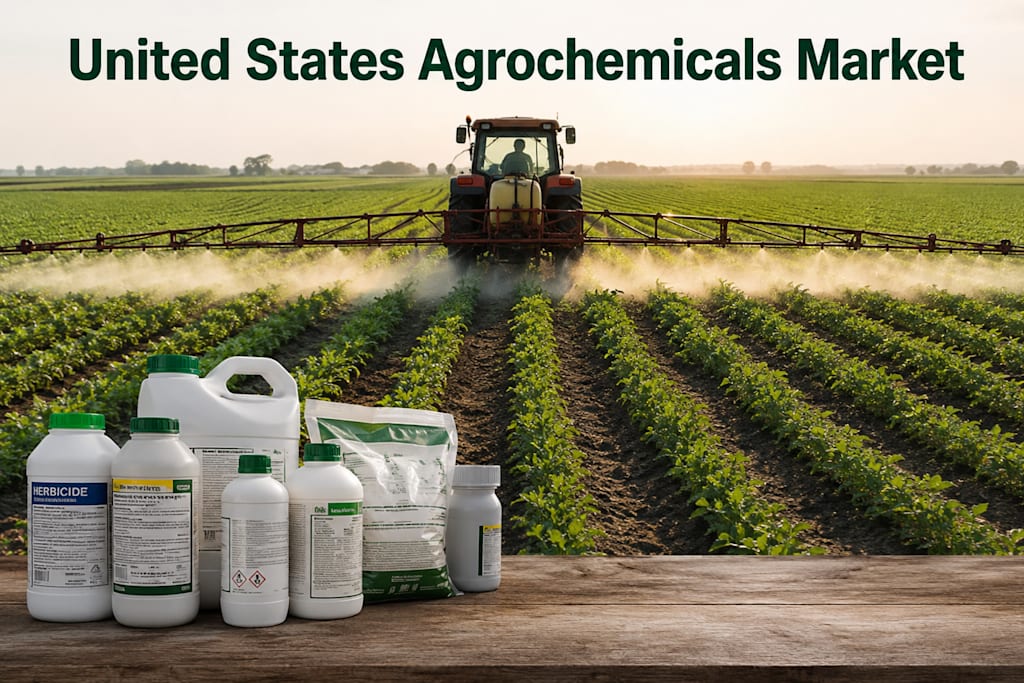
The U.S. Agricultural sector is quickly evolving as farmers increasingly embrace sophisticated technology and eco-friendly farming techniques to boost crop productivity and improve food security. In light of escalating climate change, demand for food, and shrinking agricultural land, agrochemicals continue to play a vital role in supporting large-scale farming activities across the nation.
According to IMARC Group, the U.S. Agrochemicals market grew to $36.0 billion in 2025, and is projected to reach $53.2 billion by 2034, growing at a compound annual growth rate (CAGR) of 4.21% during 2026-2034.
Rising demand for agricultural productivity is a key factor driving market growth. With a burgeoning global population, farmers face mounting pressure to grow more food while preserving quality and minimizing crop losses caused by pests, diseases, and weeds. The utilization of agrochemicals such as fertilizers, herbicides, fungicides, and insecticides helps farmers enhance yields and maintain consistent production.
Another factor shaping the market is the rapid adoption of precision agriculture technologies. Today's farms leverage GPS-guided tools, drones, sensors, and AI-driven analytics for precise application of agrochemicals, thereby reducing wastage, improving nutrient management, minimizing environmental impact, and maximizing crop performance. As many as 60% of U.S. Large farms use precision agriculture.
A prominent trend within the market is the growing shift towards sustainable, bio-based agrochemical alternatives. Farmers and agribusinesses seek environmentally sound solutions to improve soil health and minimize chemical runoff. This trend is bolstering demand for organic fertilizers, bio-pesticides, and bio-rational crop protection products that align with stricter environmental regulations and changing consumer expectations.
Innovation and technology also play a pivotal role in market expansion. Large agrochemical firms are investing significantly in research and development to formulate safer and more effective products. Advances in controlled-release fertilizers, biological crop protection agents, and targeted pesticide application are helping farmers improve efficiency while minimizing ecological risks.
Climate change, with its unpredictable weather patterns and changing pest dynamics, is another significant driver. Farmers are increasingly reliant on agrochemicals to safeguard crops in challenging environmental conditions and maintain stable agricultural output.
Regarding segmentation, the fertilizer types include nitrogen, phosphatic, potassic, and others. Nitrogen fertilizers hold significant importance in enhancing plant growth and crop yields. Among pesticide types, fungicides, herbicides, insecticides, and others, herbicides are prominent due to the wide applicability of weed control measures in large-scale operations. For crops, cereals and grains form a substantial segment as they are staple food crops cultivated in large areas across the U.S.
Geographically, the Midwest region is the leading market, driven by extensive corn and soybean production, strong agricultural infrastructure, and advanced farming technology. Southern and Western states also contribute to market growth, with increasing cultivation of fruits, vegetables, and specialty crops.
The trend toward biological crop protection and integrated pest management strategies is noteworthy. Farmers are adopting a blended approach of traditional agrochemicals with biological solutions and precision application techniques to boost sustainability and productivity. This approach is becoming crucial in response to evolving environmental regulations.
The significance of the U.S. Agrochemicals market lies in its interconnectedness with the overall trends of agricultural modernization and food sustainability. The focus has shifted from solely maximizing production to striking a balance between productivity, environmental stewardship, and long-term food security.
The market is poised for further growth owing to sustained innovation, rising demand for sustainable farming, and increasing adoption of precision agriculture. As farmers embrace modernization and adaptation, agrochemicals will remain a crucial component of American agriculture.
About the Creator
michael matthew
I’m a market researcher passionate about understanding people, markets, and motivations. My work blends data analysis, consumer psychology, and strategic insight to help brands and businesses make informed, human-centered decisions.
Enjoyed the story? Support the Creator.
Subscribe for free to receive all their stories in your feed.
Comments
There are no comments for this story
Be the first to respond and start the conversation.